

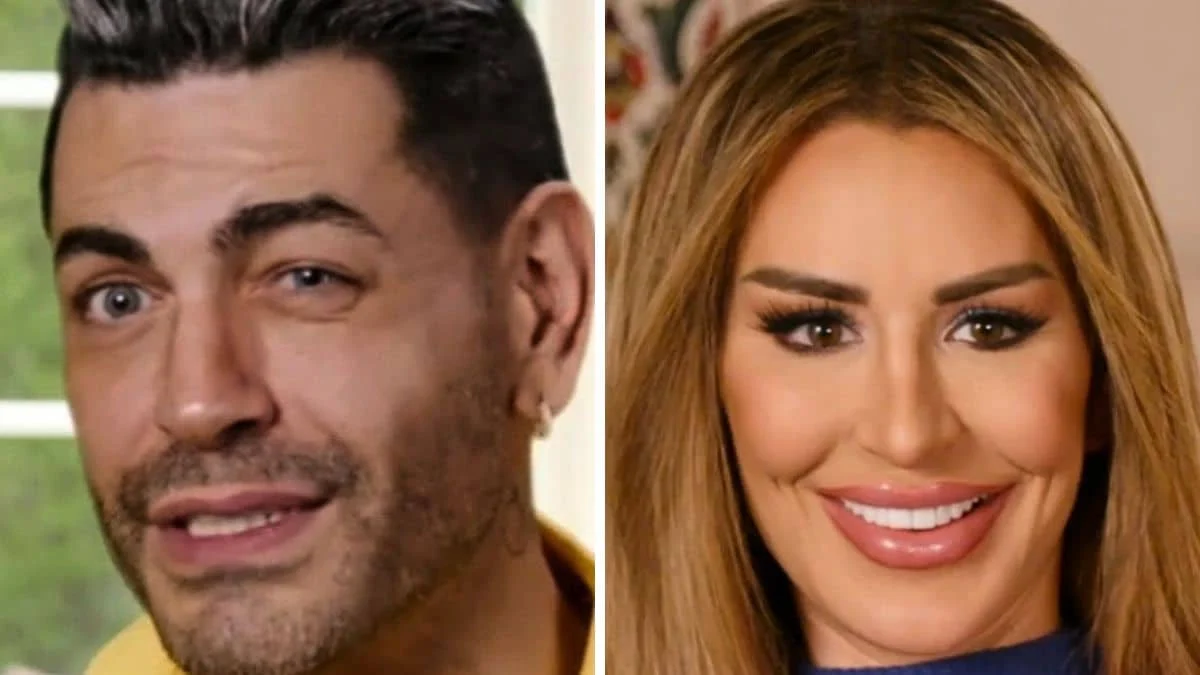
The landscape of reality television has long occupied a precarious space between authentic human experience and calculated entertainment. Perhaps no franchise exemplifies this tension more than TLC’s 90 Day Fiancé. In its current eleventh season, the series has found itself at the center of a burgeoning controversy involving veterans Shekinah Garner and Sarper Guven. Following a series of explosive episodes and questionable social media activity, the couple is facing intense scrutiny from a skeptical audience that is increasingly convinced their tumultuous relationship is less a product of genuine conflict and more a rehearsed bid for continued relevance.
Main Facts: A Relationship Under the Microscope
Shekinah Garner, an aesthetician from the United States, and Sarper Guven, a former model and personal trainer from Turkey, have become one of the most polarizing pairs in the franchise’s history. Their journey, which began on 90 Day Fiancé: The Other Way, has transitioned into the flagship series as Sarper arrived in the U.S. on a K-1 visa.
The current firestorm centers on a recent episode titled "Love’s True Colors," in which Shekinah presented audio recordings of a vitriolic argument between the two. In the recordings, Sarper is heard shouting, "I hate you so much," and threatening to abandon his visa process to return to Turkey. While the scene was intended to highlight the "true colors" of their volatile dynamic, it had the opposite effect on a significant portion of the viewership. Social media platforms, particularly X (formerly Twitter), were immediately flooded with accusations that the fight—and the recording of it—was a "fake" stunt designed to secure their spot in future spin-offs.
The skepticism is rooted in the couple’s history of high-drama antics, Sarper’s background in performance and modeling, and Shekinah’s apparent willingness to document every low point of their relationship for public consumption. As the line between their private lives and their televised personas blurs, the audience is left questioning whether they are witnessing a domestic crisis or a sophisticated audition for 90 Day: The Last Resort.
Chronology: From Istanbul to the American Dream (or Nightmare)
To understand the current wave of skepticism, one must look at the timeline of Shekinah and Sarper’s public evolution.
The Introduction (Season 5 of The Other Way)
The couple first appeared on screens during Season 5 of 90 Day Fiancé: The Other Way. The initial narrative focused on Shekinah, a woman with a history of dating "alpha" men, moving to Istanbul to be with Sarper, a man who famously claimed to have slept with over 2,500 women. From the outset, the relationship was defined by Sarper’s extreme controlling tendencies—ranging from telling Shekinah how to style her hair to dictating her makeup and clothing choices.
The "New and Improved" Sarper
Throughout their first season, Sarper attempted to pivot his image from a serial playboy to a devoted partner. He made grand gestures of commitment, and viewers saw a softer side of him as he navigated the challenges of Shekinah’s social circle. However, many fans remained wary, noting that his "reformation" seemed conveniently timed for the cameras.
The K-1 Visa Transition (Season 11)
The current season documents the high-stakes move to the United States. Unlike many couples who struggle with the legalities of the K-1 visa, Shekinah and Sarper’s primary obstacles appear to be interpersonal and familial. Upon his arrival, Sarper has struggled to adapt to a life where he is not the primary decision-maker, leading to immediate friction with Shekinah’s outspoken sisters.

The Audio Recording Incident
The climax of the current controversy occurred on Sunday’s episode. Following a dinner that devolved into chaos, Shekinah revealed she had recorded a private argument. The recording featured Sarper using profanity and expressing deep resentment, while Shekinah lamented her efforts to provide for him. This "receipt-dropping" moment, rather than garnering sympathy, served as the catalyst for the "fake storyline" allegations.
Supporting Data: Evidence of Audience Fatigue and Skepticism
The backlash against Shekinah and Sarper is not merely anecdotal; it is reflected in the sheer volume and consistency of social media discourse. Analysts of reality TV trends note several factors that have contributed to the "authenticity gap" for this couple.
The "Rehearsed" Argument Theory
On X, viewers pointed to the cadence and structure of the recorded argument as evidence of a script. One prominent viewer, @CaptPiccard, noted that the couple "already tried this stunt in Turkey," referring to similar high-pitched blowups in previous seasons that resulted in no actual change in the relationship status. The consensus among skeptics is that the couple uses a cycle of "Breakup-Makeup" to ensure they have enough "plot" to fill an episode.
The Social Media "Easter Eggs"
Adding fuel to the fire is Shekinah’s Instagram activity. Recently, she posted a cryptic, long-form message regarding being "silenced" and "threatened" by a partner. In the post, she alleged that she was told she would be left if she became "too skinny or too fat." While these are serious allegations of emotional abuse, the timing—occurring just as their TV ratings were being discussed online—led many to believe it was a promotional tactic to keep fans engaged between episodes.
The Role of the Sisters
The introduction of Shekinah’s sisters as antagonists is a classic reality TV trope. Critics argue that the "interrogation" scenes with the sisters feel forced, designed to provoke Sarper into the "angry foreigner" persona that generates high viewership numbers.
Official Responses and Cast Defense
While TLC and Sharp Entertainment (the production company behind the franchise) rarely comment on allegations of scripted content, the cast members themselves often use social media to defend their reality.
Sarper Guven has been vocal on his platforms, often defending his "dominant" lifestyle and dismissing critics as people who do not understand "true passion." He has maintained that his outbursts are a result of his Mediterranean temperament and the stress of moving to a new country.
Shekinah, meanwhile, has doubled down on the "victim" narrative in recent weeks. By sharing the audio recordings, she positioned herself as a woman trying to hold a difficult man accountable. However, her defense has been met with a "Boy Who Cried Wolf" response from the community. Many fans argue that if the relationship were truly as abusive and hateful as the audio suggests, her decision to continue filming and seeking a marriage license would be illogical—unless the drama is, in fact, the point.

The production’s role cannot be ignored. In reality TV, editors often "frankenset" conversations (stitching together different clips to create a new narrative). While the audio recording was provided by Shekinah herself, the way it was framed within the episode suggests that the producers are leanng into the "unstable" nature of the couple to drive engagement.
Implications: The Future of the Couple and the Franchise
The controversy surrounding Shekinah and Sarper has broader implications for the 90 Day Fiancé brand and the future of reality television.
The "Last Resort" Incentive
There is a growing theory among the "90 Day" fandom that couples are now intentionally manufacturing crises to secure a spot on the spin-off 90 Day: The Last Resort. This series features couples in therapy at a resort, and it pays significantly better than the standard seasons. If Shekinah and Sarper can convince the network that their relationship is on the brink of collapse, they are prime candidates for a Season 3 casting, which would provide them with both a paycheck and a free vacation.
Audience Trust and Brand Dilution
For TLC, the "Shekinah and Sarper problem" represents a risk of brand dilution. The original appeal of 90 Day Fiancé was its documentary-style look at the complexities of international love and immigration law. As the show leans more into "influencer-style" couples who seem more interested in their follower counts than their green cards, the show risks losing its core audience of "hate-watchers" and genuine fans alike.
The Ethics of "Performative Abuse"
If the arguments are indeed real, the show is documenting a toxic and potentially abusive domestic situation for entertainment. If they are fake, the couple is trivializing emotional abuse and domestic instability for fame. Neither scenario reflects well on the participants. The use of audio recordings as a "plot device" sets a troubling precedent for how domestic conflict is commodified in the digital age.
Conclusion: A Journey to the Altar or the Casting Call?
As Season 11 continues to air, the question remains: Will Shekinah and Sarper actually marry, or will they "break up" just in time for a dramatic reunion special?
The skepticism of the viewers highlights a shift in the audience’s relationship with reality TV. Fans are no longer passive observers; they are amateur detectives who cross-reference social media posts, filming schedules, and past behavior to suss out the truth. Whether Shekinah and Sarper are "pulling the wool" over the viewers’ eyes or simply living out a uniquely dysfunctional life, they have succeeded in one regard: they have ensured that everyone is talking about them. In the world of reality television, that is often the only metric of success that matters.










No comments yet. Be the first to join the conversation!