

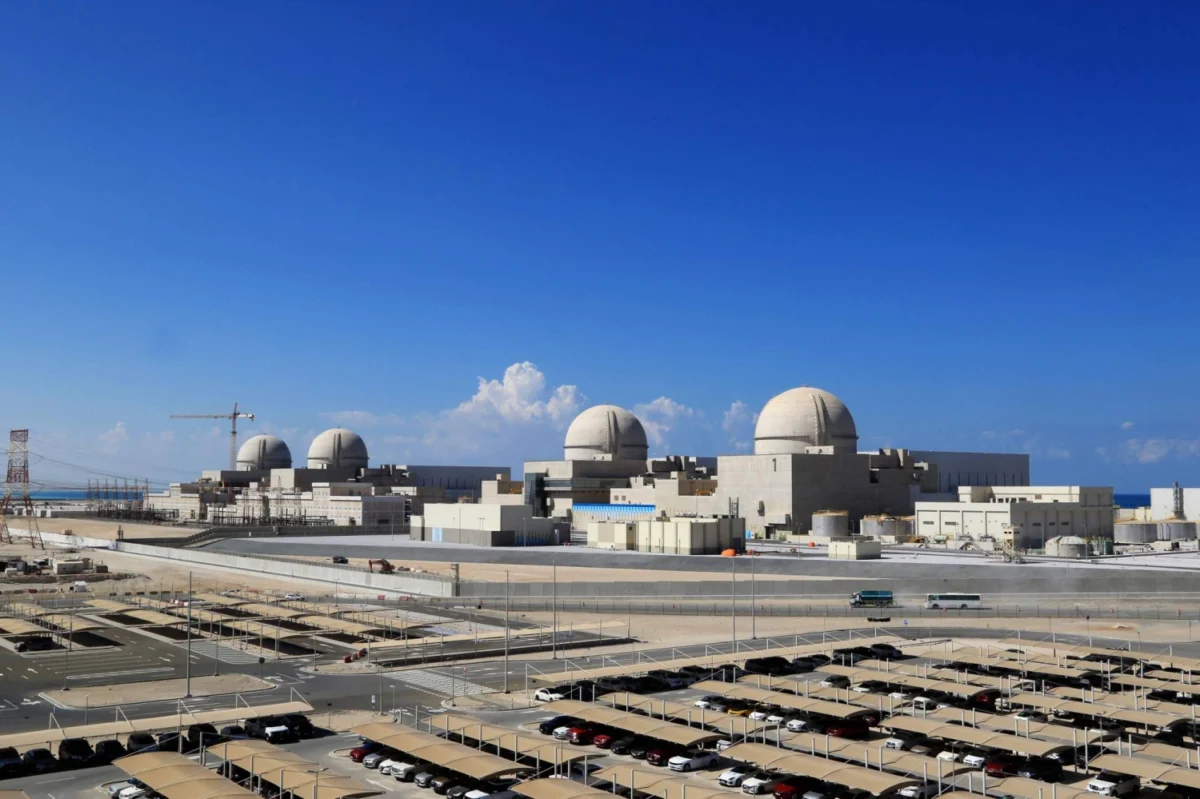
ABU DHABI — A significant security breach occurred in the United Arab Emirates on Sunday as a drone strike targeted the infrastructure surrounding the Barakah Nuclear Power Plant, located in the remote Al Dhafra region near Abu Dhabi. While authorities were quick to emphasize that the incident resulted in no casualties and posed no threat to radiological safety, the event marks a chilling escalation in the security environment surrounding the Gulf’s first operational nuclear facility.
The strike, which ignited a fire in an electrical generator situated outside the plant’s primary containment perimeter, has sent shockwaves through the regional energy sector. It underscores the increasing vulnerability of critical national infrastructure to low-cost, high-impact aerial threats in an era where drone technology has fundamentally altered the geometry of regional conflict.
The Incident: A Chronology of Events
The initial reports of the incident began to emerge early Sunday, as local residents and regional observers noted smoke rising from the Al Dhafra region.
- Early Sunday Morning: Unidentified drones penetrated the airspace surrounding the Barakah Nuclear Power Plant. According to preliminary reports, at least one device successfully targeted an electrical generator located in the facility’s outer auxiliary zone.
- 09:00 AM (GST): Firefighting crews and emergency response units, pre-positioned for such contingencies, were dispatched to the site. The fire was brought under control within hours, preventing any spread to the critical nuclear reactors themselves.
- 11:30 AM (GST): The Abu Dhabi Media Office issued a formal statement confirming that a "fire incident" had occurred. The statement explicitly identified the cause as a "drone strike," a rare admission of such an event occurring at a high-security nuclear site.
- 12:45 PM (GST): Nuclear regulators and plant operators conducted an immediate inspection of the facility’s safety protocols. Official updates confirmed that all reactor systems remained stable and that there was no deviation from normal radiological background levels.
The Barakah Nuclear Power Plant: A Strategic Asset
The Barakah Nuclear Power Plant represents the centerpiece of the UAE’s "Energy Strategy 2050," an ambitious plan to diversify the nation’s energy mix and reduce its reliance on natural gas. Located roughly 270 kilometers west of Abu Dhabi city, the plant is a multi-billion dollar project developed in collaboration with the Korea Electric Power Corporation (KEPCO).
Technical Specifications and Safety Architecture
Barakah houses four APR-1400 pressurized water reactors. When fully operational, the plant is designed to supply up to 25% of the UAE’s electricity needs, preventing the emission of millions of tons of carbon dioxide annually.
The facility is built with an exhaustive "defense-in-depth" safety strategy. The reactors are housed in massive, reinforced concrete containment buildings designed to withstand external impacts, including aircraft strikes and extreme weather events. The incident on Sunday occurred in the "electrical generator" sector—a component vital for grid connectivity but separate from the primary nuclear core and cooling systems. This distinction is crucial to the government’s assertion that the safety of the reactors was never compromised.
Official Responses and Security Posture
The Abu Dhabi government’s communication strategy was aimed at maintaining public confidence and preventing panic. By immediately confirming the drone strike while emphasizing the lack of radiological risk, the authorities sought to project control over a volatile situation.
"All precautionary measures have been taken," the Abu Dhabi Media Office noted in its follow-up statement. "The plant continues to operate under the highest international standards of safety and security."
Regulatory Oversight
The Federal Authority for Nuclear Regulation (FANR) has launched an investigation into the security failure. The primary focus of this probe is to determine how the drone bypassed the facility’s sophisticated integrated air defense systems. Experts speculate that the drone may have been a small, commercially available model modified for a tactical payload, which often presents a "low-radar-cross-section" challenge for traditional defense batteries designed to intercept larger missiles or military aircraft.
Regional Implications and Security Challenges
The targeting of a nuclear facility, even if the damage was localized to peripheral infrastructure, marks a paradigm shift in the security landscape of the Middle East. For years, the UAE has maintained a relatively stable domestic environment, positioning itself as a hub of trade and technology. However, the proliferation of "loitering munitions" and armed drones has made this stability increasingly difficult to maintain.

The Rise of Asymmetric Warfare
The use of drones by non-state actors and state-aligned proxies has become a defining feature of modern Middle Eastern conflicts. Unlike ballistic missiles, which can be tracked and intercepted with high-cost systems like the Patriot or THAAD, small drones are inexpensive, difficult to track, and can be deployed in "swarms."
"The incident at Barakah highlights the ‘tyranny of distance’ and the ‘tyranny of size,’" says Dr. Alistair Vance, a security analyst specializing in Gulf infrastructure. "When a facility is as large and as remote as Barakah, the perimeter is immense. You cannot build a wall high enough to stop a drone. The challenge for the UAE now is to invest in specialized anti-drone technology—jamming arrays, laser-based interception, and more robust signal-intelligence monitoring."
Economic and Strategic Fallout
The immediate market reaction was one of measured caution. While global energy prices saw a momentary spike, the clarification that the nuclear reactors remained intact helped stabilize the situation. Nevertheless, the psychological impact on investors and the international community cannot be ignored.
Energy Security vs. National Security
The UAE’s nuclear program is a cornerstone of its "Net Zero by 2050" initiative. Any perception that the nuclear fleet is susceptible to kinetic attack could potentially stall the UAE’s transition away from fossil fuels, forcing a reassessment of energy infrastructure security. The cost of protecting such sites is expected to skyrocket as the UAE shifts its defense budget toward high-tech, counter-drone solutions.
Looking Ahead: A New Era of Defense
As the UAE government continues to investigate the source of the drone, the focus is shifting toward regional diplomacy and defense cooperation.
- Enhanced Air Defense: There is an immediate requirement to integrate short-range air defense (SHORAD) systems specifically tailored for drone detection into the existing protective umbrella of the Barakah plant.
- Diplomatic Deterrence: The UAE is expected to exert significant diplomatic pressure on regional actors believed to be behind the supply of such technology to insurgent groups.
- Public Awareness: In a digital age where misinformation spreads faster than the truth, the UAE government’s ability to maintain transparency will be tested. Future updates regarding the investigation will be critical in shaping public sentiment and international investor trust.
A Call for Global Vigilance
The security of nuclear infrastructure is not merely a local issue; it is a global concern. The International Atomic Energy Agency (IAEA) has historically advocated for the strict protection of nuclear sites against malicious acts. The Barakah incident will likely prompt a renewed dialogue at the IAEA level regarding the standard requirements for protecting civilian nuclear power plants against the growing threat of autonomous and remote-piloted aerial vehicles.
Conclusion: Journalism in the Age of Uncertainty
In an era defined by the rapid dissemination of information and the pervasive threat of digital misinformation, the role of verified, objective reporting is paramount. The incident at the Barakah Nuclear Power Plant serves as a stark reminder that even in the most modernized and technologically advanced societies, the margin for error in national security is razor-thin.
As the UAE works to secure its critical assets and investigate the breach, the global community watches with bated breath. The lessons learned from this event will undoubtedly shape the future of nuclear facility security worldwide. The ability of the UAE to adapt, fortify, and maintain its commitment to clean energy in the face of such provocation will be a defining chapter in its development as a regional leader in the 21st century.
For ongoing coverage of this developing story and in-depth analysis of energy security in the Gulf, subscribe to our premium intelligence briefings.












No comments yet. Be the first to join the conversation!