Siti Muinah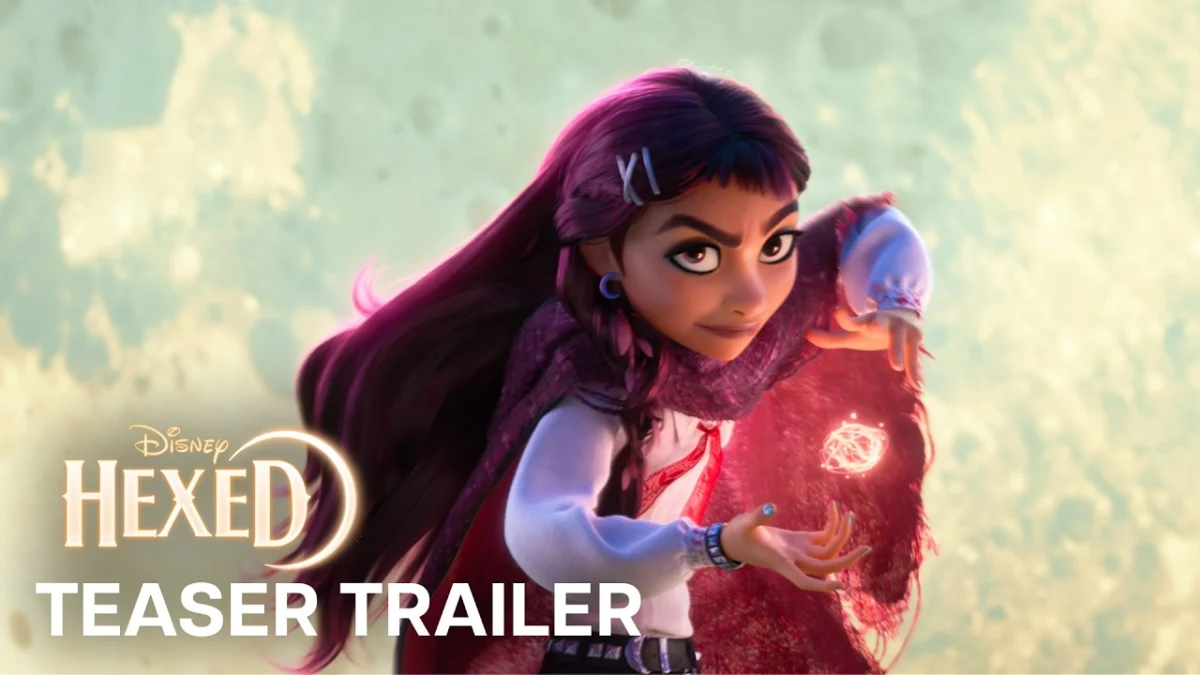
The release of the teaser trailer for Disney’s upcoming animated feature, Hexed, has ignited a firestorm of debate within the animation community. While Disney films have historically been scrutinized for their evolving aesthetic, Hexed has found itself at the epicenter of a uniquely modern controversy. Beyond the initial backlash regarding character design—specifically the shift in the protagonist’s gender and a departure from original concept art—the current discourse has turned toward a technical, and perhaps more existential, concern: the framing of the film itself.
Critics and animation enthusiasts alike have taken to social media to argue that the film’s cinematography appears "center-weighted," seemingly designed to be cropped into 9:16 vertical ratios for TikTok and Instagram. This has sparked a broader, more heated discussion about whether major studios are sacrificing cinematic language to appease the algorithm, ultimately stripping their films of artistic soul.
The Chronology of a Controversy: From Character Design to Composition
The path to the Hexed trailer release has been fraught with skepticism. When the project was first announced in April, the primary point of contention was the visual departure from the initial concept art. Fans who had invested in the early, stylized pitches were disappointed to see a shift toward a more standardized 3D CG aesthetic, alongside the decision to pivot the lead character from a boy to a girl—a change that prompted vocal, and often toxic, pushback online.
However, once the official teaser dropped, the conversation shifted. Audiences were quick to notice that the action in almost every shot appeared suspiciously centered. The debate reached a fever pitch in mid-June 2026, when side-by-side comparisons began circulating on platforms like X (formerly Twitter). These users demonstrated that when the 16:9 trailer was cropped to a 9:16 vertical format, the essential visual information remained perfectly intact.
This led to a wave of criticism from industry observers and fans who view this as a form of "pre-emptive editing." The sentiment among these critics is that if a studio is already framing its scenes to accommodate mobile-first consumption, it is actively choosing to limit the scope of its visual storytelling.
The "TikTok-ification" of Film: Implications for Visual Language
The core argument against the perceived "center-heavy" framing of Hexed is that it fundamentally undermines the art of blocking and composition. Traditionally, cinematography relies on the "rule of thirds" and the utilization of the entire frame to build tension, establish relationships between characters, and create depth. By pulling the action into the center, filmmakers lose the ability to place secondary elements at the edges of the frame—elements that often provide context, atmosphere, or visual storytelling.
"Vertical video and its consequences have been a disaster for the human race," one prominent critic noted on social media. "You can tell the bizarrely center-focused trailer was made with the assumption people would crop in on the middle of the video, in order to make it vertical."
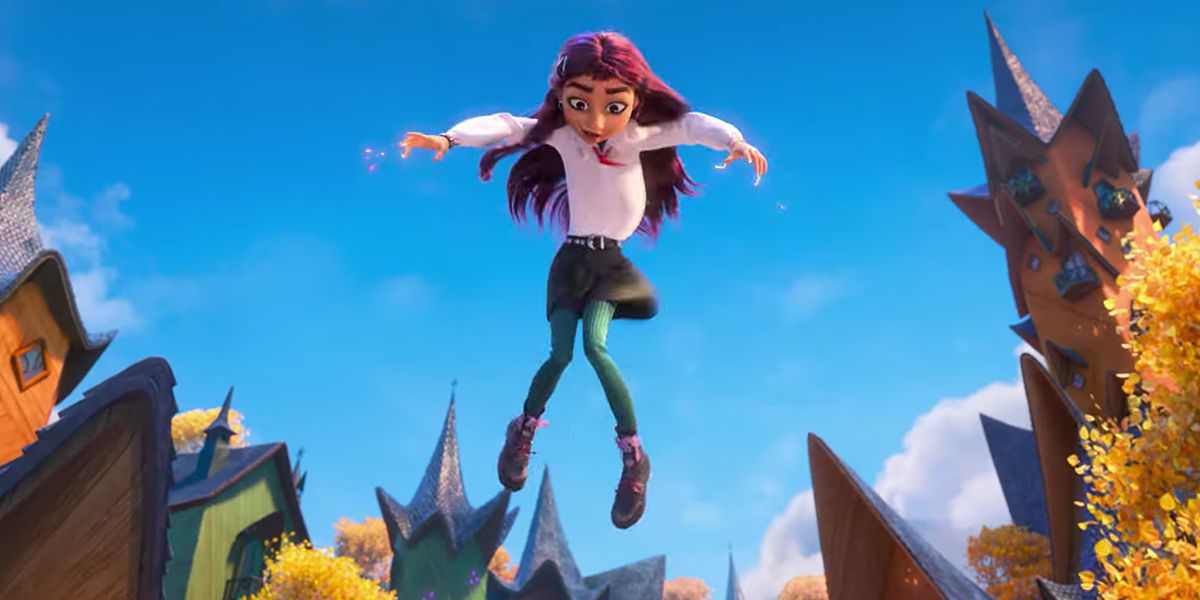
This sentiment reflects a growing anxiety that the influence of short-form video platforms—TikTok, YouTube Shorts, and Instagram Reels—is forcing traditional cinema into a "generic" box. Critics argue that when a film is composed for the smallest, most distracted screen, the result is a loss of grandeur. For a medium that prides itself on being an "ode to the imagination," the perceived safety of a centered frame feels antithetical to the very spirit of the craft.
Supporting Data: The Comparison to Forgotten Island
The frustration surrounding Hexed has been amplified by the simultaneous marketing push for DreamWorks’ Forgotten Island. Many fans have drawn unfavorable comparisons between the two, often positioning Forgotten Island as the superior, more creative project.
Observers have noted that Forgotten Island utilizes the entire screen, employing wider shots and more dynamic camera movements that feel intentional and cinematic. In contrast, Hexed is being labeled as "soft and generic." One fan noted, "Something I like about Forgotten Island compared to Hexed is that Forgotten Island feels like it’s constantly taking advantage of the entire frame, whereas Hexed feels like it was made in a way where it could be turned into a TikTok without losing any important details."
This comparison is particularly damning for Disney, as it suggests that the studio is playing it safe while its competitors are pushing the boundaries of the medium. The "Disneyfication" of modern animation—a term increasingly used to describe the perceived homogenization of style across the studio’s portfolio—has become a rallying cry for those who feel the studio has lost its creative edge.
The Counter-Argument: Is Symmetry Just Style?
Despite the intensity of the backlash, industry veterans have cautioned against jumping to conclusions. It is entirely possible that the centered framing is not a symptom of "TikTok-ification," but rather an aesthetic choice.
Cinematic history is filled with masters of symmetry. Stanley Kubrick, for instance, is famous for his obsession with one-point perspective and perfectly centered shots, as seen in The Shining and 2001: A Space Odyssey. Wes Anderson’s entire career is built upon the meticulous, symmetrical arrangement of characters and props within the frame. If Kubrick and Anderson are considered visionaries for their framing, is it fair to label Disney’s similar choices as "amateur"?
Furthermore, there is a logistical reality to consider: studios create vast amounts of promotional material. It is standard industry practice to produce multiple cuts of a trailer for different platforms. If the original film is composed in a way that allows for easy reframing, it might simply be a case of smart, modern production management rather than a creative "surrender."
Official Responses and Studio Strategy
Disney has remained largely silent regarding the specific technical criticisms of the Hexed trailer. In the studio’s view, the trailer is doing exactly what it was designed to do: generate buzz and interest in the characters. To be fair, the teaser has attracted plenty of positive attention, particularly for its vibrant backgrounds and the whimsical world of Hexe, where the protagonist, Billie Doe—voiced by Spider-Verse star Hailee Steinfeld—begins her journey.
The studio likely views the framing as a non-issue, viewing it as a byproduct of modern digital-first marketing. However, the disconnect between the studio’s desire to reach a younger, mobile-native audience and the expectations of traditional cinephiles remains a significant hurdle. For a legacy brand like Disney, the challenge is not just technical; it is about maintaining the perceived "magic" that fans expect from their films.
Looking Ahead: A Crisis of Trust
The debate over Hexed is, at its heart, a debate about trust. When audiences feel that a studio is "pandering" to the algorithm, they begin to lose trust in the artistic integrity of the work. As one critic aptly put it, "For a work that claims to be an ‘ode to the imagination,’ showing so little trust in its audience… that hurts."
As the release date for Hexed approaches on November 25th, the pressure will be on Disney to prove that the film is more than just a collection of centered, social-media-friendly shots. If the full film maintains this visual style, it will likely continue to face criticism for feeling "generic." If, however, the film surprises audiences with more ambitious, wide-frame cinematography that makes use of its world-building potential, it may successfully silence the detractors.
The success of Forgotten Island, arriving on September 25th, will serve as a crucial benchmark. If DreamWorks manages to capture the audience’s imagination with a visually distinct, risk-taking film, the pressure on Disney to move away from its "safe" aesthetic will only intensify.
Ultimately, the Hexed controversy serves as a microcosm for the current state of the film industry. We are living through a transition where the boundaries between television, cinema, and social media are blurring. Whether this leads to a dilution of the craft or the birth of a new, more adaptable form of visual storytelling remains to be seen. For now, fans are watching, waiting, and, most importantly, checking the frame.

 Lina Irawan
 Laily UPN