Ammar Sabilarrohman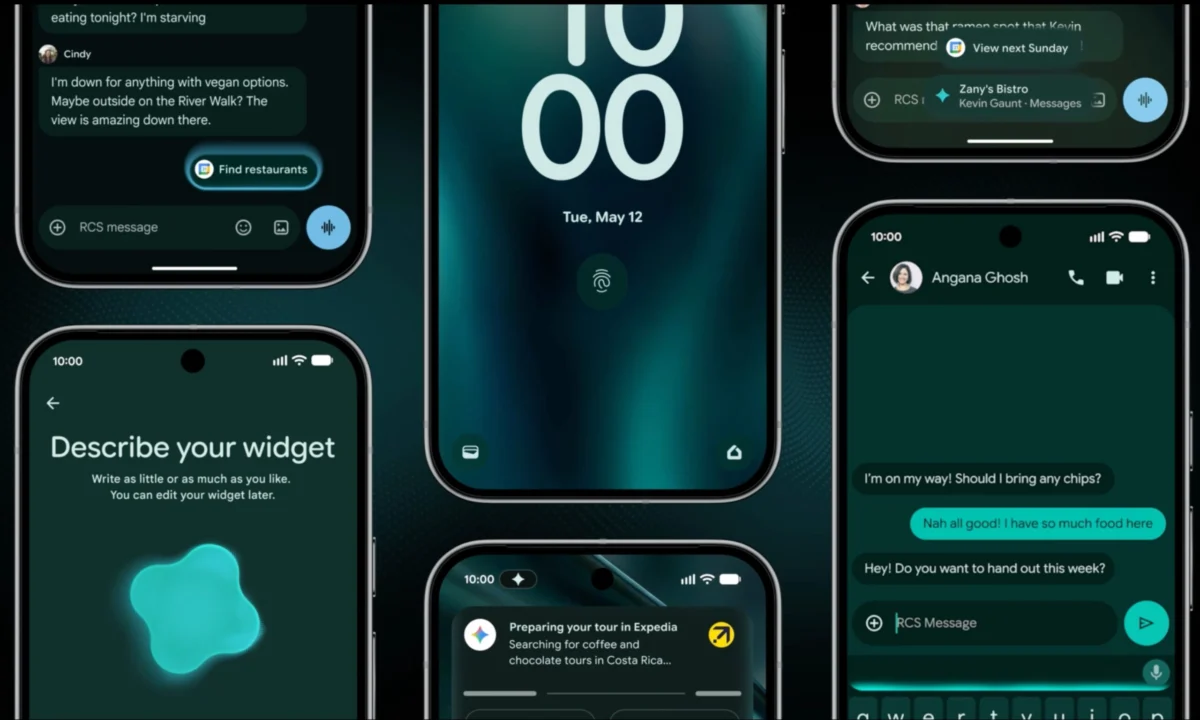
The promise of speech-to-text has long haunted the smartphone experience. For over a decade, we have been told that we could "speak our thoughts" into our devices, liberating ourselves from the ergonomic tyranny of tiny, on-screen keyboards. Yet, for most users, the reality has been underwhelming. Dictation has remained a "niche-only" feature—useful for a quick search query or a short, formal instruction, but entirely inadequate for the nuance of human conversation.
The core issue has never been the transcription accuracy of the software; it has been the rigidity of the user. To successfully use voice typing, one must effectively "code" their speech, avoiding mid-sentence corrections, filler words, and the natural, winding path of human thought. You have to be perfect, or the text output becomes a chaotic mess of "ums," "ahs," and disjointed syntax.
Enter Rambler, a groundbreaking new feature embedded within Google’s Gemini Intelligence suite for Android. By leveraging the advanced reasoning capabilities of Gemini, Google is attempting to solve the fundamental friction of mobile input: the gap between how we think and how we write.
The Evolution of Input: From Rigid Dictation to Conversational Intelligence
The Chronology of Failure
To understand why Rambler represents a paradigm shift, one must look at the history of mobile dictation. Early iterations, such as the rudimentary voice-to-text engines of the mid-2010s, functioned as simple stenographers. They mapped audio waveforms to a dictionary, literalizing every breath and stumble. If a user paused to reconsider a sentence, the software would record that hesitation, forcing the user to manually edit the resulting text.
As mobile displays grew larger—often reaching the 7-inch mark—the ergonomics of typing became increasingly difficult. The "thumb stretch" across a wide, phablet-sized screen is a frequent cause of fatigue and user error. Despite this, consumers largely abandoned dictation in favor of physical typing because the cognitive load of "perfecting" one’s speech proved greater than the physical labor of typing.
The Gemini Pivot
In 2026, Google announced a sweeping overhaul of its Android ecosystem under the "Gemini Intelligence" banner. Unlike previous AI iterations that were bolted onto the OS, Gemini is woven into the fabric of the Gboard interface. Rambler is the flagship feature of this integration. Rather than treating speech as a data-entry task, Rambler treats it as a natural language processing challenge, parsing intent rather than mere phonetics.

How Rambler Works: Decoding the Human Element
Rambler operates on a fundamentally different logic than traditional Speech-to-Text (STT). When a user activates the feature, they are no longer required to speak like a formal document. They can speak as they would to a friend, a colleague, or a family member.
Processing the "Messy" Reality
Human speech is inherently non-linear. We frequently interrupt ourselves, correct our phrasing, and rely on non-lexical fillers (the "likes," "ums," and "ahs" of natural discourse). Rambler employs a real-time semantic filter that ignores these performance markers.
By analyzing the cadence and semantic flow of the audio, the model identifies the core intent of the message. It extracts the essential meaning, discards the verbal "noise," and reconstructs the output into a coherent, polished text message that retains the user’s personal tone. This is not merely "autocorrect" on steroids; it is a generative summarization engine that functions in milliseconds.
The Bilingual Advantage
One of the most significant hurdles for legacy dictation software has been code-switching. In an increasingly globalized world, many users naturally blend languages—for instance, switching between English and Hindi or Spanish and English mid-sentence.
Standard dictation models often "break" when a speaker pivots languages, struggling to maintain the correct grammar or vocabulary context. Gemini’s multilingual model allows Rambler to maintain the rhythm and flow of a mixed-language conversation. By identifying the language context in real-time, the feature preserves the authenticity of the user’s communication, ensuring that the "bilingual rhythm" is not sacrificed for the sake of standardized output.
Supporting Data and User Experience Implications
The frustration associated with current mobile input is well-documented. Market research into mobile UX suggests that:

- Correction Time: The average user spends 15-20% of their mobile messaging time correcting typos or re-typing due to "reach" issues on large screens.
- Fatigue Factor: "Thumb fatigue" is a primary complaint among users of devices with displays exceeding 6.5 inches.
- The "Voice Note" Gap: The rising popularity of voice notes (or audio messages) is a direct response to the inadequacy of text-based input. However, voice notes are often inaccessible in professional settings or situations where the recipient cannot listen to audio.
Rambler bridges this gap. It provides the conversational freedom of a voice note with the accessibility and searchability of a text message. If the technology performs as promised, it could significantly decrease the time-to-message, allowing users to communicate while multitasking—walking, carrying groceries, or commuting—without the need for perfect, formal speech.
Official Responses and Privacy Considerations
Google has been quick to address the inevitable concerns regarding privacy. With any AI tool that "listens" to a user’s surroundings, the primary apprehension is data harvesting.
The Privacy Promise
Google has stated that Rambler is designed with a "privacy-first" architecture. According to the company’s technical briefings:
- Local Processing: Much of the intent-parsing is handled on-device, leveraging the neural processing units (NPUs) within modern Android chipsets.
- Ephemeral Data: Audio captured for the purpose of transcription is processed in a temporary, volatile state. Google has explicitly stated that this audio is not stored on company servers or used to train future iterations of Gemini models without explicit user opt-in.
- User Transparency: The interface provides a clear visual indicator whenever Rambler is active, ensuring the user is never under the impression they are "offline" while the microphone is engaged.
"The goal," says a Google spokesperson, "is to make the phone an extension of the human thought process, not a barrier to it. We aren’t building a better tape recorder; we are building a better translator for the human experience."
Implications for the Future of Mobile Interaction
If Rambler achieves mass adoption, the implications for mobile hardware and software are profound.
A Reconsideration of Hardware
If users feel more comfortable using voice as their primary input method, the pressure on manufacturers to create "one-hand-friendly" keyboard layouts may decrease. We might see a shift in UI design where the keyboard takes up less screen real estate, or where the "text entry field" becomes a more dynamic, AI-driven canvas.

Accessibility and Inclusion
Beyond the general consumer, the implications for accessibility are massive. For users with motor impairments or those who struggle with fine motor control on touchscreens, an AI that understands "messy" speech could be a transformative assistive technology. It lowers the barrier to entry for digital communication, allowing for more expressive and complex interactions without the need for precise physical dexterity.
The Challenge of Adoption
Despite the technical promise, hurdles remain. The "social barrier" of speaking to one’s phone in public remains a significant deterrent for many users. Furthermore, there is the question of accuracy versus control. Will users trust an AI to "interpret" their words, or will they constantly feel the need to audit the text before hitting "send"?
Ultimately, the success of Rambler will hinge on trust and speed. If it is faster than typing, and if the "correction" is accurate enough to avoid embarrassing, AI-generated misinterpretations, it could fundamentally alter how we interact with our devices.
We are moving into an era where our phones are no longer just tools for data entry, but active participants in our conversations. Whether Rambler becomes a staple of our daily digital lives or another forgotten "experimental" feature will depend on its ability to prove that it can handle the nuances of the human voice better than we can ourselves. For now, it represents a bold, necessary step toward the end of the "typing era," and the beginning of a more conversational future.

 Laily UPN