

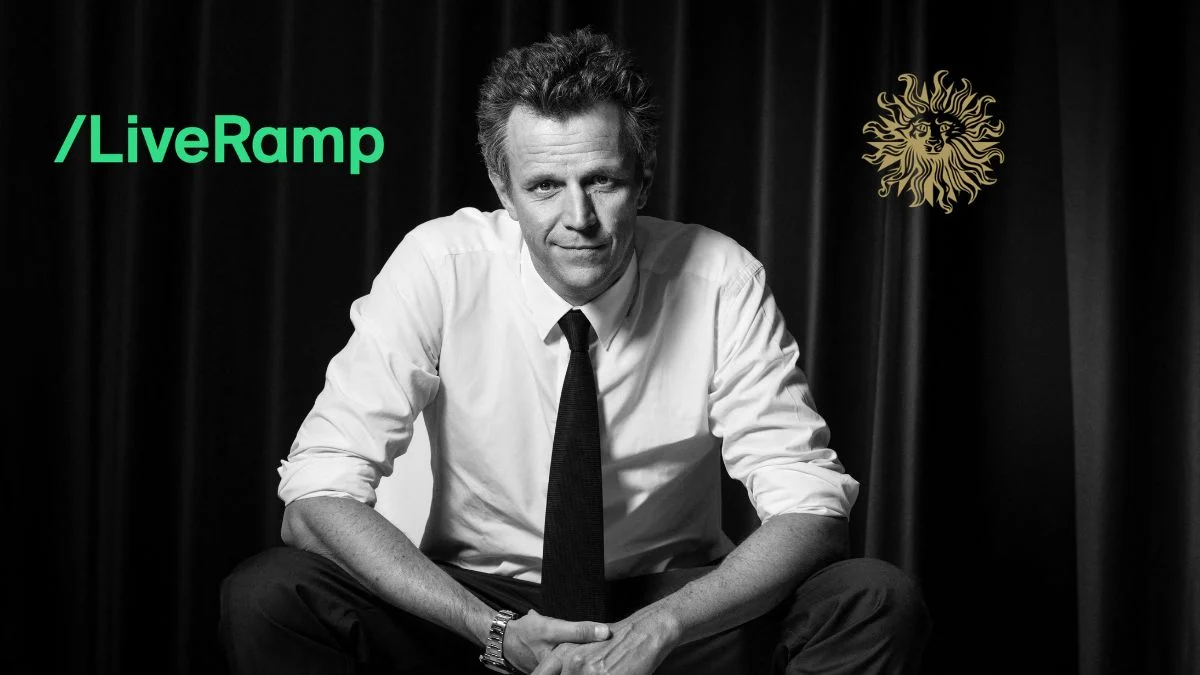
In a move that signals a seismic shift in the advertising and technology landscape, French holding company Publicis Groupe has announced a definitive agreement to acquire data collaboration platform LiveRamp in an all-cash deal valued at $2.2 billion. This strategic acquisition, unveiled on Sunday, represents one of the most significant consolidations in the martech sector in recent years and underscores Publicis Groupe’s aggressive ambition to dominate the burgeoning field of “agentic transformation.”
As the global advertising industry pivots away from traditional media buying toward AI-driven operational efficiency, Publicis is positioning itself not merely as an agency holding company, but as a technological powerhouse capable of orchestrating complex corporate workflows through autonomous AI agents.
The Core Facts: A $2.2 Billion Strategic Play
The acquisition of LiveRamp is a high-stakes bet on the infrastructure of the future. By integrating LiveRamp’s specialized data collaboration technology, Publicis aims to solve one of the most persistent challenges in modern marketing: the siloing of data.
LiveRamp, long recognized as a leader in identity resolution and data connectivity, allows companies to securely share, match, and build new data sets without compromising privacy or proprietary control. In the context of AI, these "data collaboration" capabilities are essential. To train effective AI agents—which are systems designed to execute complex tasks and make decisions autonomously—companies require massive, high-quality, and interconnected data models.
Publicis Groupe is purchasing this infrastructure to create a proprietary ecosystem where its AI agents can operate with greater autonomy and precision, effectively turning raw corporate data into actionable business intelligence.
A Chronology of the Deal: From Connectivity to Autonomy
The path to this $2.2 billion deal did not happen in a vacuum. It is the culmination of years of Publicis Groupe’s aggressive digital transformation strategy.
2018–2020: The Epsilon Foundation
The foundation for this move was laid in 2019 when Publicis Groupe acquired Epsilon, the data-marketing giant, for $3.95 billion. This move was initially viewed with skepticism by some analysts who feared the complexity of integrating a data-first company into a creative-first agency. However, Epsilon provided Publicis with the "people-based" identity data that became the backbone of their subsequent growth.
2021–2023: The AI Acceleration
During the post-pandemic digital surge, Publicis leaned heavily into its "Core" platform, integrating data across its various creative and media agencies. As generative AI moved from novelty to utility, Publicis CEO Arthur Sadoun began pivoting the group’s narrative toward “Power of One”—a singular, data-integrated model that could leverage AI across every touchpoint of a client’s business.
2024–2025: The Shift to Agentic Workflows
By late 2024, the industry began shifting from Large Language Models (LLMs) to “agentic frameworks.” Unlike standard chatbots, agents are designed to perform multi-step workflows—like auditing a supply chain, optimizing a media spend in real-time, or personalizing thousands of consumer interactions simultaneously.
February 2026: The Definitive Agreement
The announcement on Sunday marks the official realization of Publicis’s need for deeper connectivity. With the integration of LiveRamp, Publicis now gains the "connective tissue" required to move its AI agents from simple task-performers to complex, cross-functional collaborators.
Supporting Data: Why Data Collaboration Matters
The rationale behind the $2.2 billion price tag is rooted in the economics of data interoperability. Industry analysts estimate that the market for agentic AI will grow at a compound annual growth rate (CAGR) of over 30% through 2030. However, the bottleneck for most enterprises is "data friction"—the inability to share insights across departmental or organizational lines due to security and privacy concerns.
- The Privacy Factor: LiveRamp’s Clean Room technology allows companies to collaborate on data without the exchange of PII (Personally Identifiable Information). In an era of stringent GDPR and CCPA regulations, this "privacy-first" collaboration is a mandatory requirement for any enterprise-grade AI deployment.
- The Scale of Collaboration: LiveRamp currently facilitates thousands of data collaborations daily between brands, retailers, and publishers. By bringing this under the Publicis umbrella, the agency can offer its clients a "closed-loop" ecosystem, where media spend is optimized by agents that have real-time access to first-party data sets that are otherwise inaccessible to competitors.
- Operational Efficiency: For Publicis, the cost of the acquisition is expected to be offset by the increased efficiency in its own internal workflows. By automating the data-sharing process, the group expects to reduce the man-hours required for media planning and consumer insights by upwards of 40% over the next three years.
Official Responses: The Vision of Arthur Sadoun
In an exclusive discussion with ADWEEK, Publicis Groupe CEO Arthur Sadoun was unequivocal about the necessity of this deal. He framed the acquisition not as a simple expansion of service offerings, but as a fundamental evolution of the company’s identity.
“Where we truly need LiveRamp is to win a fair share of this agentic transformation market,” Sadoun stated. “This is where we are making a big shift. We are moving from a world where AI assists the human to a world where AI agents drive the business results.”
Sadoun emphasized that the "agentic" era requires a level of data fluidity that Publicis previously lacked. “You cannot have a truly autonomous agent—an agent that can negotiate media buys or adjust creative parameters in real-time—if that agent is restricted by disconnected data siloes. LiveRamp removes those walls.”
Industry leaders have responded to the news with a mix of awe and caution. While many see the move as a masterstroke that keeps Publicis ahead of competitors like WPP and Omnicom, others point to the massive technical challenge of integrating a platform as complex as LiveRamp into a global agency network.
Implications: The Future of the Agency Model
The Publicis-LiveRamp merger carries profound implications for the advertising industry.
1. The Death of the Traditional "Agency"
The lines between a creative agency, a technology consultancy, and a data broker have effectively evaporated. Publicis is no longer just selling "ads"; it is selling "AI-driven operational performance." Clients will increasingly look to agencies that can manage their entire data architecture, not just their ad campaigns.
2. A New Competitive Moat
By controlling the infrastructure of data collaboration, Publicis is building a massive competitive moat. Competitors will be forced to either build similar capabilities from scratch or seek out their own high-value acquisitions in the martech space. We should expect a wave of consolidation as other holding companies scramble to secure their own data-interoperability solutions.
3. The Rise of the "Agentic" Workforce
The implications for the labor market are significant. As Publicis deploys these agentic frameworks, the skill sets required of agency talent will change. The demand for creative copywriters and media buyers will be augmented—or in some cases replaced—by the demand for "AI Orchestrators" and "Data Ethicists." These professionals will manage the agents that, in turn, manage the data and the creative outputs.
4. Client Privacy Concerns
While the technology promises efficiency, it also raises questions about client data sovereignty. If a brand uses Publicis’s agentic framework, how much of their data is being used to train agents that might benefit other clients? Publicis will need to navigate these concerns with extreme transparency to maintain the trust of its global client base.
Conclusion: A Bold Step Toward the Unknown
The $2.2 billion acquisition of LiveRamp is a defining moment in the history of Publicis Groupe. It is a bold, expensive, and necessary gamble on a future where data collaboration is the primary currency of business success.
As Arthur Sadoun noted, the industry is at an inflection point. The transition to agentic transformation is not merely a trend; it is a total reimagining of how corporations function. By securing the technological backbone of this shift, Publicis has staked its claim to the future. Whether this acquisition delivers the promised synergy remains to be seen, but one thing is certain: the advertising landscape has changed, and it will never look the same again.
As the industry converges at events like Cannes Lions, this deal will undoubtedly serve as the primary topic of conversation, signaling that the era of the "Agentic Agency" has officially arrived.











No comments yet. Be the first to join the conversation!