

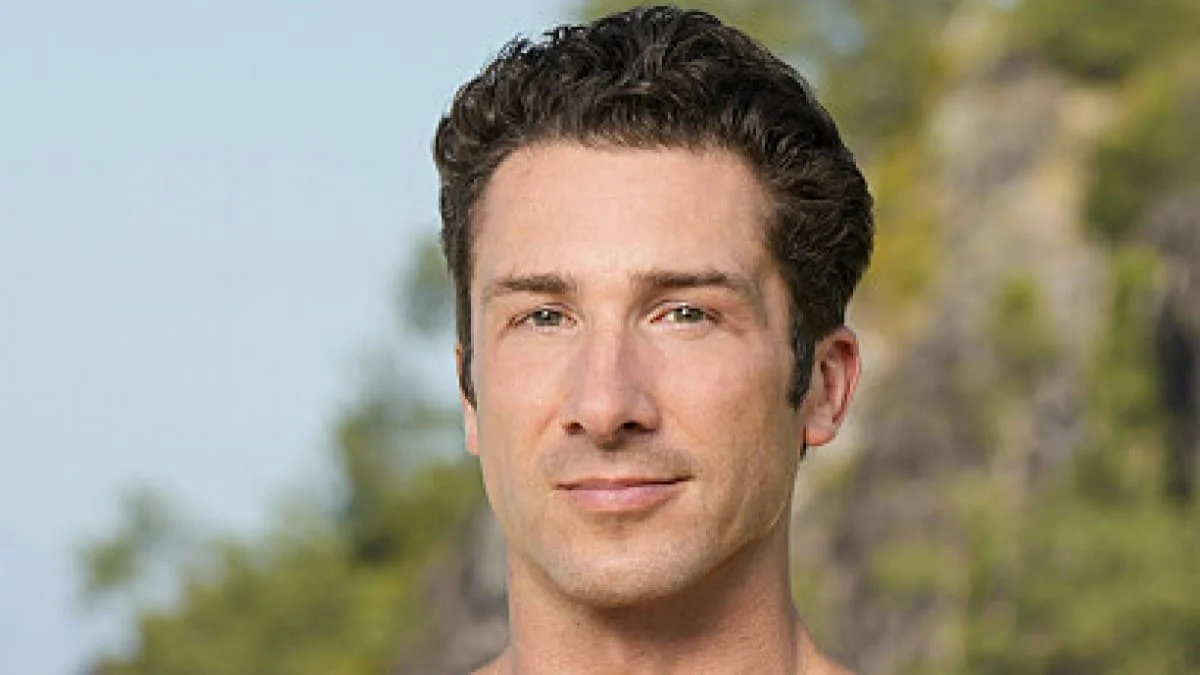
The current landscape of reality television is often defined by the tension between authentic human emotion and the curated personas required for strategic dominance. In the forty-eighth season of the CBS flagship series Survivor, few contestants have personified this tension as vividly as David Kinne. Following his elimination in the ninth episode of the season, Kinne’s departure has sparked a wider conversation regarding the "New Era" casting philosophy, the nuances of the "edit," and the enduring influence of franchise legends.
Jeff Probst, the long-standing host and executive producer of Survivor, recently dedicated significant airtime on his On Fire podcast to dissecting Kinne’s impact on the game. As the dust settles on Kinne’s ninth-place finish, the intersection of production insights, player allegations, and the show’s future trajectory provides a comprehensive look at how a single castaway can shift the gravity of a season.
Main Facts: The Exit of the Ninth-Place Finisher
David Kinne’s journey on Survivor 48 concluded during a high-stakes Tribal Council in Episode 9, where he was blindsided by a shifting alliance, effectively making him the third member of the season’s jury. While his exit was a tactical necessity for his competitors, it represented a significant loss for the show’s narrative momentum. Kinne, known for his vocal confidence and emotional transparency, had become a central figure in the season’s storytelling.
Following his elimination, Kinne has been vocal about his experience, participating in various exit interviews and social media discussions. His commentary has not been without controversy. Most notably, Kinne has leveled allegations against fellow contestant Joe Hunter, claiming that Hunter’s behavior in Fiji bordered on bullying—a claim that has ignited debates within the Survivor fan community regarding the fine line between psychological gameplay and personal misconduct. Furthermore, Kinne has suggested that the broadcasted episodes omitted "important footage" that would have provided a more nuanced view of the tribe’s internal dynamics and his own strategic maneuvers.
Despite these tensions, the official production stance remains one of admiration for Kinne’s contribution to the series. On the On Fire podcast, Probst characterized Kinne as a "blast" to work with, emphasizing that his presence was a boon for the production team from the very beginning.
Chronology: From Casting Zoom to the Ponderosa
The narrative of David Kinne did not begin on the beaches of Fiji but in the digital boardrooms of CBS during the casting process. According to Probst, Kinne made an immediate impression during the initial Zoom sessions conducted between the producers, the CBS executive "brass," and the potential castaways.
- Pre-Production (Casting): Kinne was identified early as a high-potential character. Producers noted a rare blend of "sensitivity" and "earnest boastfulness." It was during these sessions that Kinne famously predicted he would win every individual immunity challenge and set a new franchise record with six wins.
- Early Game (Days 1–12): Kinne entered the game with a target often associated with high-energy players. However, his ability to articulate his emotions helped him form early bonds, even as his "boastful" nature occasionally rubbed tribemates the wrong way.
- The Merge and Mid-Game (Days 13–18): As the tribes merged, Kinne’s profile grew. His role in strategic discussions became more prominent, but so did his visibility as a threat. The friction with Joe Hunter began to surface in the subtext of the episodes, leading to the eventual "bullying" allegations post-game.
- The Blindside (Episode 9): The culmination of Kinne’s journey occurred when his alliance fractured. Despite his pre-game bravado regarding challenge dominance, the social politics of the camp proved insurmountable, leading to his vote-out.
- The Jury Phase: Transitioning to Ponderosa (the jury villa), Kinne now holds a pivotal role in determining the ultimate winner of Survivor 48, a position that allows him to observe the remaining players without the pressure of active survival.
Supporting Data: The "Coach-esque" Archetype and Statistical Reality
To understand why David Kinne resonated so strongly with production, one must look at the history of Survivor archetypes. During the On Fire podcast, Probst revealed that fellow producer Matt Van Wagenen saw "Coach-esque" qualities in Kinne.
This comparison refers to Benjamin "Coach" Wade, a legendary three-time player and runner-up of Survivor: South Pacific. Coach was famous for his grandiloquent storytelling, self-bestowed titles (The Dragon Slayer), and a rigid, often hyperbolic moral code. By categorizing Kinne as "Coach-esque," production signaled that they viewed him as a "character" player—someone whose personality is so large that it transcends mere strategy and becomes part of the show’s mythology.
However, the data suggests a discrepancy between Kinne’s self-perception and the game’s reality:
- Challenge Performance: While Kinne predicted a record-breaking six individual immunity wins, he exited the game before he could approach that milestone. This "earnest boastfulness" is a hallmark of the archetype, where the player’s confidence outpaces their statistical output, creating a tragicomic narrative arc that viewers find compelling.
- The "Edit" Gap: Kinne’s claim that "important footage" was left out is a common refrain among eliminated contestants. In a standard 90-minute episode (roughly 62 minutes of actual content), producers must distill three days (72 hours) of 24/7 footage from multiple camera crews. Statistically, less than 2% of the actual lived experience in Fiji makes it to the screen.
Official Responses: Probst and the Production Perspective
Jeff Probst’s reflections on the On Fire podcast serve as the official "post-mortem" on Kinne’s gameplay. Probst’s tone was overwhelmingly positive, suggesting that even if Kinne was a polarizing figure for the audience or his tribemates, he was a "dream" for the editors.
"David was a blast. He gave so much to the show," Probst stated. "I liked him out of the gate." This sentiment was echoed by the CBS executives, who reportedly "loved" Kinne during the final casting rounds. The production team specifically highlighted the phrase "boastful but done with earnest" as the defining characteristic that secured his spot on the roster.
Probst further elaborated that Kinne was "meant for Survivor," a compliment reserved for players who fully lean into the experience, regardless of the physical or emotional toll. By acknowledging Kinne’s sensitivity, Probst humanized a player who could have easily been dismissed as a mere "villain" or "egoist." This nuanced view from the show’s leadership suggests that the "New Era" of Survivor prioritizes multi-dimensional personalities over one-dimensional tropes.
Regarding the allegations against Joe Hunter, the production has remained more guarded, typically allowing the on-screen narrative and the players’ own social media accounts to serve as the primary record of interpersonal conflict, unless such behavior violates the show’s code of conduct.
Implications: The Future of the Franchise
The saga of David Kinne has broader implications for the upcoming milestones of the Survivor franchise. As Survivor 49 begins filming in the Mamanuca Islands and the landmark Survivor 50 looms on the horizon, the "Kinne Model" of casting—prioritizing high-energy, self-aware, and emotionally volatile individuals—appears to be the blueprint.
1. The Jury’s Influence
As a member of the Survivor 48 jury, Kinne’s "sensitive" nature may play a significant role in the final vote. If he feels betrayed by certain players or bullied by others, his advocacy at Ponderosa could sway the $1 million decision. His presence ensures that the Final Tribal Council will be an emotionally charged affair.
2. The Road to Survivor 50
With Survivor 50 confirmed to be a "Returning Players" season, Kinne’s name is already being circulated in fan circles and by analysts. His "Coach-esque" qualities make him a prime candidate for a "Second Chance" narrative. History has shown that players who are "meant for Survivor" often return to refine their legacy.
3. Reality TV Crossovers
The mention of The Traitors 4 "dream cast" highlights a new career path for standout Survivor alumni. Kinne’s boisterous personality and penchant for drama would make him a natural fit for the psychological warfare of the Scottish Highlands, alongside other legends from Big Brother and The Bachelor.
4. The Evolution of the "Edit"
Kinne’s public critique of the show’s editing reinforces a growing trend of "New Era" players demanding more transparency. As the audience becomes more sophisticated in understanding how reality TV is constructed, CBS may face increasing pressure to show more of the "raw" footage that Kinne claims was missing, perhaps through expanded digital exclusives or Paramount+ "deleted scenes."
In conclusion, David Kinne’s exit from Survivor 48 is not an end, but a transition. From his "boastful" pre-game predictions to his current role as a vocal critic and jury member, he remains a testament to the show’s ability to find individuals who are as complex as the game itself. Whether he is remembered as a misunderstood strategist, a sensitive soul, or a "Coach-esque" entertainer, his impact on Season 48 is indelible. As Jeff Probst noted, the game was better for having him in it.









No comments yet. Be the first to join the conversation!