Azzam Bilal Chamdy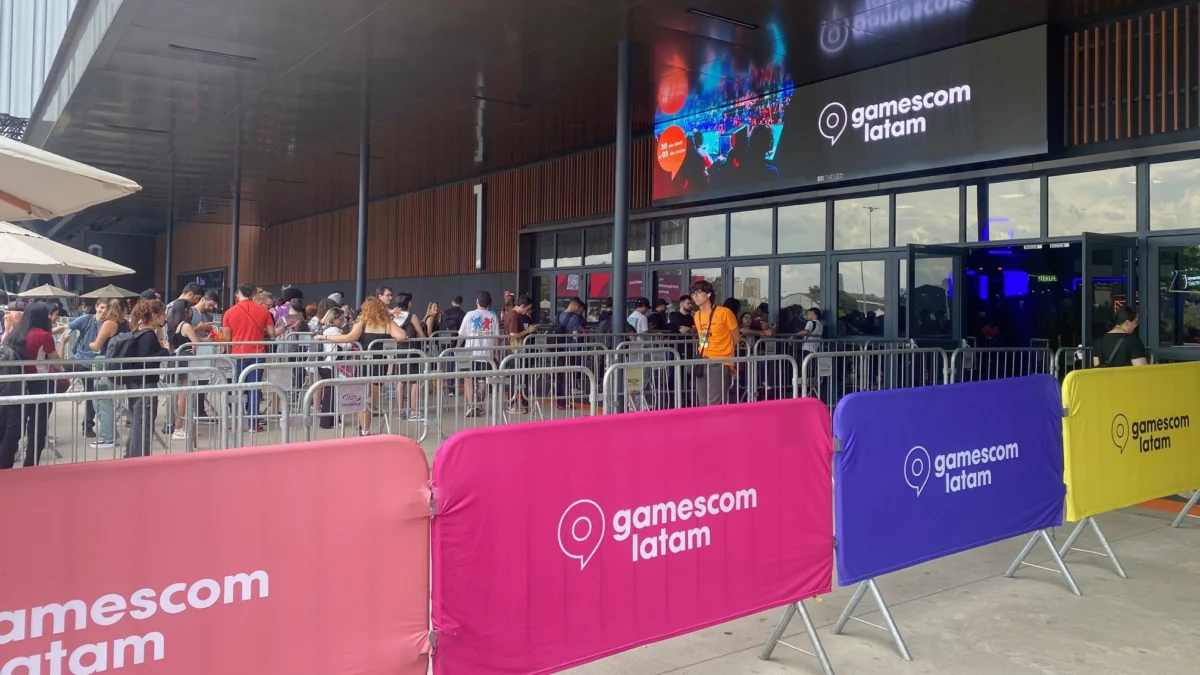
The third iteration of Gamescom Latam has officially cemented its status as the heartbeat of the Latin American video game industry. Held at the sprawling Distrito Anhembi in São Paulo from April 29 to May 3, 2026, the event served as a definitive showcase of Brazil’s maturation from a localized market to a formidable player on the international stage. With record-breaking attendance, a massive surge in business-to-business (B2B) activity, and a spotlight on both local talent and global partnerships, the event has sent a clear message to the world: the Global South is ready for investment.
Record-Breaking Growth and Industry Momentum
The trajectory of Gamescom Latam is nothing short of exponential. This year, the event drew a staggering 154,000 visitors, marking a 17.5% increase over the 2025 figures. This sustained momentum follows a 30% year-on-year growth rate from the inaugural 2024 event, which saw 130,000 attendees.
The physical scale of the event matched its attendance numbers. Across the five-day exhibition, attendees navigated over 400 unique gaming experiences. The floor was energized by more than 60 high-profile new releases and previews, including the highly anticipated Lego Batman: Legacy of the Dark Knight, Invincible VS, and the visually striking Phantom Blade Zero. With 175 exhibitors hailing from 23 countries and a roster of 500 speakers—ranging from legendary industry figures like PUBG creator Brendan Greene and former Rare composer David Wise to Remedy Entertainment’s creative force Mikael Kasurinen—the event functioned as a true global summit.
.jpeg?width=570&quality=85&format=jpg&dpr=3)
A Chronology of Success: From Concept to Global Hub
To understand the current state of the Brazilian gaming scene, one must look at the rapid evolution of the ecosystem over the last three years.
- 2024 (The Inception): The launch of Gamescom Latam provided the first truly global-standard platform for Brazilian developers. It proved that there was a massive, untapped consumer appetite in Brazil and provided a focal point for the fragmented local industry.
- 2025 (The Expansion): The second year solidified the event’s reputation, with a 30% growth in attendance. It was during this year that international publishers began to view Brazil not just as a consumer market, but as a potential production partner.
- 2026 (The Maturity): The third year saw a shift from mere attendance to deep, structural business integration. The B2B sector experienced a meteoric rise, with 1,100 companies from 59 countries participating in over 13,000 business meetings. This activity resulted in an estimated $180 million in new business, proving that the event is a high-yield investment vehicle.
Supporting Data: The Economic Landscape
The data emerging from the BIG Festival Awards—a cornerstone of the event—further illustrates the depth of local talent. This year, the awards received 960 game submissions from 75 countries. Notably, 451 of those submissions originated from Brazil, underscoring the sheer volume of production currently underway in the country. Out of 81 finalists across 18 categories, the top honor of "Best Game" was awarded to Clair Obscur: Expedition 33, a testament to the creative ambition of Brazilian studios.
Beyond the awards, the labor statistics paint a picture of a sector that has reached critical mass. Brazil is now home to over 1,000 game development studios, employing approximately 13,000 professionals. This workforce density is comparable to the established industry in France, signaling that Brazil has moved well beyond the "emerging market" phase and is now a top-tier contender in the global development landscape.
.jpeg)
Official Perspectives: Abragames and Brasil Games
GamesIndustry.biz had the opportunity to sit down with key leaders shaping the future of the nation’s industry: Rodrigo Terra, head of the Brazilian game developers’ association (Abragames), and Patricia Sato, executive manager for the Brasil Games export program.
The Outsourcing Paradox and the Pivot to IP
Rodrigo Terra highlights the tactical journey many Brazilian studios take. "When you start small here, you can’t necessarily choose if you’re going to develop your own IP," Terra explains. "Compared to European countries or other regions, we have fewer opportunities for public funds or support. So you need to do things that give you revenue in the short term—outsourcing and external development—and then plan your long term. IP development is the long-term goal that every studio here wants to achieve."
The "Ready-to-Scale" Advantage
Patricia Sato emphasizes that the global pandemic served as a catalyst for Brazil’s entry into the international outsourcing market. "We are always cited as one of the main territories to invest in for external development," she notes. "When major global companies found themselves unable to complete projects due to staffing shortages, Brazil was ready to embrace the demand. We have the talent, the capacity, and the scale to handle major contributions to AAA titles."
.jpeg)
Terra adds that while Brazil may not compete with the ultra-low costs of some Asian markets, its price-to-quality ratio is highly competitive against the United States, the UK, and France. "We are no longer just doing the grunt work," Terra says. "We are seeing entire projects being entrusted to our studios. International players like PlayStation, Xbox, and Nintendo are here, and they aren’t just buying services anymore; they are actively hunting for new, original intellectual property."
Strategic Implications: The Call for Capital
The consensus among industry leaders at Gamescom Latam is that the infrastructure is ready; the only missing component is a more robust financial engine.
Eliana Russi, partner at Gamescom Latam and head of B2B, has been vocal about the need for fiscal support. "Brazil is already the leading hub for the games industry in the Global South," she stated. "We have the associations, we have the creative hubs, and we have the events. All we need now is for investors to show us the money."
.jpeg)
The Road Ahead: Tax Incentives and Lobbying
The primary focus for Abragames is now legislative. The association is currently lobbying for a 12% rebate on employee taxes, a move they argue would make Brazil an even more attractive destination for international studios looking to establish satellite offices. By building on the existing framework of the Rouanet Law—which already supports arts and culture—the industry hopes to create a sustainable pipeline of capital.
As Gamescom Latam 2026 concludes, the implications for the global industry are clear. Brazil has transitioned from an observational market to a participant that holds the keys to both cost-effective development and fresh, creative IP. For international investors, the message is simple: the groundwork has been laid, the talent is in place, and the market is waiting for the spark of global capital to ignite the next great era of Brazilian game development.


 Dwi Wanna
 Sagoh
Sagoh