Ammar Sabilarrohman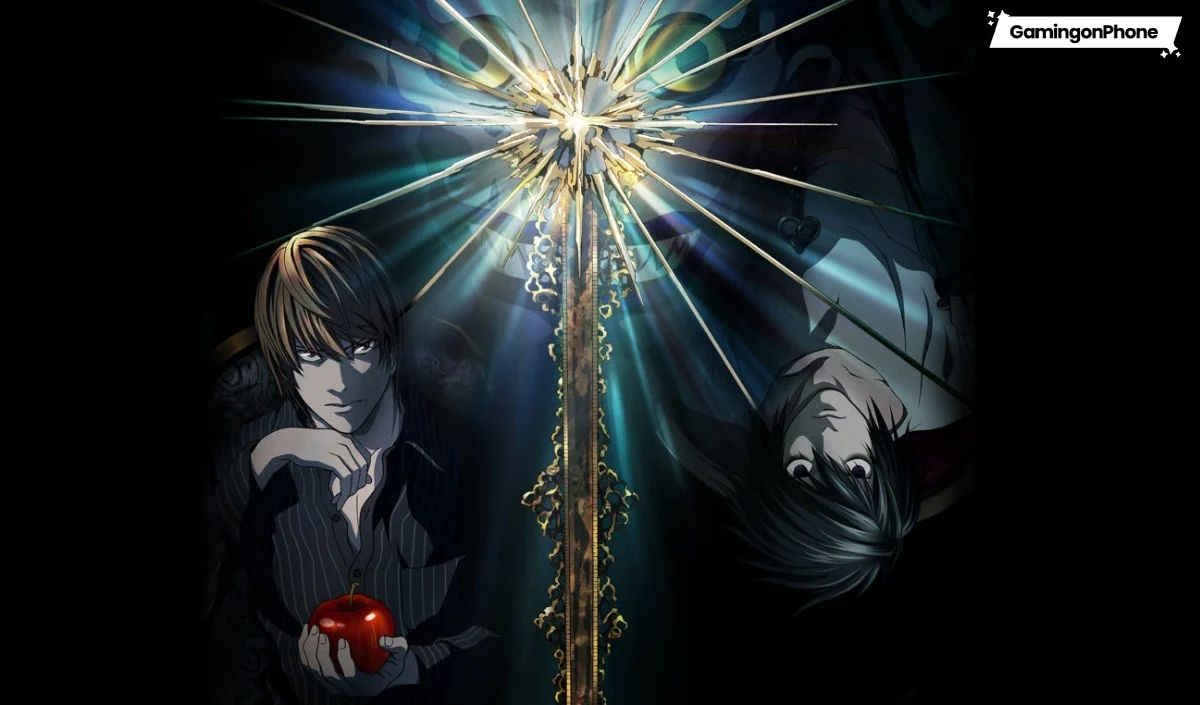
Main Facts:
- Death Note, the iconic psychological supernatural thriller by Tsugumi Ohba, is widely considered ripe for a high-quality mobile game adaptation.
- Despite its immense global popularity and critical acclaim since its manga debut in 2003, a definitive interactive experience that truly captures its essence remains elusive.
- This article explores the compelling reasons why a story-driven RPG, integrating strategic investigation and choice-based mechanics with dark, semi-realistic visuals, would be an ideal fit for the mobile platform, offering an immersive experience for its vast fanbase.
Chronology:
From its initial serialization to its global phenomenon status, Death Note‘s journey has been marked by unparalleled intellectual depth and moral ambiguity. The evolution of mobile gaming now presents a unique opportunity to translate this complex narrative into an interactive format that was previously unimaginable.
For nearly two decades, the name Death Note has resonated through the halls of pop culture, a testament to its profound impact on anime, manga, and psychological thrillers worldwide. Created by the legendary duo Tsugumi Ohba and Takeshi Obata, this series, which first graced manga pages in 2003, swiftly transcended its medium, captivating audiences with its intricate mind games, relentless battles of intelligence, and profound ethical dilemmas. Yet, despite its enduring legacy and massive global fanbase, a truly fitting mobile game adaptation remains conspicuously absent. This piece argues that Death Note is not just deserving, but urgently requires a mobile game that honors its intellectual gravity and narrative depth, leveraging the sophisticated capabilities of modern mobile platforms.
This exploration is part of GamingonPhone’s "Mobile Games We Wish Existed" column, a dedicated space where we envision innovative game concepts and delve into how beloved intellectual properties could be reimagined for mobile. From celebrated franchises to hidden gems, we dissect the elements that could transform these dream games into compelling, playable realities for on-the-go entertainment.
The Enduring Legacy of Tsugumi Ohba’s Death Note
Death Note‘s influence cannot be overstated. It carved a unique niche in the crowded landscape of supernatural thrillers by foregoing flashy action in favor of cerebral combat. The series’ core premise, combined with its unforgettable characters, has cemented its place as a masterpiece of modern storytelling.
A Phenomenon Beyond Manga: The Genesis of a Global Sensation
The manga’s initial release in December 2003 in Weekly Shōnen Jump quickly established it as a critical and commercial darling. Its success led to a 37-episode anime adaptation in 2006, live-action films, a television drama, and even a musical, each expanding its reach and solidifying its iconic status. What truly set Death Note apart was its ability to attract audiences far beyond the typical anime and manga demographic. Its exploration of justice, morality, and the corrupting influence of power resonated universally, sparking philosophical debates and captivating minds with its relentless tension. The sheer volume of merchandise, fan art, and critical essays dedicated to the series underscores its profound cultural footprint.
Synopsis for the Uninitiated: A Dance with Death and Destiny
At its heart, Death Note is a psychological thriller infused with supernatural elements, chronicling the descent of Light Yagami, a brilliant but disillusioned high school student. His life takes a drastic turn when he discovers a mysterious notebook—the "Death Note"—dropped into the human world by a bored Shinigami (god of death) named Ryuk. This isn’t just any notebook; it grants its user the power to kill anyone whose name is written within its pages, provided the user knows their face and full name.
Initially, Light, adopting the moniker "Kira" (a Japanese pronunciation of "killer"), uses the Death Note to rid the world of criminals, envisioning himself as the god of a new, purified world. However, his self-righteous crusade soon morphs into a full-blown god complex, setting him on a collision course with L, an eccentric but equally brilliant detective determined to unmask Kira. The series then unfolds as an elaborate, high-stakes game of cat and mouse, where every move, every deduction, and every deception could mean the difference between life and death, justice and tyranny.

The genius of Death Note lies in its ability to maintain relentless suspense through purely intellectual warfare. The psychological back-and-forth between Light and L, later joined by other formidable intellects like Near and Mello, kept viewers on the edge of their seats, proving that intricate plotting and character development could be far more thrilling than any physical confrontation. It’s this unique blend of supernatural power and human intellect that makes Death Note an unparalleled narrative experience.
The Untapped Potential: Why Mobile Gaming is the Perfect Canvas
While Death Note has seen various adaptations, its foray into the gaming world has been surprisingly limited and, in some cases, underwhelming. The mobile platform, with its expansive reach and evolving capabilities, offers an unprecedented opportunity to rectify this.
A Gap in the Market: The Absence of a Definitive Adaptation
Past attempts at Death Note games, such as DEATH NOTE: Killer Within, an online social deduction game available on PC, have touched upon certain aspects of the series but often failed to capture its full scope or deliver a truly immersive experience. While social deduction elements could certainly play a role, the profound narrative and character depth of Death Note demand a more comprehensive and nuanced approach for a mobile game. The existing adaptations often distill the complex psychological battle into simplified mechanics, missing the opportunity to truly engage players in the intricate web of deceit and deduction that defines the series.
Mobile’s Evolving Landscape: A New Frontier for Narrative Gaming
The mobile gaming industry has matured significantly. Gone are the days when mobile was solely associated with casual, simplistic games. Modern smartphones boast impressive processing power, high-resolution displays, and sophisticated touch interfaces, capable of supporting rich narratives, complex strategic gameplay, and stunning visuals. Titles like Genshin Impact, Honkai: Star Rail, and narrative-driven experiences akin to Telltale Games have demonstrated that mobile players are eager for deep, engaging, and graphically impressive experiences. This evolution makes the mobile platform not just a viable, but an ideal canvas for Death Note‘s intricate storytelling and strategic depth. The ubiquity of mobile devices also means a Death Note game could reach its vast global fanbase directly, allowing for quick, immersive sessions on the go.
Envisioning the Ideal Death Note Mobile Experience: Genre and Mechanics
For a Death Note mobile game to truly succeed, it must move beyond superficial adaptations and embrace a genre that allows for profound player engagement with the series’ core themes. A story-driven RPG that blends strategic investigation with choice-based mechanics emerges as the most promising blueprint.
Beyond Social Deduction: A Deep Dive into RPG and Strategic Investigation
Imagine a game where players are thrust into the shoes of key characters, making decisions that genuinely alter the course of events, mirroring the high-stakes chess match between Light and L.
-
Player Role & Perspective: The game could offer multiple playable perspectives.
- As L (or a new detective): Players would embark on a meticulous investigative journey. This would involve gathering clues from crime scenes, analyzing evidence, cross-referencing information, conducting interrogations, and developing psychological profiles of suspects. Each piece of evidence could unlock new dialogue options or investigative paths. The challenge would lie in piecing together fragmented information under immense pressure, making logical deductions, and identifying contradictions in testimonies.
- As Light (Kira): This path would offer a thrilling, morally ambiguous experience focused on deception and manipulation. Players would manage their use of the Death Note, carefully selecting targets, orchestrating deaths to mislead investigators, and manipulating public opinion through media. The gameplay would revolve around strategic planning, anticipating L’s moves, and maintaining a facade of innocence while secretly orchestrating a global cleansing. This perspective would require delicate handling to avoid glorifying Kira’s actions, perhaps by emphasizing the psychological toll and the constant fear of exposure.
- A New Character: Introducing an original character, perhaps an FBI agent or a member of L’s task force, could offer a fresh perspective on the events of the series, allowing for unique interactions and unforeseen plot twists without directly altering the established canon.
-
Investigation Loop: The core gameplay loop would involve:

- Clue Gathering: Exploring environments (digital recreations of Tokyo streets, police headquarters, Light’s home), interacting with objects, and discovering hidden information.
- Data Analysis: A robust in-game database where players can categorize, link, and analyze suspects, victims, and evidence, revealing patterns and inconsistencies.
- Interrogation Mechanics: Dialogue choices during interrogations that influence a suspect’s trust level, revealing new information or leading to dead ends. Psychological profiling could play a role here, allowing players to tailor their approach based on character traits.
- Logic Puzzles: Mini-games or sequences requiring players to solve complex logical puzzles, decode ciphers, or break down alibis, mirroring the intellectual challenges faced by the characters.
-
Choice and Consequence: The defining feature would be a branching narrative where every significant decision has tangible consequences. This means:
- Multiple Endings: The player’s choices could lead to various outcomes, including different resolutions to the Kira case, the survival or demise of key characters, or even alternative power dynamics in the new world.
- Reputation System: Decisions could affect the player character’s reputation within the task force or with the public, influencing how NPCs react and what opportunities become available.
- Ethical Dilemmas: The game should frequently present players with moral quandaries, forcing them to confront the same ethical questions that underpin the Death Note narrative.
-
Strategic Mind Battles: The iconic confrontations between Light and L could be translated into intense, turn-based "mind battles" or deduction sequences. Players would present evidence, challenge opponents’ statements, and use logic to outmaneuver their adversaries. Success would depend on careful preparation, understanding character psychology, and anticipating counter-arguments.
The Allure of Asynchronous Multiplayer: Kira vs. Detectives
While avoiding a purely social deduction game, a sophisticated asynchronous multiplayer mode could offer incredible depth. Imagine a dynamic online environment where:
- One player assumes the role of Kira: Their objective is to eliminate targets and evade detection, using cunning and misdirection. They might have a limited number of Death Note uses per game session or specific conditions they must meet for kills to be successful.
- A team of other players acts as detectives: Collaborating to gather clues, analyze public data, track Kira’s movements, and ultimately identify the Kira player. Each detective could have unique skills—e.g., a profiler, a forensic expert, a hacker—encouraging teamwork and diverse strategies.
- Hidden Information: Players would operate with incomplete information, mirroring the series’ tension. Kira’s identity would be a secret, and detectives would have to work together to deduce it from fragmented clues.
- Time Limits and Rounds: Matches could be structured into "days" or "weeks," with each round representing a period of investigation and Kira’s actions. The game could feature leaderboards for both Kiras (most successful eliminations/evasions) and Detectives (most successful captures). This asymmetrical multiplayer could draw inspiration from successful titles like Dead by Daylight or even Among Us in terms of player roles, but with a significantly more cerebral and narrative-driven approach.
Crafting the Aesthetic: Art Style, Visuals, and Atmosphere
The visual presentation of a Death Note mobile game is paramount to capturing its unique tone. It requires a deliberate choice that enhances the psychological thriller aspect rather than detracting from it.
Embracing the Gritty Reality: Dark and Semi-Realistic Visuals
Instead of the often-seen vibrant, stylized, or chibi art styles prevalent in many anime-to-game adaptations (like the new The God Of Highschool Change game), a Death Note mobile game would benefit immensely from dark and semi-realistic visuals. This choice would immediately set a serious, mature tone, aligning with the manga’s intense themes. The character models should reflect the distinctive designs of Obata-sensei, maintaining their sharp features and expressive faces, avoiding any cartoonish simplification. This grounded aesthetic would make the supernatural elements, like Ryuk’s appearance, even more striking and unsettling.
Environmental Storytelling: Setting the Mood
The atmosphere is a silent narrator in Death Note. The game’s environments should meticulously recreate this mood:
- Rainy Cityscapes: Picture navigating dimly lit, rain-slicked Tokyo streets, the city lights reflecting eerily on wet surfaces, symbolizing the pervasive moral murkiness.
- Dim Interrogation Rooms: The stark, claustrophobic environment of an interrogation room, with harsh lighting casting long shadows, would heighten the tension during critical dialogue sequences.
- Subtle Visual Cues: The use of specific color palettes—cool blues and grays for investigative moments, contrasting with sudden flashes of red for moments of tension or Death Note activation—could subtly guide player emotions.
UI and Presentation Inspired by Persona 5: The Phantom X
The sleek, stylish, yet non-quirky user interface and presentation of games like Persona 5: The Phantom X offer an excellent blueprint for a dialogue-heavy Death Note RPG. Imagine elegant menus, dynamic character portraits during conversations, and impactful, yet minimalist, visual effects during key deductions or plot revelations. The UI should be intuitive and visually engaging without being distracting, allowing players to focus on the narrative and strategic elements. This aesthetic would complement the serious tone, making information digestible and interactions feel impactful. High graphic quality is important, but a cohesive and immersive atmosphere is what will truly elevate the player experience.
Iconic Characters: More Than Just Playable Avatars
The heart of Death Note lies in its compelling cast of characters. A mobile game must leverage this strength, allowing players to not only interact with them but, ideally, embody them, each offering a distinct gameplay experience.

Diverse Gameplay Roles: Unlocking Unique Abilities
- Light Yagami: Playing as Light would involve intricate deception mechanics. Players might manage a "suspicion meter," carefully choosing who to kill, how to kill them (heart attack, accident), and when to kill them to avoid drawing suspicion. His gameplay would revolve around resource management (Death Note pages, time), psychological manipulation of others, and quick thinking to counter L’s moves.
- L: As L, gameplay would focus on pure deduction. Players would analyze forensic reports, scrutinize suspect timelines, track digital footprints, and conduct surveillance. L’s unique deductive style could be represented by a "logic tree" system, where connecting disparate clues leads to breakthroughs. His ability to think multiple steps ahead could be simulated through predictive analytics mini-games.
- Misa Amane: Misa’s gameplay could be fascinating. Her Shinigami Eyes (allowing her to see people’s names and lifespans) would be a powerful, yet costly, ability (halving her lifespan). Players would manage this trade-off, using her celebrity status to gather information or manipulate the media, offering a unique blend of investigation and social influence.
- Near and Mello: The rivalry and distinct methods of Near and Mello could be explored through separate campaign paths or even a cooperative mode. Near’s methodical, puzzle-solving approach could involve assembling complex scenarios and hypotheses, while Mello’s more aggressive, underworld-driven investigations would involve daring raids and direct confrontations.
- Ryuk: While not a primary protagonist, Ryuk could serve as an interactive narrator or a source of cryptic hints (or temptations) in a single-player mode, offering his cynical commentary on the unfolding human drama. In a multiplayer scenario, a Ryuk-like entity could introduce unpredictable events or challenges.
Deep Character Arcs and Interactions: Reliving the Drama
Beyond their unique abilities, the game could delve into the characters’ personal struggles and complex relationships. Side quests could explore Misa’s devotion to Light, Light’s internal monologue as his morality erodes, or L’s isolated genius. Dynamic dialogue systems could allow players to forge alliances, betray trust, and navigate the intricate web of personal motivations that drive the Death Note narrative. Imagine close-up shots during tense conversations, capturing the subtle shifts in expression that convey unspoken thoughts, a hallmark of the anime.
Market Viability and Fan Engagement
The potential success of a Death Note mobile game is not merely speculative; it is grounded in concrete market realities and the franchise’s robust global presence.
Global Fanbase as a Catalyst: A Pre-Built Audience
Death Note boasts one of the most dedicated and widespread fanbases in anime history. Millions worldwide have followed Light’s tragic journey and L’s relentless pursuit across various media. This pre-existing audience represents a massive, engaged market segment eager for authentic and high-quality interactive experiences based on their beloved series. A well-executed mobile game would not need to build its audience from scratch but would instead tap into a ready-made community passionate about the lore, characters, and intricate plot. The sheer anticipation for such a title would generate significant buzz even before launch.
Monetization and Longevity: A Sustainable Model
A Death Note mobile game, particularly one with RPG and strategic elements, offers multiple avenues for sustainable monetization without resorting to predatory tactics.
- Story Expansions (DLC): New cases, alternate timelines, or character-specific story arcs could be released as paid DLC, extending the game’s lifespan and narrative depth.
- Cosmetic Customization: For playable characters, subtle cosmetic items (e.g., L’s different shirts, Light’s watch, unique Death Note cover designs) could be offered, respecting the dark aesthetic.
- Character Unlocks/Enhancements: If multiple characters are playable, new characters or unique abilities for existing ones could be unlockable through gameplay or premium purchases.
- Battle Pass/Seasonal Content: For multiplayer modes, a battle pass could offer rewards for progression, keeping players engaged with regular content updates.
- Leaderboards and Competitive Play: Ranking systems and competitive seasons for the Kira vs. Detectives mode would encourage sustained engagement and potentially foster an esports scene.
Community Building: Fostering Interaction and Discussion
A Death Note mobile game would naturally foster a vibrant community. In-game events, player-versus-player leaderboards, and integrated social features could encourage interaction. Discussions around strategic choices, favorite endings, and deductions would thrive on forums and social media, creating a self-sustaining ecosystem of engagement that extends beyond the game itself. Regular updates with new cases, challenges, and narrative branches would ensure fans remain hooked for years.
Challenges and Considerations for Developers
While the potential is immense, developing a Death Note mobile game comes with its own set of unique challenges that developers must meticulously address.
Balancing Narrative Fidelity with Gameplay Innovation: The Tightrope Walk
The primary challenge lies in striking the perfect balance between remaining faithful to the original manga and anime’s intricate plot and characterizations, and introducing innovative gameplay mechanics that make it a compelling interactive experience. Deviating too far from the source material risks alienating the dedicated fanbase, while a slavish recreation might lack interactive depth. The game must find ways to allow player agency within the established narrative framework, perhaps through exploring "what-if" scenarios or focusing on untold stories within the Death Note universe.
Ethical Dilemmas and Player Agency: Navigating Moral Ambiguity
Death Note is renowned for its exploration of complex ethical questions surrounding justice, power, and morality. A game where players can embody Kira raises significant ethical considerations. Developers must carefully design gameplay that allows players to engage with these moral dilemmas without glorifying destructive actions. This could involve presenting consequences for Kira’s actions, emphasizing the psychological burden, or offering alternative paths that challenge the player’s own sense of right and wrong. The goal is to make players think about the implications of their choices, not just to enable them to commit virtual acts of violence.

Technical Demands and Mobile Optimization: Performance on Diverse Hardware
Bringing a graphically rich, story-driven RPG with complex AI (for opposing characters) and potentially sophisticated multiplayer elements to mobile devices demands significant technical expertise. Optimizing the game to run smoothly across a wide range of mobile hardware, from high-end flagship phones to more budget-friendly devices, is crucial for maximizing its reach. This includes efficient asset management, scalable graphics settings, and robust network code for multiplayer modes. Ensuring a seamless user experience, free from lag or crashes, will be paramount to its success and critical acclaim.
Conclusion
The case for a high-quality Death Note mobile game is overwhelmingly strong. With its unparalleled narrative depth, iconic characters, and a global fanbase hungry for authentic interactive experiences, Death Note is perfectly positioned for a definitive mobile adaptation. A story-driven RPG that emphasizes strategic investigation, choice-based narratives, dark semi-realistic visuals, and unique character-specific gameplay mechanics could not only captivate existing fans but also introduce new audiences to the intellectual thrill of Tsugumi Ohba’s masterpiece.
The evolution of mobile gaming has paved the way for complex, immersive titles, and Death Note represents an untapped reservoir of storytelling potential waiting to be unleashed on this platform. If developers can navigate the challenges of narrative fidelity, ethical representation, and technical optimization, a Death Note mobile game would not merely be a dream realized; it would be a landmark title, cementing the franchise’s legacy in the interactive entertainment sphere and proving that true battles of wit belong just as much in the palm of our hands as they do on the pages of a manga or the frames of an anime. The time for Death Note to claim its rightful place in the mobile gaming world is now.
Do you agree, or is there a specific genre you want Death Note adapted into? Let us know in the comments below!
For more Mobile Gaming news and updates, join our [WhatsApp Group], [Telegram Group], or [Discord server]. Also, follow us on [Google News], [Instagram], and [Twitter] for quick updates.


 Lina Irawan
 Sagoh
Sagoh