

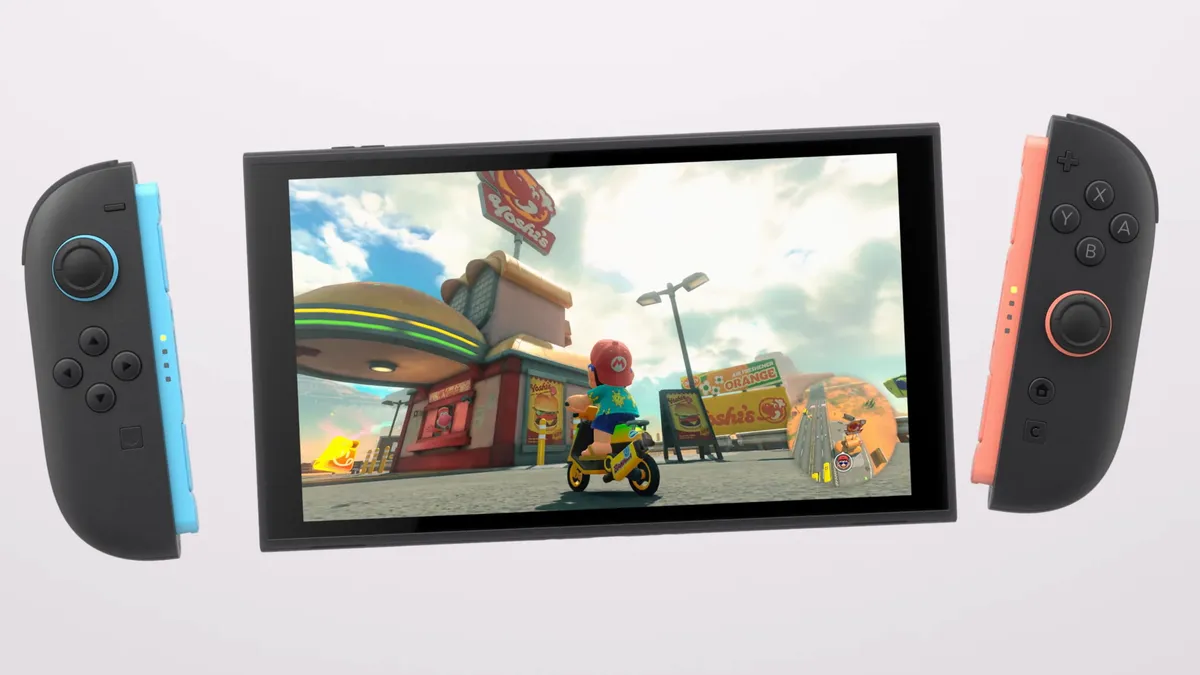
In a move that has sent ripples through the gaming industry, Nintendo has officially confirmed an upward adjustment in the pricing of its next-generation hardware, the Switch 2. Despite a blistering start that saw the console fly off shelves at record-breaking speeds, the company’s leadership has cited a confluence of unavoidable macroeconomic pressures as the primary catalyst for this decision.
As Nintendo pivots from the initial launch euphoria to long-term market sustainability, the shift in pricing policy marks a departure from the company’s traditional philosophy of maintaining consistent, accessible hardware costs. In a detailed explanation provided during a recent earnings call, Nintendo President Shuntaro Furukawa underscored the reality that even gaming giants are not immune to the shifting tides of the global supply chain.
The Catalyst: Why the Price Hike?
For years, Nintendo has championed the "blue ocean" strategy—creating unique hardware experiences that appeal to a broad audience, often prioritizing a wide install base over aggressive hardware margins. However, the current economic climate has forced a strategic pivot.
During the Q&A session following the company’s recent financial results, Furukawa explained that the decision to raise prices was not a reactionary measure to a single event, but a necessary response to long-term structural shifts in the global economy. "If the increase in costs were seen as something temporary that would subside relatively soon, then we could have pursued other options," Furukawa noted. "Unfortunately, the recent surge in memory and other component prices, trends in the foreign exchange market, and the price of oil are all factors that we anticipate will continue over the medium to long term."
This admission highlights the vulnerability of consumer electronics to inflation. With memory chips—the lifeblood of modern gaming consoles—seeing significant cost increases, and the volatile nature of global logistics and energy prices, Nintendo’s operational overhead has ballooned. For a company that typically relies on software sales to drive the bulk of its revenue, the hardware itself can no longer afford to be a loss-leader or a break-even product if those margins threaten the company’s overall health.
A Chronology of Success and Transition
The story of the Switch 2 is, by all metrics, a success story. Launched with the promise of backward compatibility—a feature that arguably smoothed the transition for millions of existing Switch users—the console hit the ground running.
- The Launch Phase: Upon its release last year, the Switch 2 set an aggressive pace. Initial internal forecasts were set at 15 million units. By the time the fiscal dust had settled, the company had not only met that target but shattered it, reaching a total of 19.86 million units sold.
- The Mid-Year Surge: The momentum was maintained through strategic software releases. The launch of the Switch 2-optimized edition of Animal Crossing and the breakout hit Pokémon Pokopia proved to be essential pillars of the console’s early lifecycle. These titles did more than just sell units; they provided the "pull" factor required to convince the massive legacy Switch audience to upgrade.
- The Current Pivot: Now, as the company enters its second year, it is revising its forecasts downward to 16.5 million units. While this might appear as a deceleration, Nintendo leadership maintains that this is a natural leveling-off period consistent with the performance of previous hardware systems.
Supporting Data: The Numbers Behind the Strategy
Nintendo’s financial report paints a picture of a company in a state of robust, yet cautious, expansion. The 19.86 million units sold in the first year represent a high-water mark for the company. Furukawa noted that this performance was "exceptionally high compared to our past hardware launches," a testament to the brand loyalty Nintendo has cultivated over decades.
The strategy, as outlined by the executive board, remains centered on the "install base expansion" model. The goal is to get as many units into homes as possible, then leverage the high "attach rate"—the number of software titles purchased per hardware unit—to generate sustained revenue.
However, the cost-to-profit ratio has shifted. By reflecting a portion of the component cost increases in the final retail price, Nintendo is effectively protecting its R&D and future software development budgets. The company has made it clear: if the hardware cannot sustain its own profitability, it threatens the "healthy earnings structure" required to fund the next generation of masterpieces from franchises like Zelda, Mario, and Pokémon.
Official Responses and Strategic Philosophy
The core of the issue, according to Shuntaro Furukawa, is the preservation of the company’s "dedicated video game platform business." In his words: "We felt that the profitability of our hardware would suffer significantly if we maintained our existing pricing, potentially impacting our business operations over this time frame."
This statement is telling. It suggests that Nintendo is choosing to protect its long-term financial independence rather than sacrificing margins to keep retail prices artificially low. By choosing to absorb only a portion of the costs while passing the rest to the consumer, the company is attempting to find a middle ground—maintaining accessibility without compromising the quality of the ecosystem.
Moreover, the company is preparing for a "flexible" future. Furukawa acknowledged that uncertainty remains, noting that component pricing volatility is likely to persist through the next fiscal year. To counter this, Nintendo is optimizing its supply chain and preparing to adjust its operational tactics as the situation on the ground evolves.
The Implications: What This Means for Gamers
For the average consumer, the news of a price hike is rarely welcome. However, the context provided by Nintendo suggests a few key takeaways for the future of the Switch 2:
1. The End of "Cheap" Hardware?
While the Switch 2 remains a value-driven console compared to the high-end gaming PCs or competing platforms, the era of ultra-affordable, low-margin hardware may be closing. Consumers should expect that the price of entry will continue to reflect the rising costs of semiconductors and global shipping.
2. Software Remains King
Nintendo’s commitment to "carefully conveying the appeal" of upcoming titles suggests that they will rely heavily on their proprietary software library to justify the hardware cost. The company is betting that the quality of games like Pokémon Pokopia is enough to convince users that the value proposition of the hardware remains intact despite the price hike.
3. A Longer Lifecycle
By focusing on the "medium to long term," Nintendo is signaling that the Switch 2 is intended to be a multi-year investment. The company is not looking for a "flash in the pan" success but rather a sustainable platform that can house a growing library of games for years to come.
4. The Transition Period
Nintendo is keenly aware that its audience is currently split between legacy hardware and the new Switch 2. Their strategy of "encouraging people to transition at their own pace" is an attempt to mitigate the friction of the price increase. By ensuring that the software library for the Switch 2 is diverse and high-quality, they hope to make the decision to upgrade a "want" rather than a "need."
Conclusion: A Delicate Balance
Nintendo stands at a crossroads. By acknowledging the economic realities of the modern manufacturing landscape, they are choosing to prioritize the health of their business model over the short-term optics of price stability. While the price increase is a hurdle, the company’s track record—marked by high-quality software and an unmatched ability to build a dedicated install base—suggests they are well-positioned to weather the storm.
As the company moves into the next fiscal year, the focus will be on maintaining momentum. With a pipeline of new titles waiting in the wings and a clear, albeit difficult, financial strategy in place, Nintendo remains committed to its core mission: delivering unique gaming experiences, regardless of the macroeconomic headwinds. Whether this strategy will hold in the long run remains to be seen, but for now, Nintendo is doubling down on its most valuable asset—its brand and the software that defines it.









No comments yet. Be the first to join the conversation!