Pevita Pearce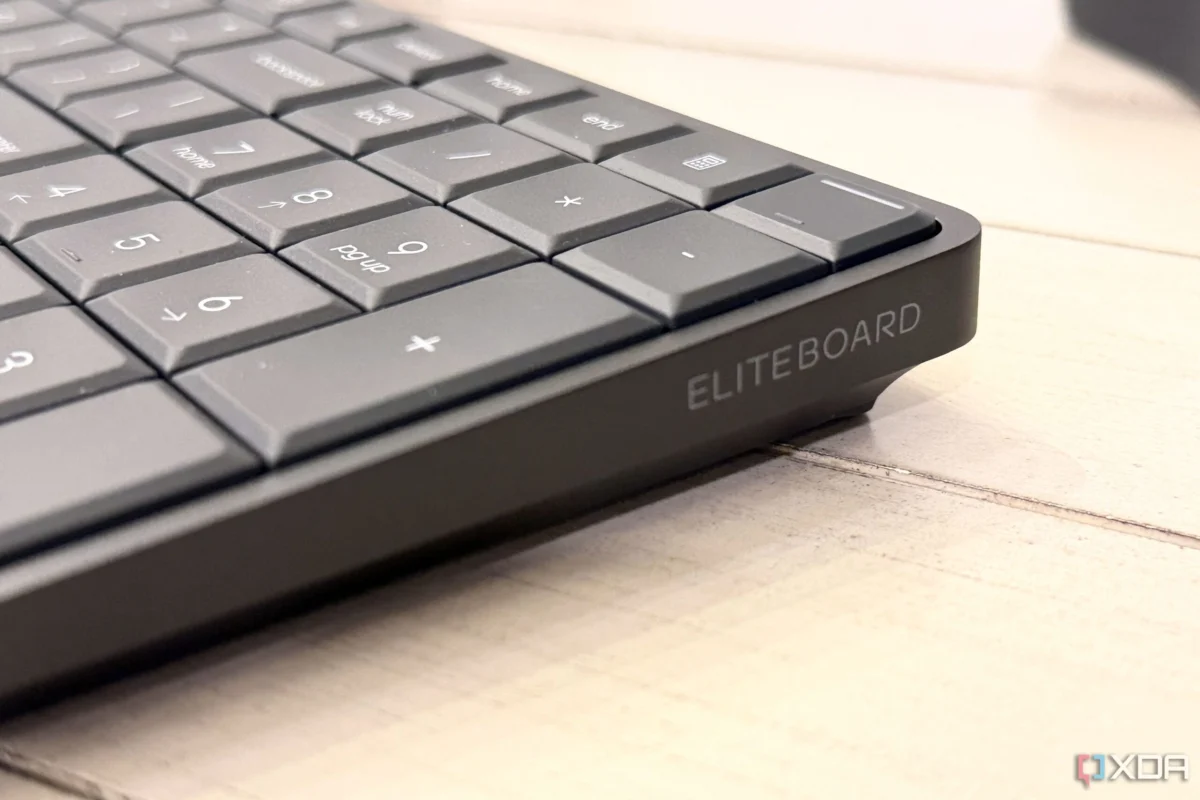
For decades, the concept of a "computer-in-a-keyboard" was relegated to the history books, a nostalgic relic of the 8-bit era defined by machines like the Commodore 64 and the ZX Spectrum. However, in May 2026, HP challenged this decades-old obsolescence with the launch of the HP EliteBoard G1a. This isn’t a retro-styled toy; it is a serious, enterprise-grade computing solution that manages to pack the internals of a high-performance laptop into a sleek, portable chassis. By blending modern AMD Ryzen AI processing power with a form factor that feels lifted straight out of a science fiction novel, HP has created one of the most polarizing and fascinating devices of the year.
Main Facts: What is the HP EliteBoard G1a?
At its core, the EliteBoard G1a is a full-featured PC integrated entirely within a keyboard frame. Unlike traditional Mini PCs, which require a separate footprint on your desk, or laptops, which carry the overhead of a built-in display and battery-heavy chassis, the EliteBoard sits in a unique "third category."
The device is powered by the latest AMD Ryzen AI 300-series APUs, offering a robust balance of thermal efficiency and high-performance computing. With support for up to 64GB of DDR5 SODIMM memory and storage capacities reaching 2TB via Gen 4 PCIe NVMe SSDs, the machine is not just a novelty—it is a workstation.
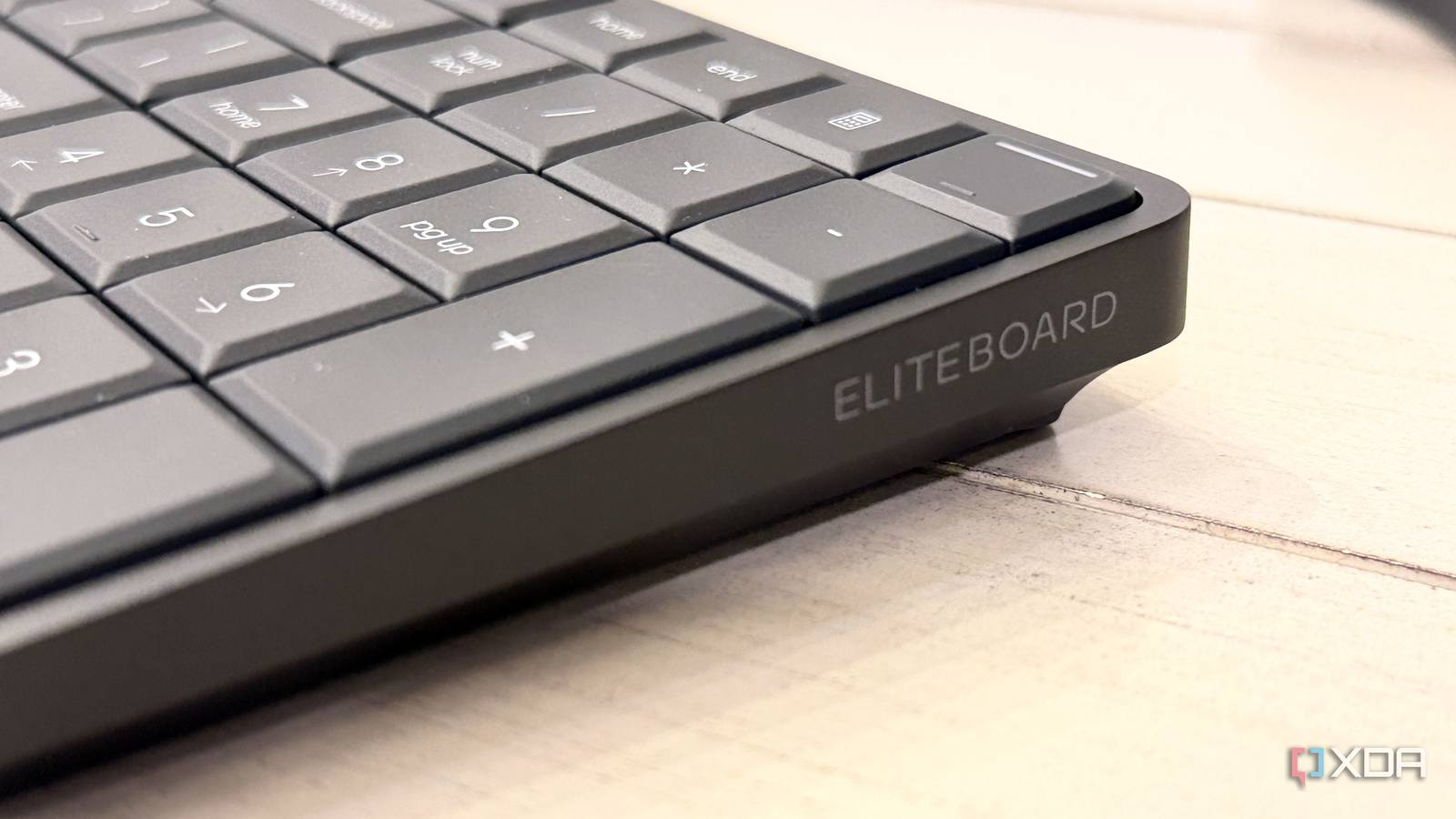
Perhaps most impressive is its connectivity. It utilizes a single-cable USB4 (40 Gbps) interface to handle power, data, and video output simultaneously. For professionals working in hot-desking environments, this allows for a "dock-less" workflow: simply plug one cable into your monitor, and the keyboard becomes your entire computing brain.
A Chronology: From Concept to CES 2026
The journey of the EliteBoard G1a began long before its public unveiling. Internal leaks from HP’s R&D labs in late 2025 hinted at a project focused on "de-cluttering the modern workspace." While most manufacturers were racing to make thinner laptops, HP’s engineering team was exploring how to leverage the extreme efficiency of mobile APUs to eliminate the laptop chassis entirely.
- Q4 2025: Initial prototypes emerge under the codename "Project Deck," aiming to solve the issue of peripheral clutter in corporate environments.
- January 2026: The device makes its official debut at CES 2026. The tech community is initially skeptical, questioning the utility of a keyboard-PC compared to a traditional desktop mini-PC.
- April 2026: Early review units are distributed to select media outlets, demonstrating that the thermal management challenges have been largely mitigated.
- May 17, 2026: The HP EliteBoard G1a officially hits the market with a starting price of $1,549.
Supporting Data and Performance Metrics
To understand the viability of the EliteBoard G1a, we must look at how it performs against its more traditional counterparts. Benchmarking reveals that the G1a is not merely a "lite" version of a computer; it punches well above its weight class.

| Benchmark Test | HP EliteBoard G1a (Ryzen AI 340 PRO) | Lenovo Yoga 7a (Ryzen AI 7 445) | ThinkPad X1 Carbon (Intel Ultra 7) |
|---|---|---|---|
| PCMark 10 | 6,913 | 6,686 | 6,861 |
| Geekbench 6 (Multi) | 10,770 | 10,544 | 8,461 |
| Cinebench 2024 (Multi) | 576 | 502 | 463 |
The data shows that the G1a excels in sustained multi-threaded performance, likely due to the superior airflow afforded by the keyboard’s internal design compared to the cramped confines of a sub-14-inch laptop. However, gaming remains a weakness. With the integrated Radeon 860M graphics, it handles productivity apps with ease but struggles with high-fidelity rendering, confirming its position as a "pro-productivity" tool rather than a gaming rig.
The Design Philosophy: Repairability and Enterprise Focus
HP has leaned heavily into the "Elite" branding. This device is not intended for the average consumer browsing at a local electronics store; it is built for IT procurement managers.
One of the most significant selling points is its serviceability. Unlike modern thin-and-light laptops where components are often soldered to the motherboard, the EliteBoard G1a features a user-removable deck. This allows technicians to easily replace SODIMM RAM modules, upgrade the M.2 SSD, or service the front-facing speakers and cooling fans. In an era of increasing electronic waste, this modular approach is a welcome deviation from industry norms.
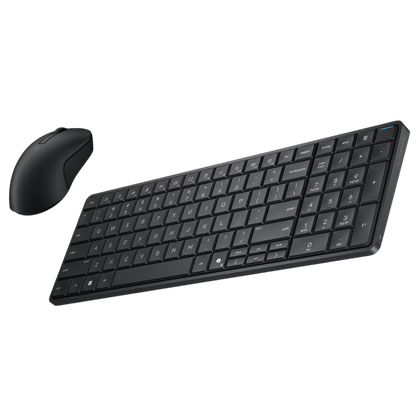
However, there is a catch: the thermals. Under heavy load, the APU consistently hits the 94°C mark. While the heat is expertly managed away from the keys—ensuring the user never feels the burn—the internal fans are audible. For office workers in open-plan environments, this might require the use of noise-canceling headphones during heavy compilation or rendering tasks.
Official Responses and Market Positioning
HP’s official stance on the EliteBoard G1a is that it is the "ultimate solution for the minimalist office." During the product launch, an HP spokesperson stated: "The EliteBoard G1a represents a shift in how we view the workstation. By decoupling the processing power from the screen, we allow the user to define their workspace, whether that’s a 49-inch ultrawide monitor at the office or a pair of AR glasses at home."
The industry reaction has been cautiously optimistic. While critics point to the $1,549 price tag as a barrier, enterprise partners have praised the device for its potential to reduce hardware costs. By not including a screen, battery, or complex hinge mechanisms, HP has theoretically reduced the failure points of the machine, leading to a potentially lower Total Cost of Ownership (TCO) over a three-year refresh cycle.
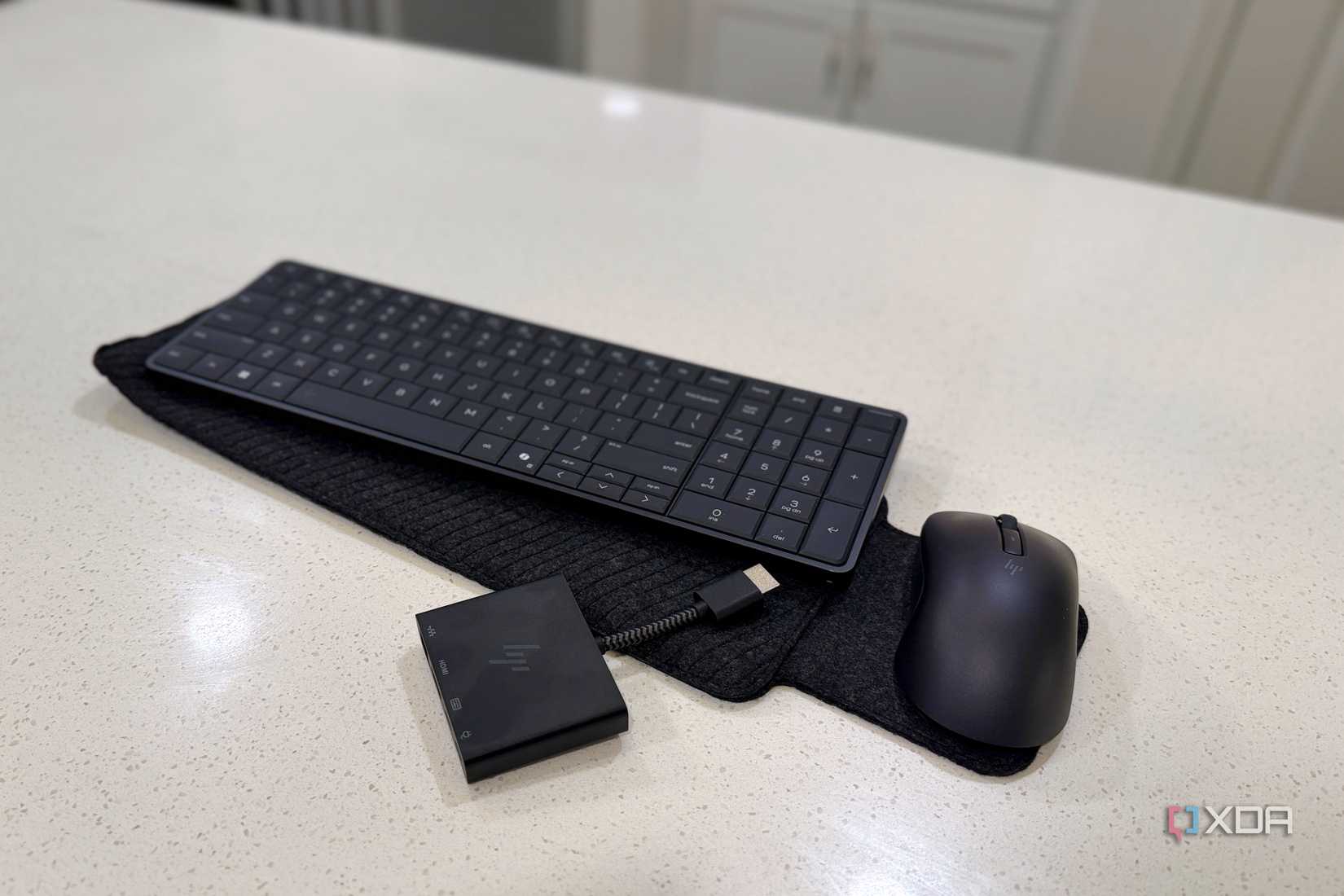
Implications for the Future of Personal Computing
The success or failure of the EliteBoard G1a could signal a massive shift in how we structure our desks. If this form factor gains traction, we may see a resurgence in the "keyboard-first" computing model, where users carry their entire OS and data library in a lightweight peripheral.
The "Decker" Renaissance
For the enthusiast community, the G1a serves as the closest commercial product to a "cyberdeck." While it isn’t the DIY, custom-built, ruggedized unit that fans of the aesthetic might want, it provides a reliable, powerful foundation that could be modded or integrated into custom enclosures.
The Death of the Desktop?
Is the desktop dead? Probably not. But the EliteBoard G1a forces us to ask why we keep buying bulky towers or underpowered all-in-ones. If you already have a high-quality monitor at your desk, the logic of keeping a PC unit behind that monitor becomes questionable when that PC could simply be the device you type on.
The Sustainability Factor
HP’s commitment to making this device repairable is perhaps its most important implication. By proving that a high-performance machine can be packed into a keyboard without sacrificing modularity, HP is setting a precedent. If other manufacturers follow suit, we could see a future where upgrading your PC is as simple as popping off a keyboard cover rather than replacing an entire laptop or desktop chassis.
Conclusion: A Niche Masterpiece
The HP EliteBoard G1a is not for everyone. It is a niche device that requires a specific workflow and a specific set of peripherals to truly shine. It is loud under load, expensive for its class, and arguably unnecessary for the average user who is perfectly happy with a standard laptop.
Yet, for those who value desk space, modularity, and the sheer coolness of owning a computer that looks like it came from the future of 1985, the EliteBoard G1a is a triumph. It is a reminder that computing innovation doesn’t always have to be about making things smaller or thinner—sometimes, it’s about rethinking the very shape of the tools we use every single day.
HP has successfully walked the line between a business-focused workstation and a gadget-lover’s dream. Whether it becomes a staple of the modern office or remains a high-end curiosity, the EliteBoard G1a is undeniably one of the most significant pieces of hardware to emerge in 2026. If you are a professional looking to redefine your desk, and you already have a display you love, this "board" is worth a serious look.

 Nana Wu
 Reynand Wu