

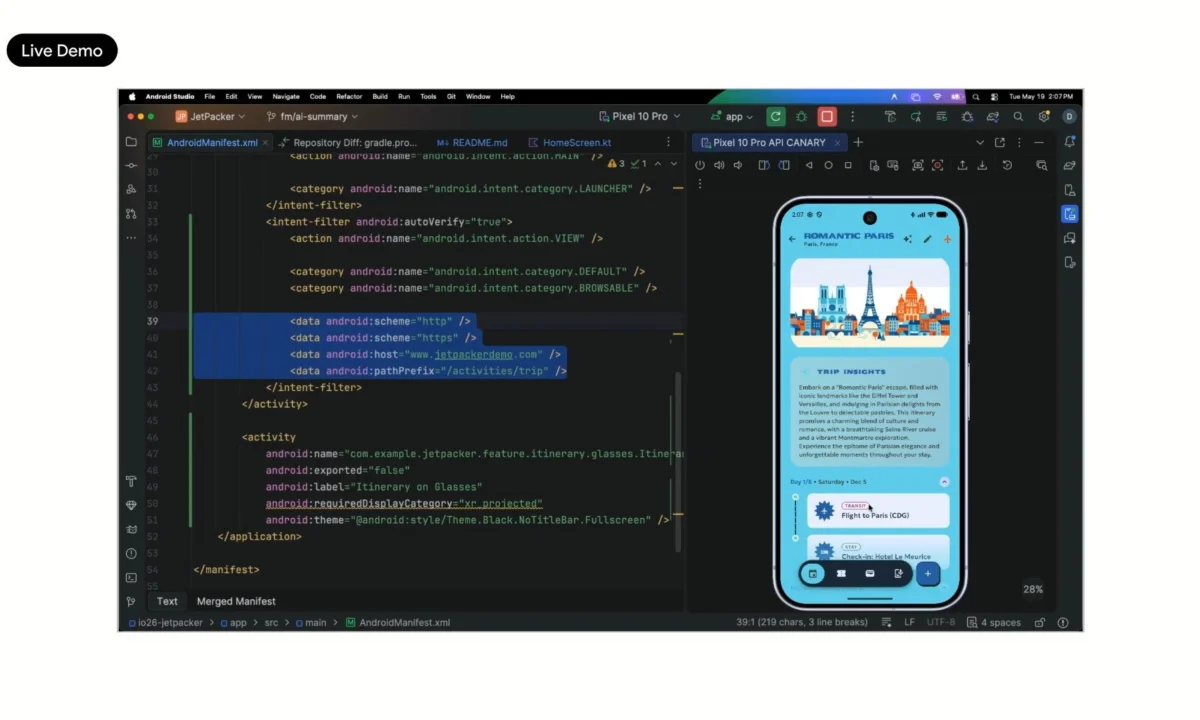
For over a decade, a familiar, frustrating rhythm has defined the smartphone industry. An innovative new app, a polished productivity tool, or a viral indie game launches on the Apple App Store, quickly garnering a dedicated fanbase. Meanwhile, Android users are left in a state of limbo—hoping for an eventual port that might take months to arrive, or worse, never makes it to the Google Play Store at all. This "app gap" has long been a sticking point for the Android ecosystem, but at Google I/O 2026, the tech giant unveiled a potential breakthrough: the Migration Assistant.
Integrated directly into Android Studio, this new AI-driven tool is designed to fundamentally alter how developers approach cross-platform parity. By automating the most tedious aspects of porting code, Google is positioning itself to make the transition from iOS to Android not just easier, but nearly instantaneous for many applications.
The Core Innovation: Bridging the Platform Divide
The Migration Assistant is not merely a "translator" that clumsily converts lines of code from one language to another. Instead, it functions as an intelligent agent embedded within the development environment. When a developer provides an existing iOS, React Native, or web-based project, the AI agent performs a deep analysis of the application’s architecture.
Intelligent Feature Mapping
The tool maps existing iOS features to their Android counterparts. This includes handling complex UI elements, user flows, and backend integration. By intelligently mapping these features, the assistant ensures that the "logic" of the app remains intact while the "presentation" is translated into the native Android language.

Asset Conversion
One of the most time-consuming aspects of porting is the recreation of visual assets. The Migration Assistant automates the conversion of storyboards, SVGs, and other graphical resources into formats optimized for Android. This allows developers to focus on the nuance of the user experience rather than the administrative burden of asset migration.
Native Performance via Jetpack Compose
Crucially, Google has emphasized that this tool is not intended to create "hybrid" or "web-wrapped" applications. The Migration Assistant is specifically engineered to utilize Jetpack Compose and Google’s recommended Jetpack libraries. By enforcing the use of native Android best practices, the tool ensures that the resulting applications are not "half-baked" ports, but high-quality, performant, and stable native apps.
A Chronology of the App Gap Problem
To understand the magnitude of this announcement, one must look at the history of the "iOS-first" strategy that has dominated the app development landscape since the early 2010s.
- 2010–2015: The Rise of iOS Dominance: During the early years of the smartphone boom, iOS was the undisputed leader in developer revenue. Smaller teams with limited resources often opted to build for iOS first to maximize their initial return on investment.
- 2016–2020: The Cost of Fragmentation: As Android’s market share grew, the cost of maintaining two separate codebases—one in Swift/Objective-C and one in Java/Kotlin—became a significant barrier for startups. Many developers chose to simply ignore Android, contributing to the persistent app gap.
- 2021–2025: The Move Toward Cross-Platform Frameworks: The rise of React Native, Flutter, and Kotlin Multiplatform (KMP) began to bridge the gap, but they still required significant manual effort to ensure the apps felt "native" on both operating systems.
- 2026: The AI Inflection Point: Google’s introduction of the Migration Assistant at I/O 2026 marks the beginning of a new era. By leveraging Large Language Models (LLMs) to handle the boilerplate code, Google is effectively removing the "time and cost" friction that has kept developers away from Android for years.
Supporting Data and Industry Context
The necessity of this tool is supported by the economic realities of app development. According to recent developer surveys, nearly 40% of small-to-medium-sized development teams report that they would develop for Android simultaneously with iOS if the engineering effort could be reduced by more than 50%.

Furthermore, the complexity of modern apps has increased significantly. An average mobile application today requires integration with cloud services, biometric security, complex navigation, and varying screen form factors (including foldables and tablets). Manual porting is no longer just about changing syntax; it is about rebuilding complex engineering stacks.
Google’s internal testing suggests that tasks that once required weeks of development time—such as restructuring a UI layout or implementing a new navigation controller—can now be performed in mere hours. This drastic reduction in labor cost is expected to incentivize smaller independent developers to prioritize Android support as part of their initial launch strategy.
Official Responses and Developer Sentiment
Initial reactions from the developer community at Google I/O were largely positive, though tempered with a healthy dose of technical scrutiny.
"The promise of the Migration Assistant is a game-changer for my team," said one lead developer at a boutique software agency. "We often have to tell clients that an Android version will cost them an extra $50,000 and two months of development. If this tool can handle 70% of the migration work, we can finally offer true parity."

Google executives have framed this as part of a larger, long-term commitment to "AI-first" developer tools. "Our goal is to make Android the most developer-friendly platform in the world," stated a Google spokesperson during the keynote. "By using AI to handle the ‘heavy lifting’ of migration, we aren’t replacing developers; we are giving them the time to focus on innovation and user experience rather than repetitive syntax conversion."
However, industry analysts note that the success of the tool depends on its reliability. If the code generated by the AI agent is buggy or requires significant debugging, the "time saved" may be lost in the testing phase. Google appears to have anticipated this, emphasizing that the tool is designed to work with developers, not to replace the final QA and optimization steps.
The Broader Implications for the Mobile Ecosystem
The rollout of the Migration Assistant has implications that extend far beyond the convenience of individual developers.
1. Increased App Quality on Android
As more developers use Jetpack Compose and modern Android libraries, the overall quality of apps on the Play Store is expected to rise. Apps will feel more fluid, look more consistent with the Material Design language, and be better optimized for the hardware they run on.

2. A Challenge to the "iPhone-First" Culture
If the time-to-market difference between iOS and Android shrinks from months to days, the competitive advantage of being an "iOS-first" developer will evaporate. This could lead to a more balanced market where Android users are treated as first-class citizens by software creators.
3. Strengthening the Android Tablet and Foldable Market
One of the biggest criticisms of Android tablets and foldables has been the lack of tablet-optimized apps. The Migration Assistant’s ability to map features to native Android libraries could help ensure that ported apps are automatically optimized for larger screens and foldable form factors, solving one of the most persistent hurdles for the Android hardware ecosystem.
4. A New Standard for AI in IDEs
With this release, Google is setting a new standard for Integrated Development Environments (IDEs). We are moving toward a future where the IDE is not just a text editor, but a collaborative partner. Other platforms, such as Microsoft’s Visual Studio or Apple’s Xcode, will likely be forced to accelerate their own AI-integration efforts to keep pace with the efficiency gains Google is providing to Android developers.
Conclusion: A More Harmonious Mobile Future?
While it is still early days for the Migration Assistant, the potential for a seismic shift in the mobile landscape is undeniable. For the average user, this means the end of the "waiting game" for the latest apps. For developers, it means lower overhead and a wider potential audience.

The "app gap" has been a defining feature of the smartphone era, a constant reminder of the friction inherent in having two competing, dominant ecosystems. Google’s latest innovation represents a pragmatic, technology-driven approach to reducing that friction. As the Migration Assistant matures and moves out of preview, it will be fascinating to see how quickly the app stores of the world begin to align. If successful, the distinction between "iOS-first" and "Android-first" may eventually become a relic of the past, replaced by a truly platform-agnostic development culture.












No comments yet. Be the first to join the conversation!