

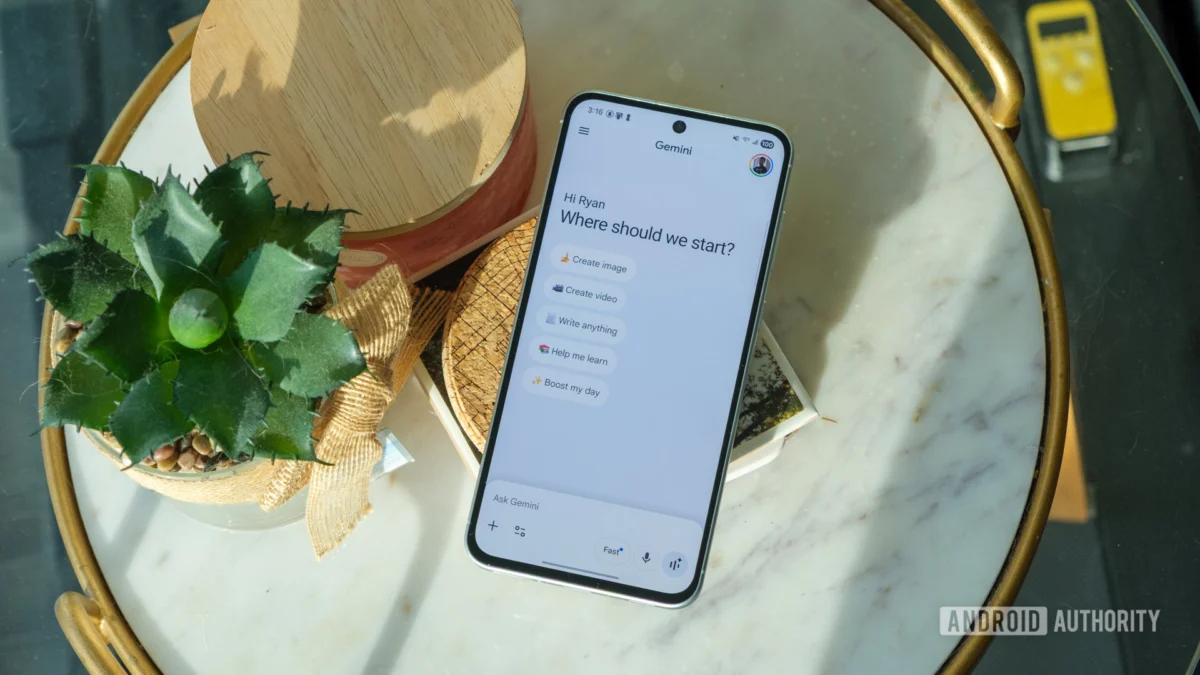
As the tech industry converges on the Shoreline Amphitheatre for Google I/O 2026, the atmosphere is thick with anticipation. While hardware announcements often capture the spotlight, the true battleground for Google this year is the evolution of its generative AI powerhouse: Gemini. In a flurry of pre-conference activity, Google has begun deploying significant updates to the Gemini application, introducing granular control over how the model "thinks" and expanding its ecosystem through strategic third-party integrations.
These updates represent a shift from Gemini being a passive chatbot to becoming an active, agentic assistant capable of complex reasoning and real-world task execution.
Main Facts: A New Paradigm for Gemini Reasoning
The most significant development arriving on user devices is the introduction of a "Thinking level" toggle. According to reports emerging from the Android ecosystem, this feature resides within the model picker menu. Users who toggle between the "Fast" and "Pro" models now have the option to adjust the depth of the model’s cognitive process by selecting between "Standard" and "Extended" thinking levels.
This is not merely a cosmetic change; it suggests that Google is allowing users to trade latency for depth. By selecting "Extended," users are likely enabling a chain-of-thought (CoT) process where the model performs additional internal verification or recursive reasoning before outputting a final answer. This is particularly useful for complex coding tasks, mathematical problem-solving, or nuanced creative writing, where the "Standard" output might suffer from hallucinations or lack of logical rigor.
Simultaneously, Google has updated its official support documentation to reflect upcoming integrations with Canva, Instacart, and OpenTable. While these features are currently in a "staged rollout" phase, their inclusion in the official support hierarchy signals that a public launch is imminent. These integrations mark a pivot toward "Action-Oriented AI," where Gemini functions as a control layer for the digital and physical services we rely on daily.
Chronology: The Road to I/O 2026
To understand the significance of these updates, we must look at the timeline of Gemini’s rapid iteration over the last quarter:
- Early Q1 2026: Google begins testing refined UI elements, including a new, fluid animation style for Gemini responses, designed to make the interaction feel more organic and less like a static terminal.
- Mid Q1 2026: Leaks regarding "smarter audio sharing" emerge, indicating that Google is working on ways to allow Gemini to analyze and summarize audio content more effectively across devices.
- May 2026: The "Thinking level" feature is discovered in the wild by beta testers. Simultaneously, Google updates its support pages to include instructions for Canva, Instacart, and OpenTable.
- May 18, 2026: The immediate lead-up to Google I/O, where the industry expects these features to be the cornerstone of the keynote presentation.
This rapid-fire release schedule demonstrates that Google is no longer content with a "release-once-a-year" strategy. Instead, they are moving toward a continuous deployment model, treating Gemini like a living software platform that evolves weekly.
Supporting Data: Why "Thinking Levels" Matter
The implementation of "Extended" thinking levels addresses one of the primary criticisms of Large Language Models (LLMs): the tendency to prioritize speed over accuracy.
In standard inference mode, an LLM predicts the next token with high speed but limited foresight. By introducing an "Extended" mode, Google is likely invoking a more compute-intensive path. Data from early adopters suggests that this mode increases response times by 30-50% but significantly improves performance on benchmarks like GSM8K (math) and HumanEval (coding).
Furthermore, the expansion into third-party apps—Canva for design, Instacart for logistics, and OpenTable for reservations—indicates that Google is finally cracking the "App Intent" problem. Previously, asking an AI to order groceries required multiple steps of context switching. By building direct API hooks, Gemini acts as the orchestration layer, reducing a five-minute task of browsing and selecting items into a single, natural language prompt: "Find ingredients for a pasta dinner on Instacart and add them to my cart."
Official Responses and Strategic Intent
While Google has not released a formal press release detailing the "Thinking level" rollout, the update to the support portal for third-party integrations is an official acknowledgment of the new capability.
Google’s strategy, as hinted in previous developer conferences and investor calls, is to position Gemini as an "Agentic Ecosystem." By integrating with Canva, they are tapping into the creative economy; with Instacart and OpenTable, they are anchoring themselves in the "Utility Economy."
An internal Google spokesperson noted in recent months that the goal for 2026 is "frictionless intent." They argue that users shouldn’t have to navigate menus or individual apps when they know what they want; the AI should bridge the gap between intent and execution.
Implications: The Rise of the AI Agent
The implications of these changes are profound, both for developers and for the average smartphone user.
1. The Death of the "Single-App" Workflow
The integration of Canva, Instacart, and OpenTable is the first major step toward an operating system where the user interacts with the AI rather than the UI. If you can design a social media post in Canva directly through Gemini, the necessity of opening the Canva app—with its specific toolbars and complex interface—diminishes. This shifts the power dynamic from the app developer to the AI platform owner.
2. Computing Costs and Power Management
The "Thinking level" feature introduces a new variable into mobile power management. "Extended" thinking requires more cycles from the NPU (Neural Processing Unit) and potentially more cloud-based inference. This creates a trade-off: does the user want the most accurate answer, or the one that saves battery life? As these features become standard, we will likely see "AI Battery Management" become a standard setting in Android, similar to "Performance Mode" in gaming laptops.
3. The Future of Google I/O
Tomorrow’s I/O keynote is expected to be dominated by these agentic capabilities. We can expect Google to announce:
- Gemini 2.0 (or a successor): A model trained specifically for multi-step reasoning.
- Android Integration: A deeper hook into the Android system, allowing Gemini to control settings, move data between apps, and read screen context more accurately.
- Developer SDKs: New tools for developers to "plug in" their services into the Gemini Agent ecosystem, ensuring that Google remains the hub of the mobile experience.
4. Competitive Landscape
With OpenAI rumored to be working on its own "Operator" agent and Apple integrating deeper AI into iOS 19, Google is under immense pressure. By pushing these updates before the keynote, they are signaling to the market that they are not just planning for the future—they are shipping it.
Conclusion: A New Dawn for Personal Computing
The rollout of "Thinking levels" and third-party app integrations marks the transition of the smartphone from a tool for information consumption to a tool for active task completion. As users begin to experiment with these features, the boundary between "the app" and "the assistant" will continue to blur.
For Google, the challenge remains in the execution. Can they ensure these integrations remain stable? Can they prevent the "Extended" thinking process from becoming a source of battery drain? And, perhaps most importantly, can they convince users that the convenience of an AI agent is worth the privacy trade-offs of giving an AI control over their shopping and reservations?
As the sun rises over the I/O 2026 stage, one thing is clear: the era of the static chatbot is over. The era of the agent has begun. Whether these features will redefine our daily digital habits or simply add another layer of complexity remains to be seen, but the trajectory is undeniable. Gemini is no longer just a model; it is becoming the primary interface for our digital lives.












No comments yet. Be the first to join the conversation!