

In the rapidly evolving landscape of digital marketing, the traditional "broadcast" model—where brands push messages onto passive audiences—is facing a significant decline in efficacy. As consumers grow increasingly weary of disruptive, high-production-value advertisements, a new paradigm is emerging: the creator-led economy.
Snapchat, long known for its ephemeral messaging and focus on close-knit social circles, has officially thrown its weight behind this shift. A newly published report from the platform reveals that influencer-led promotions are not merely a supplemental marketing tactic; they are becoming the primary driver of consumer trust, engagement, and conversion within the app. By leveraging the platform’s unique infrastructure—which prioritizes intimate, real-time communication over endless scrolling—Snapchat is providing brands with a blueprint to capture "active attention" rather than just passive impressions.
The Core Thesis: Why Snapchat is Different
To understand the efficacy of Snapchat’s creator marketing, one must first understand the architecture of the app itself. Unlike competing platforms that are designed primarily for public content discovery and algorithmic consumption, Snapchat is built for communication. It is a digital space where users interact with their "BFFs," family members, and closest acquaintances.
Because the app is fundamentally rooted in day-to-day conversation, the inclusion of creator content feels inherently different. When a creator updates their story on Snapchat, it does not arrive as an intrusive pop-up or an algorithmic suggestion in a sea of viral memes. Instead, it appears in a space dedicated to the user’s personal connections. This context shifts the user’s psychological state from "scrolling to kill time" to "engaging with familiar faces." Consequently, creators on Snapchat are not just influencers; they are participants in a digital conversation.
Chronology: The Evolution of Creator Marketing on Snapchat
The shift toward creator-centric advertising on Snapchat did not happen overnight. It is the result of a multi-year strategy aimed at professionalizing the creator experience while maintaining the platform’s core identity.
- Early Phase (2018–2020): Snapchat began by expanding its Discover tab, inviting publishers and early digital creators to build audiences. At this stage, content was largely one-way, mimicking traditional media consumption.
- The Pivot to Authenticity (2021–2022): As user feedback indicated a preference for "real" content over polished commercials, Snapchat introduced better monetization tools for creators. This period saw the rise of the "Creator Marketplace," designed to connect brands with the individuals who best represented their target demographics.
- The "BFF Energy" Era (2023–Present): The current phase focuses on "BFF Energy at Scale." Snapchat’s latest report marks a maturity point in this strategy, where the platform is no longer testing creator ads but is instead providing data-backed evidence that these ads outperform traditional branding formats in virtually every metric of the marketing funnel.
Supporting Data: The Measurable Impact of Authenticity
The most compelling aspect of Snapchat’s report is the granular data supporting the effectiveness of creator ads. The figures indicate that when brands move away from traditional, slick advertisements and toward creator-led content, the return on investment (ROI) is significant.
The "Active Attention" Metric
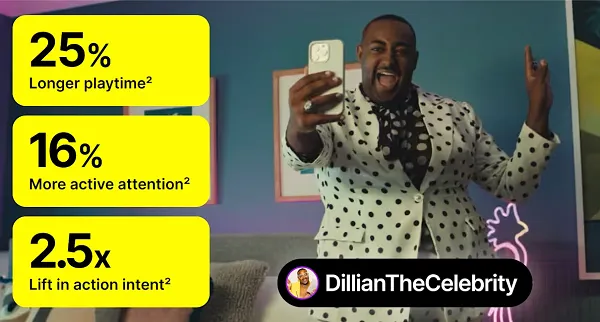
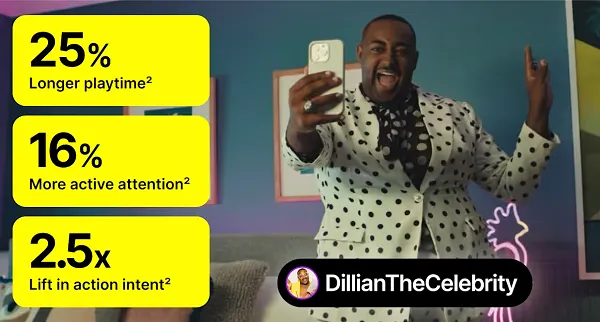
The study highlights that creator ads on Snapchat are watched 25% longer than standard branding advertisements. More importantly, they drive 16% more "active attention." In an era where the average consumer’s attention span is measured in seconds, these double-digit increases are massive. The reason for this, according to the platform, is that creator content is perceived as native to the experience. It doesn’t trigger the "skip" instinct because it feels like a continuation of the user’s social feed rather than a jarring break from it.
Trust and Conversion
The data suggests that the "intimacy advantage" translates directly into brand sentiment. According to the report:
- 57% of Snapchatters follow creators specifically to gain insight into their daily lives, establishing a parasocial bond that is much stronger than a typical "fan-brand" relationship.
- 66% of users are more likely to feel excited about a brand when the sponsored content feels authentic and aligns with the creator’s personal narrative.
- Conversion Power: By moving the consumer from a state of passive viewing to active interest, brands see higher intent to purchase, effectively shortening the path from awareness to checkout.
Official Perspectives: The Strategy Behind the Shift
Snapchat’s leadership has been vocal about the necessity of this shift. By positioning the app as a place for meaningful connection, they are effectively insulating their user base from the "ad fatigue" that plagues other social media giants.
In the company’s official communication regarding the report, representatives noted: "On Snapchat, creator ads don’t just generate impressions. They help drive stronger attention, deeper trust, and measurable action across the funnel, from awareness to purchase."
The company emphasizes that the secret ingredient is the conversational nature of the content. Creators on Snapchat aren’t just "broadcasting" to their followers; they are engaging in a dialogue. This approach reduces the friction of advertising. When a creator presents a product in a way that feels like a recommendation to a friend, the audience is far less likely to view the promotion as a corporate intrusion.
Strategic Implications for Modern Marketers
For brands looking to capitalize on this trend, the implications are clear: the era of the high-budget, low-authenticity commercial is waning. Success on Snapchat requires a new playbook.
1. Embrace the "Lo-Fi" Aesthetic
The most successful ads on the platform are often the ones that look the least like ads. Brands should encourage creators to use native tools, such as the app’s internal camera, filters, and text overlays, rather than importing highly edited external videos. The goal is to make the ad feel as though it was captured on a phone in the middle of a creator’s day.
2. Prioritize Contextual Relevance
Creators should be selected not just for the size of their follower count, but for the relevance of their content to the brand’s mission. Because Snapchat users are highly sensitive to authenticity, a mismatch between a brand and a creator will be immediately flagged by the audience as a "sell-out" moment, damaging both the creator’s credibility and the brand’s reputation.

3. Focus on the "Funnel-Full" Approach
Marketers often segment their ads into "awareness" (top-of-funnel) and "conversion" (bottom-of-funnel). Snapchat’s report suggests that creator-led content is uniquely capable of handling both simultaneously. Because the content builds trust, it can prime a user for a purchase while still maintaining a light, entertainment-focused tone.
4. Respect the "BFF" Space
Brands must remember that they are guests in a space designed for personal connections. Advertising that feels like a disruption will always underperform. Instead, brands should aim for "lean-in" content—material that provides value, entertainment, or genuine utility that fits naturally into the daily stream of the user’s life.
Conclusion: The Future is Conversational
As digital marketing continues to mature, the barriers between "content" and "advertisement" are dissolving. The data from Snapchat serves as a stark reminder that in a world of infinite content, the most valuable currency is trust.
By leveraging the unique, high-trust environment of Snapchat, brands have a rare opportunity to engage with consumers in a way that feels personal, authentic, and impactful. The move toward creator-led marketing is not just a trend—it is a fundamental change in how commerce and community intersect. For those willing to cede some control to creators and lean into the intimacy of the platform, the rewards in terms of engagement, brand loyalty, and conversion are set to be substantial.
The "BFF energy" that defines Snapchat is no longer just a social characteristic; it is the heartbeat of the next generation of digital advertising. Marketers who can harness that energy will find themselves not just reaching audiences, but resonating with them.












No comments yet. Be the first to join the conversation!