
 Siti Muinah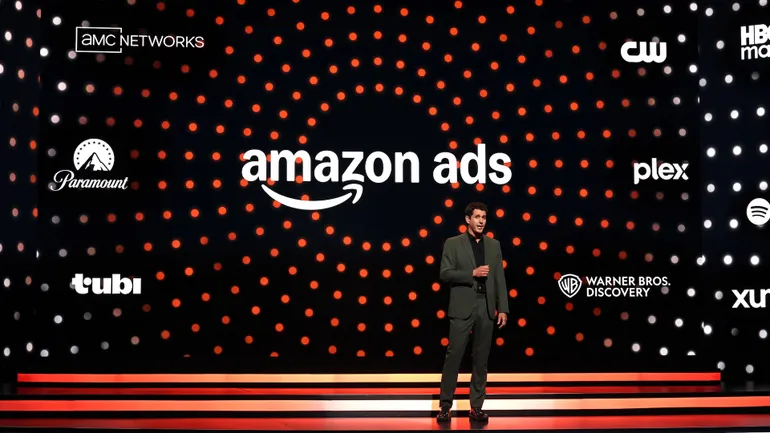
The annual ritual of the upfront presentations—where media titans descend upon New York to court advertising dollars—has undergone a metamorphosis. Once defined by glitzy sitcom previews and star-studded stage performances, the 2026 upfront season signaled a fundamental shift: the era of "awareness-only" TV advertising is officially over. In its place is a high-stakes, data-driven environment where the premium reach of traditional television is now inextricably linked to measurable business outcomes.
For legacy media giants like NBCUniversal, Disney, Warner Bros. Discovery, and Fox, as well as digital-native disruptors like Amazon and Netflix, the message to marketers was unified. Advertisers are no longer buying "eyeballs"; they are buying precision, performance, and the ability to track a consumer’s journey from a 30-second spot to a completed purchase.
Main Facts: A Pivot Toward Precision
The defining theme of this year’s upfronts was the convergence of linear reach and digital-style accountability. As YJ Kim, strategy director at AI Digital, observed, "The biggest shift heading into this year’s upfronts is that TV is no longer insulated by awareness-only measurement expectations. Premium reach still matters, but measurable business impact is increasingly what unlocks incremental budget."
This sentiment permeated every presentation, from the massive scale of Disney’s sports portfolio to Amazon’s hyper-personalized ad tech. The industry has effectively moved past the experimental phase of artificial intelligence and cross-platform measurement, entering a stage where these tools are now foundational to how media companies monetize their audiences.
Chronology: The Evolution of the Upfront Showcase
The 2026 upfront cycle unfolded with a clear sense of urgency. The week began with legacy networks attempting to reclaim their territory against the rapid encroachment of streaming platforms.
- Early Week: Legacy networks led with massive investments in live event programming. NBCUniversal and Fox emphasized their year-round sports calendars, pivoting away from the volatility of scripted drama performance.
- Mid-Week: The focus shifted toward infrastructure. Tech-forward players like Amazon and media conglomerates like Warner Bros. Discovery (WBD) unveiled sophisticated, always-on measurement dashboards. The narrative moved from "what content we have" to "how we can prove our value to your bottom line."
- Late Week: The focus narrowed on the application of generative AI. By the end of the presentations, it was clear that every major publisher had integrated AI-driven creative optimization into their core sales pitch, moving toward a future where ad creative can be generated and adapted in real-time.
The Dominance of Live Sports
The traditional "sitcom-and-drama" slate that once anchored the upfronts has been relegated to the background. In its place, sports have emerged as the "must-buy" asset for every major network.
NBCUniversal, for example, is aggressively expanding its Sunday night sports strategy to include basketball and baseball, ensuring that advertisers have a consistent, year-round footprint. The network also highlighted its massive commitment to the 2026 FIFA World Cup, with Telemundo planning 700 hours of coverage and on-site production at all 104 matches. Similarly, Fox announced it would broadcast a record 70 World Cup matches, with 40 airing in primetime.
"At Fox, that’s not a new story: It’s what we’ve been delivering successfully for years," said Fox CEO Lachlan Murdoch. "Fox is the leader in live programming and home to one of the fastest growing ad-supported streaming platforms in the business. That combination isn’t accidental—it’s intentional."
The streaming giants are equally invested. Amazon Prime Video reported that "Thursday Night Football" delivered its largest audience in the show’s 20-year history, while its wild card game presentation reached 31.6 million viewers—the most-streamed NFL game of all time. As sportscaster Charissa Thompson noted, "Prime audiences don’t merely tune in, they lean in. Our audience is younger and more likely to engage with advertised brands than sports viewers on any linear network."
Disney, meanwhile, is positioning itself as a "category of one." With the Oscars, the Grammys, and the first-ever Super Bowl broadcast to be shared across ESPN and ABC, Disney is banking on a 55% year-over-year increase in NFL impressions.
Supporting Data: The Power of Authenticated Reach
The shift toward performance marketing is fueled by the massive amounts of first-party data now available to media companies. Amazon leads this charge with access to over 300 million ad-supported consumers, representing roughly 90% of U.S. households.
Tanner Elton, VP of U.S. ad sales at Amazon, emphasized the quality of these signals: "These signals are not modeled. They’re not assumed. They’re built on trust. These signals give us unparalleled precision. That precision drives performance, and that performance delivers outcomes that matter."
Fox provided further data to support the pivot, noting that its reach spans over 200 million people monthly across more than 1 billion devices. Through its Fox AdStudio, the network has already delivered advanced outcome reports for over 1,000 campaigns, demonstrating double-digit lifts in key metrics like in-store sales and foot traffic.
Warner Bros. Discovery and NBCUniversal have matched these efforts with their own measurement breakthroughs. WBD’s new "Always-On Measurement & Attribution Dashboard" provides real-time visibility into campaign performance, while NBCU’s "Performance Insights Hub" is set to integrate data from industry leaders like iSpot, VideoAmp, and EDO, with Instacart serving as a key partner for CPG outcomes.
AI Powers Dynamic, Contextual Advertising
Beyond measurement, AI is being deployed to streamline the creative process itself. Amazon’s "Dynamic TV Creative" tool, for instance, allows for the automatic personalization of interactive video ads based on real-time shopping behavior. This removes the "one-size-fits-all" approach, allowing for adjustments to headlines, calls-to-action, and visuals depending on the viewer’s place in the purchasing funnel.
Warner Bros. Discovery is also pushing into "Agentic Experiences"—a nod to the industry’s burgeoning interest in agent-to-agent advertising. Meanwhile, NBCU is rolling out always-on AI agents, and Fox is utilizing large-language models (LLMs) to power contextual engines that match ad insertions to specific scene-level content.
According to iSpot’s 2026 Video Ad Spend and Strategy Report, four in 10 advertisers are currently testing AI creative, and over one-third are exploring AI workflows. "The 2026 advertising environment is defined by a decisive pivot toward precision," the report states. "Marketers have moved past the experimentation phase of AI, now integrating full-scale workflow automation to optimize efficiency."
Implications for the Future of Media
The implications of this year’s upfronts are profound. The barrier between "brand advertising" (long-term awareness) and "performance advertising" (short-term conversion) has effectively dissolved. For media companies, this means the future is no longer about the quantity of content, but the quality of the data-signal attached to that content.
For advertisers, the new landscape offers unprecedented control. However, it also demands a higher degree of technical literacy. As budgets become more concentrated in channels that offer the highest degree of accountability, the "fluff" of the traditional upfront is being replaced by the rigor of the dashboard.
As the industry moves into the latter half of 2026, the question for media companies will be whether they can continue to balance the creative needs of entertainment with the clinical demands of performance marketing. If this year’s upfronts are any indication, the industry has already chosen its path: the future of television is a screen that acts like a storefront, backed by the intelligence of a data warehouse. Whether it’s a Super Bowl broadcast or a Thursday night football game, the objective is the same—capture the audience, measure the impact, and drive the sale.


 Azzam Bilal Chamdy
 Sagoh
Sagoh





