
 Siti Muinah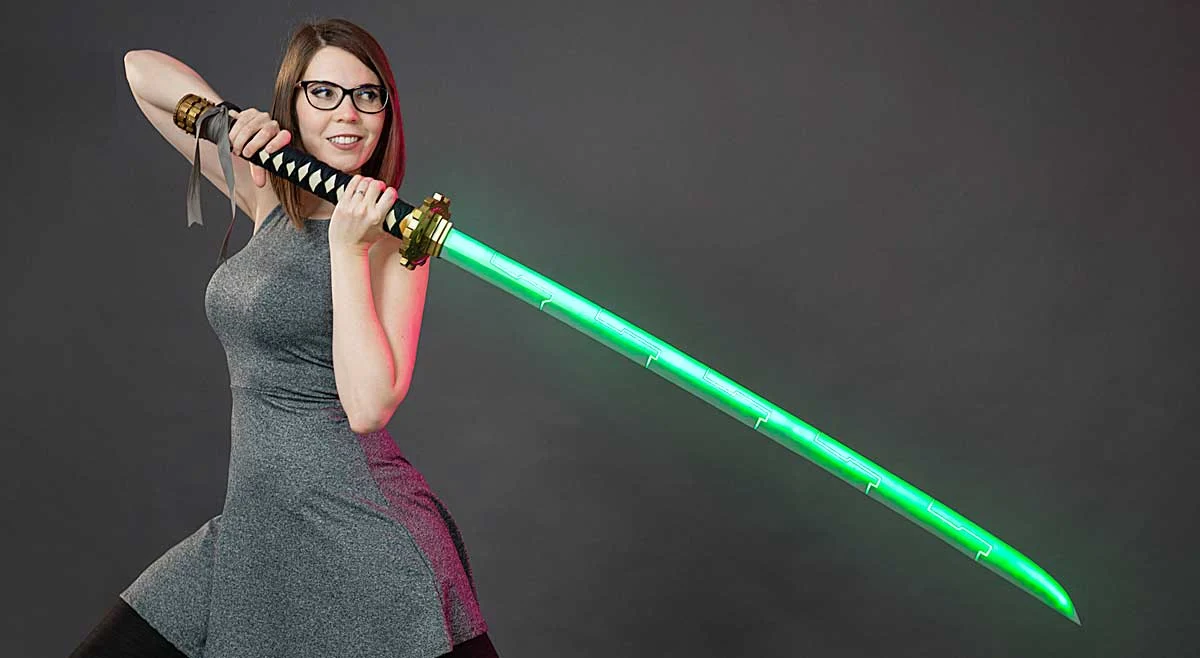
In the evolving intersection of digital gaming and physical craftsmanship, few names command as much respect as Kamui Cosplay. Svetlana and Benni, the creative duo behind the brand, have long been at the forefront of the cosplay industry, pushing the boundaries of what is possible with foam, electronics, and 3D printing. Their latest project—a functional, light-up, and sound-emitting replica of the Karakuri Katana from Electronic Arts’ Wild Hearts—represents a masterclass in modern prop-making.
This project was not merely a hobbyist endeavor; it was a collaborative bridge between a major gaming publisher and the professional crafting community, designed to bring the intricate mechanics of Wild Hearts into the tangible world.
The Genesis: Bridging the Digital and Physical Worlds
The project began when Electronic Arts (EA) approached Kamui Cosplay with a specific mission: to breathe life into the iconic Karakuri Katana from Wild Hearts. In the game, the blade is more than a simple weapon; it is a mechanical marvel that glows with ethereal energy and transforms during combat. For the developers, the goal was to provide fans with a high-fidelity representation of the game’s aesthetic, while for Kamui, it was an opportunity to push their technical skills to new heights.
"What’s better than a Katana?" Svetlana asked in a recent retrospective on the project. "A light-up LED Katana that also plays sounds."
The challenge was significant. Unlike traditional static props, the Karakuri Katana required a complex internal architecture to house the LEDs, soundboards, and power sources, all while maintaining the sleek, aggressive profile seen on screen.
Chronology of Construction: A Seven-Day Sprint
The creation of the Karakuri Katana was a high-intensity, one-week sprint that required seamless coordination between 3D modeling and hardware integration.
Phase 1: Digital Sculpting (Days 1–2)
Benni began by building the sword from the ground up in Blender. Given that the game model was optimized for rendering, it was not inherently "print-ready." Benni had to manually retopologize and engineer the internal mounting points for the electronics. This process required a deep understanding of structural integrity, as the sword needed to be durable enough for handling while remaining light enough for convention wear.
Phase 2: Additive Manufacturing (Days 3–4)
The team utilized a Creality CR-M4 3D printer, chosen for its large build volume and precision. They printed the components using white ABS plastic. The choice of material was deliberate; ABS is renowned for its durability and heat resistance, but it also provides a semi-translucent quality when printed with thin walls, which is essential for diffusing LED light evenly across the surface of the blade.
Phase 3: Electronic Integration (Days 5–6)
This was the most technically demanding phase. Inspired by the open-source community, specifically the "Lightsaber Featherwing" tutorials from Adafruit, the team integrated a microcontroller and sound module. The electronics had to be carefully routed through the handle and into the blade’s spine. The result was a weapon that could be toggled through various light modes, accompanied by authentic sound effects that mirror the in-game mechanics.
Phase 4: Final Assembly and Finishing (Day 7)
The final day was dedicated to sanding, painting, and the installation of the diffusion layers. By the end of the week, the prop was fully functional, standing as a testament to the speed and efficiency of modern digital fabrication tools.
Supporting Data and Technical Specifications
The project utilized a blend of professional-grade hardware and community-sourced knowledge. Key technical details include:

- Printer Used: Creality CR-M4 (Large format, 17.71 x 17.71 x 18.5-inch build area).
- Material: White ABS filament (chosen for light diffusion properties).
- Software: Blender (for 3D modeling) and standard slicing software for printer calibration.
- Electronics Inspiration: Adafruit.com’s Lightsaber Featherwing project.
- Accessibility: The 3D files are now available for purchase on the Kamui Cosplay shop, allowing the community to replicate the build at home.
Official Responses and Collaborative Impact
Electronic Arts’ decision to partner with Kamui Cosplay highlights a growing trend in the gaming industry: the "creator-first" approach to community engagement. By commissioning high-quality replicas, EA was able to generate significant hype around the Wild Hearts launch.
In a statement regarding the project, the team at Kamui noted: "The original Karakuri Katana from the game has a really fancy special attack and lights up. It was an amazing opportunity to finally bring this blade to life."
The collaboration also highlights the importance of the open-source spirit. By crediting Adafruit for their tutorials and offering their own files for sale, Kamui is fostering an environment where fans can learn the technical skills required to build their own professional-grade props. This democratization of high-end crafting is the cornerstone of the modern "Maker" movement.
Implications for the Future of Cosplay
The successful completion of the Karakuri Katana has several profound implications for the world of prop-making and interactive media:
1. The Proliferation of "Smart" Props
We are moving away from an era of static foam swords. The success of this build proves that integrated electronics—specifically microcontrollers that handle both lighting and sound—are becoming the new standard for high-end cosplay. As components become cheaper and more accessible, the barrier to entry for "smart" props is rapidly lowering.
2. Digital-to-Physical Pipelines
The workflow used by Benni and Svetlana—blender-based modeling followed by large-format ABS printing—is becoming the industry standard. This pipeline allows for incredible accuracy, as creators can pull assets directly from game engines and modify them for print. This creates a more direct link between developers and the fan community.
3. Sustainability through Digital Kits
By selling the 3D print files rather than just the physical sword, Kamui Cosplay is addressing the logistics of global distribution. It is far more sustainable to sell a digital file that can be printed locally than it is to ship heavy, fragile props across the globe. This business model allows them to maintain a global reach while minimizing their carbon footprint and logistical overhead.
4. Educational Value
The inclusion of a 3D printing and modeling book within their shop, alongside the prop files, shows a commitment to education. The team is not just selling a finished product; they are selling the methodology. By providing the "how-to," they are empowering a new generation of creators to build their own props, ensuring that the skill set required to maintain this craft remains vibrant and evolving.
Conclusion
The Karakuri Katana project is more than just a piece of fan art; it is a successful case study in modern collaborative marketing and technical artistry. By utilizing cutting-edge 3D printing technology, open-source electronics, and expert craftsmanship, Kamui Cosplay has effectively blurred the lines between a digital asset and a physical reality.
As game developers continue to create increasingly complex and fantastical weapons, the demand for creators like Kamui—who can bridge the gap between imagination and engineering—will only continue to grow. For fans of Wild Hearts and aspiring makers alike, the Karakuri Katana stands as a glowing, humming monument to what can be achieved when technology meets the artisan’s touch.

 Azzam Bilal Chamdy





