

By Editorial Staff
Updated: May 19, 2026
The prestigious grounds of the University of Tokyo’s Hongo Campus, typically a sanctuary for academic inquiry and intellectual exchange, were transformed into a scene of panic and evacuation this past Saturday. A targeted bomb threat against Sohei Kamiya, the leader of the right-wing populist party Sanseito, forced the abrupt cancellation of a high-profile lecture and brought the university’s annual May Festival to a grinding halt. The incident has reignited a heated national debate regarding the boundaries of political expression, the security of public institutions, and the rising tide of extremism in Japanese discourse.
A Chronology of the Disruption
The security crisis began to unfold at approximately 10:45 a.m. on Saturday, as the University of Tokyo was buzzing with the activity of its annual two-day May Festival. According to university officials, a chilling message was submitted through the institution’s public inquiry form. The sender explicitly threatened to detonate bombs on campus, citing the presence of Sohei Kamiya as the primary motive.
The situation escalated rapidly. Shortly after the initial digital threat, the student political circle Ugonoshu—the group responsible for hosting Kamiya—along with the festival’s organizing committee, received a series of menacing emails. The messages claimed that multiple explosive devices had been surreptitiously planted across the Hongo and Yayoi campuses.
By 1:00 p.m., the administration had no choice but to cancel the scheduled lecture. As word of the threat spread, university authorities and local law enforcement initiated a massive evacuation effort. Thousands of attendees, students, and vendors were funneled out of the campus gates. By 2:00 p.m., the entire May Festival was officially suspended.
Police conducted an exhaustive sweep of the grounds, utilizing bomb-detection units to ensure the safety of the sprawling academic complex. While no devices were discovered, the psychological and logistical impact was immediate. The festival remained shuttered for the duration of the day, finally resuming on Sunday under a heightened state of vigilance that included mandatory baggage checks for all entrants.
The Official Response and Kamiya’s Rebuttal
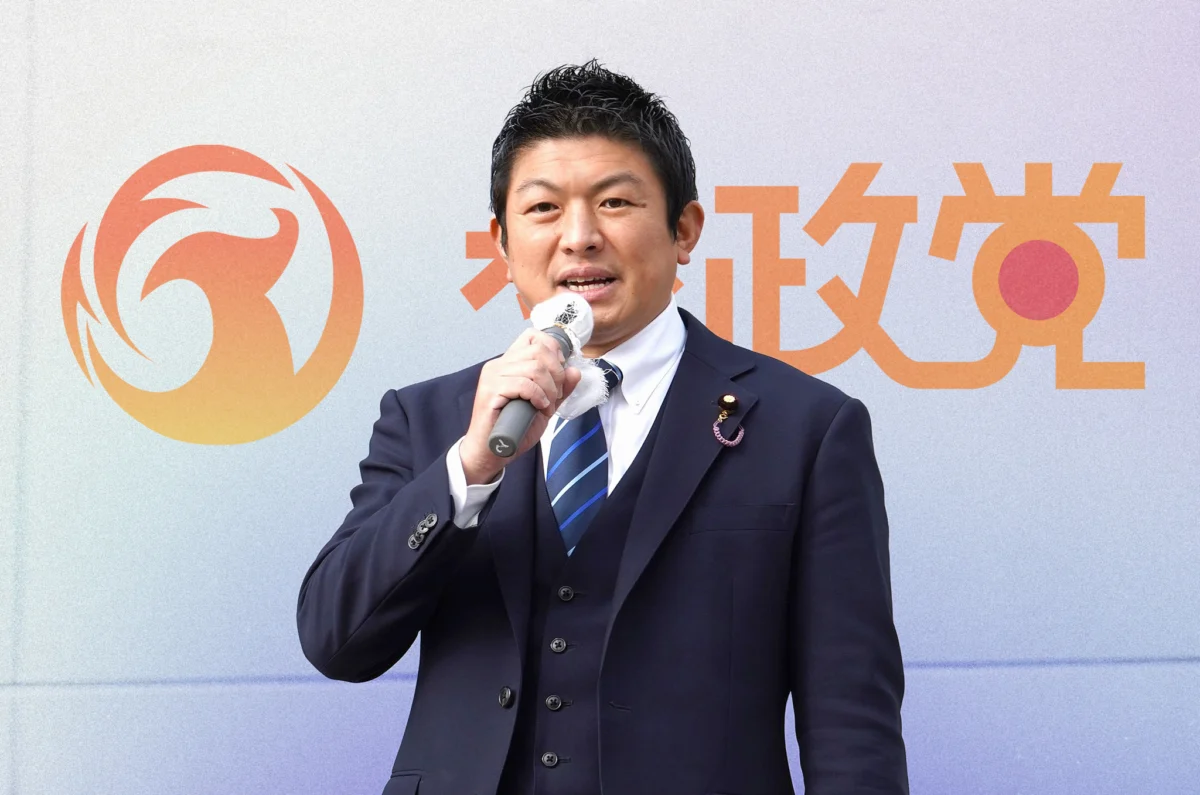
On Monday, Sohei Kamiya addressed the media in a press conference that was equal parts defiant and indignant. Visibly frustrated by the disruption, the Sanseito leader characterized the threat as a direct assault on the democratic process.
"I was deeply shocked and felt a sense of anger," Kamiya stated. "Using violent threats simply because someone has different views or opinions is detrimental to public discourse. It is a cowardly act that targets the very heart of the university—the exchange of ideas."
Kamiya expressed particular concern for the student body, noting that the event was intended to be an interactive forum. "This threat deprived the students of the opportunity to ask questions, which is a very serious matter," he added.
Responding to speculation regarding the motive behind the threat—often linked to Sanseito’s controversial stance on immigration and globalization—Kamiya pushed back against characterizations of his party as discriminatory. He insisted that the lecture was designed to be an educational overview of his political journey, the current state of the Japanese social landscape, and historical context.
"There was almost nothing about foreigners in my prepared remarks," Kamiya asserted. "First of all, we do not engage in discriminatory behavior towards foreigners. Nor do we do so towards LGBT people. My goal was to discuss what students should do to engage with politics in the current era."
Political Context: The Rise of Sanseito
To understand the intensity of the reaction to Kamiya’s visit, one must look at the meteoric and polarizing rise of the Sanseito party. Founded in 2020, the party emerged from the fringes of the COVID-19 pandemic, leveraging widespread dissatisfaction with the government’s pandemic management to promote an anti-establishment, nationalist platform.
Sanseito operates under an "anti-globalist" ideology, frequently emphasizing a "Japan First" policy that resonates with a growing segment of the electorate concerned about economic stagnation and cultural preservation. Their platform campaigns heavily on anti-immigration rhetoric, which critics argue fuels xenophobia, while supporters contend it is a necessary defense of Japanese sovereignty.
The party’s electoral performance has been nothing short of a political anomaly. In the previous Upper House election, Sanseito secured 14 seats, a massive leap from the single seat they held previously. The momentum continued into the 2026 Lower House election, where they captured 15 seats—a significant increase from their prior standing of two. This trajectory indicates that while Sanseito remains a minority party, it has solidified a dedicated base of support that is increasingly influencing the national conversation.
Implications for Public Discourse and University Autonomy
The events at the University of Tokyo have prompted a broader discussion about the vulnerability of academic spaces. Universities have historically been treated as "safe zones" for the clash of ideas, even those considered radical or controversial. However, the use of bomb threats to silence speakers forces a difficult choice upon university administrators: prioritize the principle of free speech, or prioritize the physical safety of the student body.
The Security Dilemma
The implementation of baggage checks and restricted access at the May Festival signals a new, more guarded era for campus events. For an institution that prides itself on openness, these measures are a somber departure from tradition. Many faculty members have expressed concern that if universities begin to self-censor or cancel events due to fear of harassment, the "marketplace of ideas" will effectively be held hostage by anyone with an internet connection and a malicious intent.
The Radicalization of Political Protest
Security analysts have pointed out that the threat against Kamiya follows a trend of increasing volatility in Japanese political life. The assassination of former Prime Minister Shinzo Abe in 2022 fundamentally shifted the national perception of security, making even localized threats against politicians a matter of severe state concern.
The incident highlights a disturbing trend: the move away from civil disagreement toward violent coercion. When political opponents resort to bomb threats to prevent a speech, they succeed in creating a chilling effect that extends far beyond the individual targeted. It discourages moderate voices from entering the arena and emboldens those who seek to use intimidation as a tool for political gain.
The Role of Social Media and Digital Anonymity
The fact that the threat originated from an online inquiry form underscores the difficulty of policing discourse in the digital age. Law enforcement faces the arduous task of tracing anonymous digital footprints, a process that is often slow and prone to dead ends. As Sanseito continues to expand its digital footprint, the party is likely to remain a lightning rod for such friction, placing the burden of security on any institution—public or private—that chooses to host its leadership.
Conclusion: A Fragile Balance
As the University of Tokyo attempts to return to normalcy, the shadow of Saturday’s event remains. The incident has become a rallying point for Sanseito, which will likely use the event to further their narrative of being "silenced" by a biased establishment. Simultaneously, it leaves the university in a precarious position, forced to balance its academic mission with the reality of an increasingly hostile political environment.
Whether this event leads to stricter regulations on campus speakers or a reaffirmation of free speech, one thing is certain: the incident serves as a stark reminder that the health of a democracy is measured not by the ease of our agreements, but by our capacity to tolerate the presence of those with whom we vehemently disagree. For now, the bomb threats have been cleared, but the deeper, more complex questions regarding the future of political dialogue in Japan remain unresolved.












No comments yet. Be the first to join the conversation!