

The iconic mantle of the Shredder has long been synonymous with isolation. Traditionally portrayed as a singular force of nature—a man whose iron will and mastery of the blade allow him to stand against not only the four brothers of the TMNT but also the collective might of the Foot Clan—Oroku Saki has rarely needed to rely on others. However, the latest installment in IDW’s ongoing Teenage Mutant Ninja Turtles: Shredder series, issue #8, marks a significant departure from this established status quo. By forcing the master of the Foot into an unlikely alliance, writer Dan Watters and artist Sid Kotian have elevated the series into a complex study of survival, body horror, and the shifting landscape of the TMNT universe.
The Main Facts: An Unexpected Shift in Strategy
In Teenage Mutant Ninja Turtles: Shredder #8, the narrative trajectory shifts dramatically. Following a harrowing, brutal encounter with the mysterious Dog Star Clan, the Shredder finds himself in a position he is unaccustomed to: needing help. The issue centers on a clandestine approach from a member of the Dog Star, who seeks to leverage Saki’s legendary combat prowess to liberate their faction from the grip of their cybernetically-obsessed captor, Kenji Norinaga.
This development is not merely a plot device; it serves as a thematic pivot. For years, the Shredder has been the hunter, the predator lurking in the shadows of New York City. Now, by positioning him as a reluctant ally to those he was previously slaughtering, the story forces readers to view Oroku Saki through a different lens. He is no longer just the villain standing in the Turtles’ way; he is a man navigating a world that has become increasingly alien, technological, and dangerous—even for a master ninja.

Chronology of Conflict: From Bloodshed to Alliance
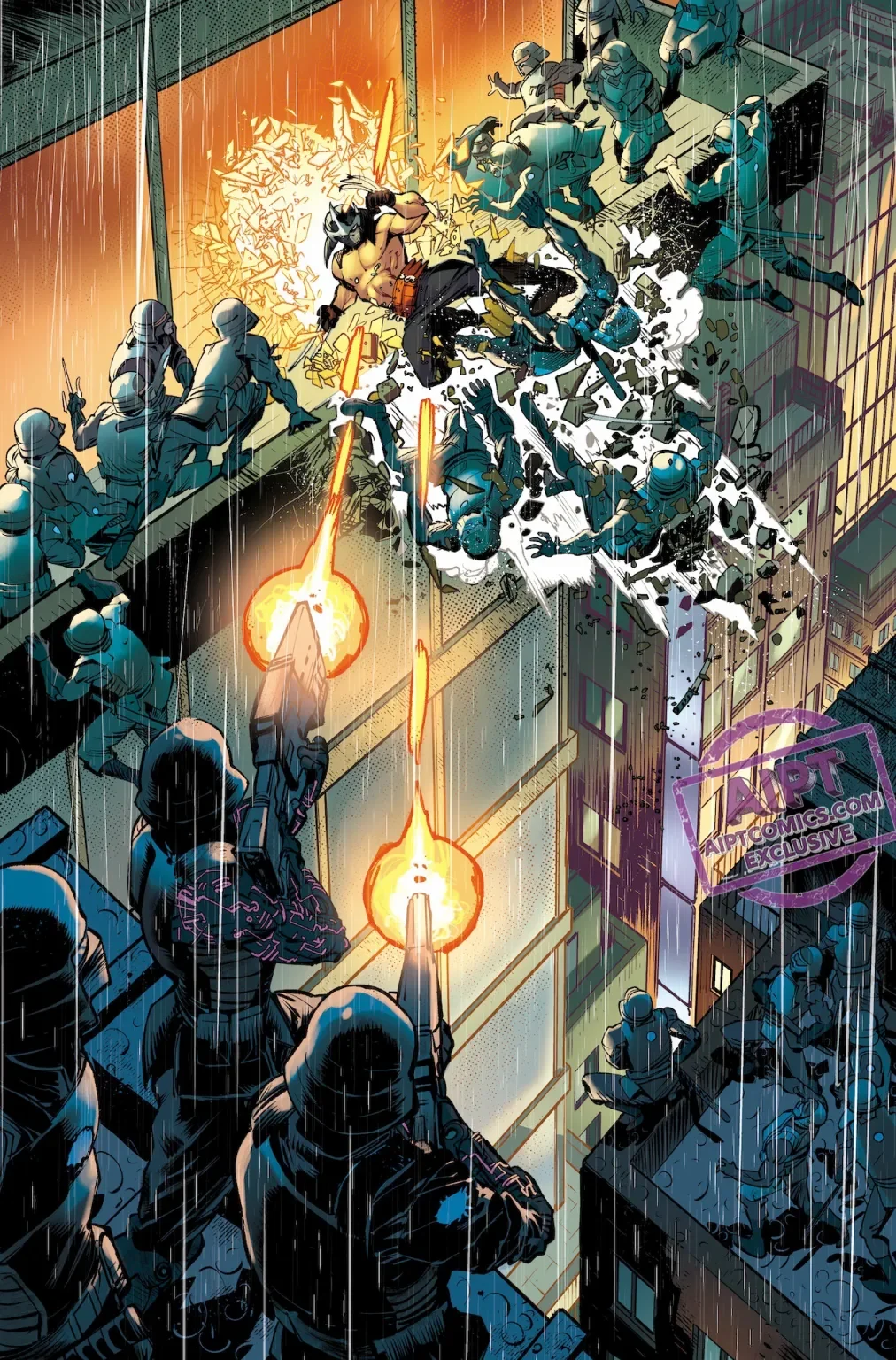
The issue opens with a masterclass in kinetic storytelling. Sid Kotian’s pencils capture the visceral reality of Shredder’s violence as he systematically dismantles a legion of Dog Star ninjas. The sequence is defined by its brutality; one particularly striking panel depicts Saki physically ejecting a foe through a window before engaging in a lethal dance with gun-wielding operatives.
The progression of the narrative is as follows:
- The Initial Siege: Shredder engages the Dog Star Clan, showcasing his dominance in hand-to-hand combat.
- The Turning Point: The violence reaches a crescendo when Saki utilizes a fallen opponent as a weapon during a Yakuza meeting. This scene serves as a focal point for the issue’s exploration of body horror, as the victim’s cybernetic programming is turned against the Yakuza leadership.
- The Call for Aid: Post-skirmish, the power dynamic shifts as a member of the Dog Star Clan approaches the Shredder. The promise of mutual benefit—the liberation of their clan from Kenji Norinaga—provides the catalyst for an uneasy partnership.
- The Escalation: With his new, albeit reluctant, allies in tow, Shredder prepares to move against the technological threats orchestrated by Norinaga, all while navigating the ever-present surveillance of the Earth Protection Force.
Supporting Data: Visualizing the Nightmare
The effectiveness of this narrative shift is largely dependent on the visual language established by artist Sid Kotian and colorist Marco Lesko. In comic book criticism, "visual storytelling" often refers to the marriage of panel layout and color theory, and in issue #8, this partnership is essential.

Kotian’s approach to anatomy and motion ensures that the reader feels every strike. His depiction of the "body horror" elements—specifically the intersection of human tissue and cybernetic hardware—is unsettling, grounding the high-concept sci-fi elements in the gritty reality of the streets.
Marco Lesko’s color palette is equally vital. By utilizing deep, oppressive shadows juxtaposed against the stark, cold white of lightning strikes, Lesko creates a sense of dread. The strategic use of a distinct reddish-orange hue every time the Shredder’s blades draw blood acts as a visual shorthand for danger. This specific coloring technique keeps the reader in a state of high alert, reinforcing the idea that the Shredder is a constant, looming threat—a shark in the water that never stops moving.
Official Context and Narrative Implications
The implications for the wider TMNT universe are profound. Writer Dan Watters has consistently utilized this series to explore the "weird" side of the franchise—a realm where mutants, aliens, and ancient magic occupy the same space as street-level crime. By introducing the Dog Star Clan’s reliance on advanced, potentially alien technology, Watters is effectively raising the stakes.

The inclusion of the Earth Protection Force (EPF) further complicates the Shredder’s journey. The EPF represents the bureaucratic and militaristic arm of human resistance to the "other." By placing Shredder between the Yakuza, the Dog Star, and the EPF, the story transforms into a high-stakes geopolitical thriller set within a dark, urban fantasy framework.
Furthermore, the characterization of Oroku Saki remains the anchor. Watters is not attempting to "redeem" the Shredder. Instead, he is refining the portrait of a man who is so formidable that he can survive encounters with beings that would destroy lesser individuals. Whether he is cutting down aliens or outmaneuvering tech-gods, the Shredder remains a character defined by his ability to conquer the impossible.
The Broader Impact on the TMNT Franchise
Teenage Mutant Ninja Turtles: Shredder #8 is not just another chapter in a character study; it is an expansion of the franchise’s boundaries. In the current landscape of comic books, where readers often demand higher stakes and more intricate character development, this issue delivers on both fronts.

Why This Matters:
- Narrative Interconnectivity: The story weaves together multiple plot threads, ensuring that the reader is never left without a sense of forward momentum. The intersection of the Yakuza’s criminal empire with the high-tech horrors of the Dog Star creates a multi-layered conflict that feels organic to the TMNT world.
- The "Shredder" Archetype: By stripping away the comfort of the Foot Clan’s infrastructure and forcing Shredder to operate on his own—or with allies he doesn’t necessarily trust—the story highlights why Oroku Saki is the most compelling antagonist in the franchise.
- Accessibility and Depth: For long-time fans, the issue provides a fresh take on a classic character. For new readers, the "body horror" and high-octane action serve as an accessible entry point into the deeper, more complex lore of the IDW TMNT run.
Final Assessment: A Must-Read for Genre Fans
As the story moves toward its inevitable conclusion, the tension is palpable. The questions raised in this issue—most notably how the Shredder will handle a threat that requires more than just a sharp blade to solve—will undoubtedly dictate the tone of the final installments.
Is the Shredder changing, or is he merely adapting? The evidence suggests the latter. Saki is a survivor, and his willingness to engage in an "unexpected partnership" is not a sign of weakness, but of strategic evolution. He understands that to defeat a monster, one must occasionally become something different.
For those interested in the craft of comic book storytelling, Teenage Mutant Ninja Turtles: Shredder #8 is a masterclass in pacing, tone, and visual impact. It proves that even after decades of publication, the Teenage Mutant Ninja Turtles universe remains a fertile ground for bold, dark, and inventive storytelling. Whether you are a devotee of the Foot Clan or simply an enthusiast of high-quality genre fiction, this issue is a necessary addition to your reading list. The intrigue, the horror, and the relentless action ensure that, at the very least, the Shredder remains the most formidable figure in the shadows of New York.









No comments yet. Be the first to join the conversation!