Nila Kartika Wati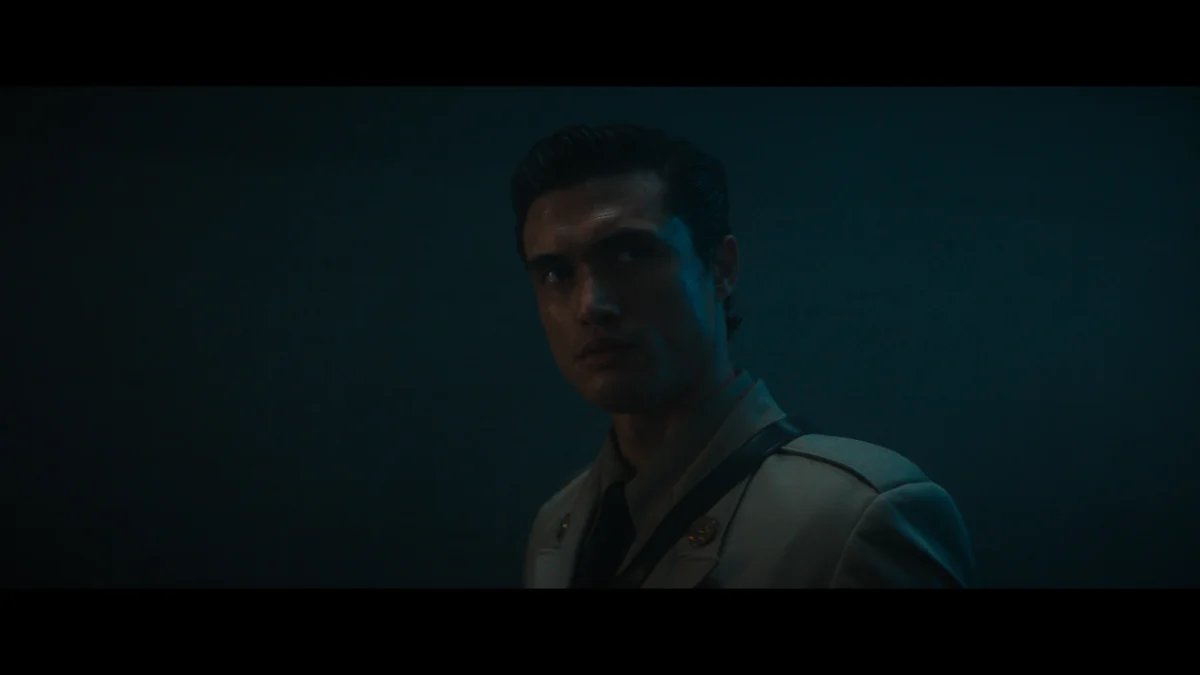
By Editorial Staff
Nicolas Winding Refn has long occupied a polarizing space in the landscape of contemporary auteur cinema. Once hailed as the razor-sharp architect of the modern crime thriller with his 2011 masterpiece Drive, the Danish provocateur has spent the last decade drifting further into an aesthetic abyss of his own making. With the premiere of his latest feature, Her Private Hell, at the 2026 Cannes Film Festival, that drift has officially reached its terminal velocity. If The Neon Demon was a self-indulgent experiment in superficiality, Her Private Hell is a complete collapse of form, narrative, and engagement, resulting in what may well be the most grueling theatrical experience of the decade.
The Premise and the Plunge
Her Private Hell marks Refn’s first feature-length project in ten years, a period defined by his increasingly abstract television work and a well-publicized personal health crisis in 2023. Expectations were high for a grand return to the big screen, but the result is a work that feels less like a film and more like a fever dream filtered through a broken kaleidoscope.
The story—if it can be called that—is set in an unnamed, rain-slicked metropolis that borrows heavily from the dystopian visual shorthand of Blade Runner 2049. The narrative centers on Elle (Sophie Thatcher), an aspiring actress who arrives at the gargantuan Tower Hotel for a high-stakes meeting with Hunter (Kristine Froseth), a social media influencer-turned-director. Their objective? To collaborate on a sci-fi project inspired by a fictional comic book series, "Candy Floss."
As the film progresses, the distinction between the "real" world and the "film-within-the-film" dissolves into a muddled slurry of neon lighting and heavy-handed symbolism. The plot is further tangled by the presence of Johnny Thunders (Dougray Scott), an oily, unctuous figure who serves as the object of obsession for the female leads, and his wife, Dominique (Havana Rose Liu). The interplay between these characters is staged as a narcotized psychodrama, characterized by dialogue so sparse and stilted that it feels like an attempt to mimic Bergman while under the influence of a potent sedative.

A Chronology of Artistic Attrition
The descent into the chaotic absurdity of Her Private Hell follows a predictable, if agonizing, trajectory:
- The Introduction: The film opens with a sequence of aggressive, saturated visuals, establishing a tone of immediate dread that never dissipates. The pacing is intentionally, almost sadistically, slow.
- The Rising Action: As Elle and Hunter begin their "creative process," the film introduces a secondary, equally incoherent subplot involving a mysterious serial killer known as "The Leather Man." This antagonist, draped in fetishistic black leather, stalks the streets, murdering women in a series of gratuitously violent vignettes that feel entirely detached from the central drama.
- The Intersection: The paths of Private Kay (Charles Melton)—a man searching for his missing daughter—and the various socialites collide in a series of near-motionless tableaus.
- The Climax: The "climax" offers no catharsis. Instead, it doubles down on the film’s penchant for visual static, culminating in a sequence of violence that feels less like a narrative conclusion and more like a exhaustion of the director’s ideas.
The Aesthetic of "Excrement in a Pipe"
If David Lynch famously describes ideas as "fish in a river" that one must catch, Nicolas Winding Refn’s approach in Her Private Hell resembles the byproduct of an exploded sewage pipe. The cinematography, provided by Magnus Nordenhof Jönck, is arguably the film’s only technical achievement, though it is ultimately wasted.
The lighting choices—ranging from impenetrable darkness to blinding, garish neons—frequently render the actors invisible or mask them entirely in a thick, artificial fog. This stylistic choice is compounded by Pino Donaggio’s musical score. Rather than building tension, the strings are deployed with such unrelenting, mournful intensity that they evoke the sensation of watching a masterpiece from a deathbed, though the film itself possesses none of the gravitas such a comparison requires.
Performance and Portrayal
The cast of Her Private Hell is comprised of undeniable talent, including Sophie Thatcher, Havana Rose Liu, Kristine Froseth, and Charles Melton. Yet, they are forced to operate within a directorial vacuum. Every line is delivered at a agonizingly slow cadence, as if the actors are trapped in the "Black Lodge" of a malfunctioning television set.
Charles Melton, following a string of career-defining performances, is relegated here to a "blank space"—a brooding, hollow shell of a character who exists merely to facilitate the film’s aimless wandering. The female characters are similarly hollowed out, serving as little more than decorative dolls for Refn to pose against glass surfaces and neon signs. Their dialogue, often reduced to singular, repetitive pleas, echoes the most polarizing aspects of Andrew Dominik’s Blonde, trading genuine character interiority for a superficial aesthetic of victimhood.

Official Responses and Industry Context
The premiere at Cannes was met with a stunned, chilly silence. While the festival has a long history of embracing Refn, the consensus among critics this year suggests that the director’s "enfant terrible" status has worn thin.
"Refn is chasing not a full artistic meal, but the isolated adrenaline hits of numbed-out doomscrolling," noted one early review. Industry insiders suggest that the film’s failure is not one of budget or technical capability—the film is, in fact, lushly produced—but one of fundamental intent. By prioritizing style over substance to such an extreme degree, Refn has effectively isolated even his most loyal supporters.
Implications for the Future of Auteurism
The failure of Her Private Hell carries significant implications for the "Refn brand." For years, the director has operated on the assumption that his audience would follow him down any rabbit hole, provided the colors were vivid enough and the synth-pop soundtrack was sufficiently moody. Her Private Hell challenges this assumption.
The film raises a difficult question for the industry: Is there a point where an auteur’s dedication to their "signature style" becomes a form of artistic malpractice? When a director treats his own past successes—such as the kinetic, focused energy of Drive—as objects of ridicule, he risks alienating the very audience that granted him his status. The "Mandela Effect" described by some critics—where viewers begin to question if Refn was ever truly as talented as they remembered—is the ultimate consequence of this project.
Final Verdict
Her Private Hell is a baffling, bewildering, and ultimately hollow exercise in vanity. It is a film that demands everything from its audience while offering nothing in return—no emotional resonance, no intellectual stimulation, and no narrative clarity. It is a work for no one, existing only to serve the director’s own desire to remain provocative, even when he has nothing left to say.

Grade: D
Her Private Hell is scheduled for a wide release on July 24 via Neon. Whether the film will find an audience in the commercial sector remains to be seen, but as a critical assessment of the state of contemporary art-house cinema, it stands as a cautionary tale of what happens when a visionary loses sight of the audience entirely.


 Reynand Wu
 Layla Zulfa