

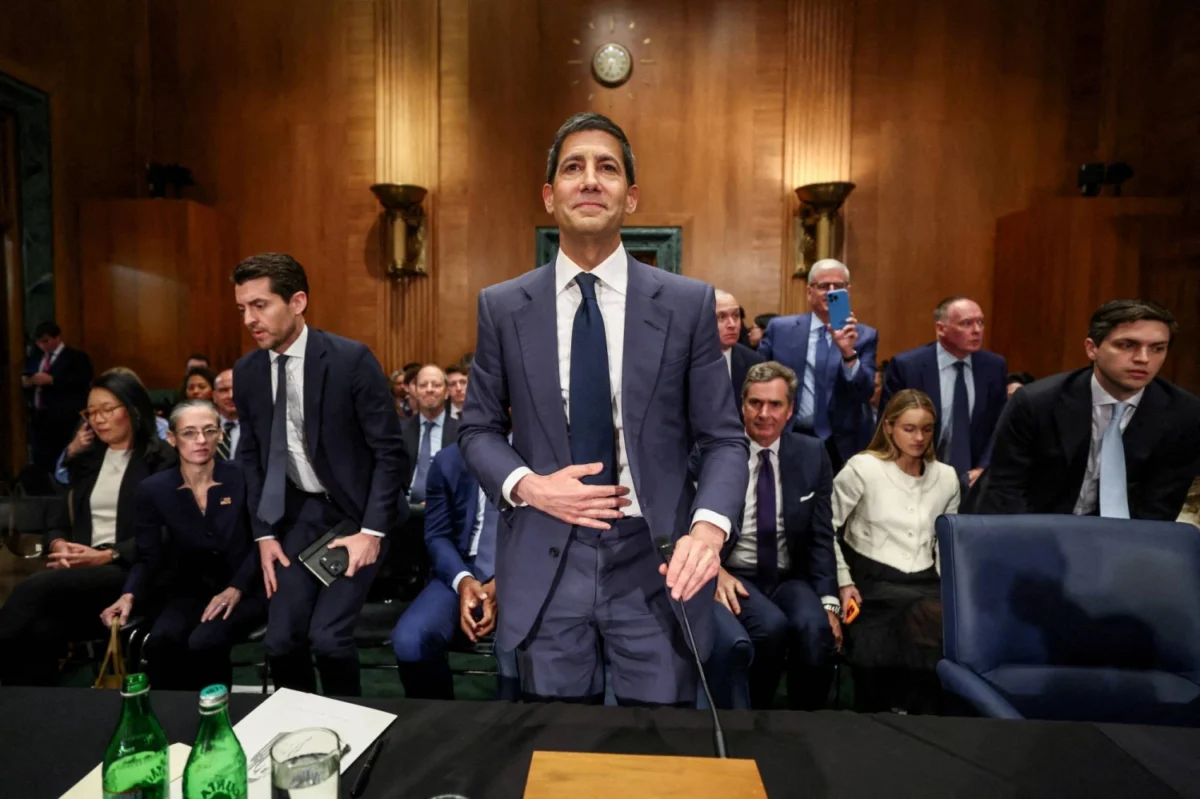
FRANKFURT, Germany — The global financial architecture, built upon the bedrock of the U.S. Federal Reserve’s role as the world’s de facto lender of last resort, is facing a moment of profound uncertainty. Kevin Warsh, the nominee selected by U.S. President Donald Trump to lead the Federal Reserve, has signaled a departure from the long-standing tradition of central bank autonomy. His recent suggestions—that the Fed’s mandate and operational independence should be curtailed when it comes to international crisis management—have sent ripples of anxiety through the corridors of central banking power in Europe and beyond.
For decades, the Federal Reserve has operated under the tacit assumption that its "independence" is not merely a domestic concern but a global public good. By decoupling monetary policy from the immediate political pressures of the White House and Capitol Hill, the Fed has provided the global economy with a stable, predictable anchor. However, should Warsh’s vision take hold, that anchor may be tethered to the political whims of the executive branch, fundamentally altering the way the world navigates financial turbulence.
The Core Conflict: Independence vs. Executive Oversight
At the heart of the controversy is a fundamental disagreement over the scope of the Federal Reserve’s authority. The Fed’s traditional crisis-fighting tools—most notably its dollar liquidity swap lines with other central banks—have been instrumental in preventing systemic collapses during the 2008 financial crisis and the 2020 pandemic.
Warsh has publicly posited that while the Fed should retain independence in setting domestic monetary policy, its activities in the international arena should be more closely coordinated with the presidential administration and Congress. This stance suggests a transition toward a "politicized" approach to international finance, where the Fed’s ability to inject liquidity into global markets could be used as leverage in broader diplomatic or trade negotiations.
"Central banking is not an island," supporters of the shift argue, suggesting that the Fed has overstepped its bounds in previous decades. Critics, however, argue that if the Fed’s crisis-fighting capabilities become subject to political approval, the speed and efficacy of its interventions will vanish, replaced by the glacial pace of legislative gridlock.
Chronology: The Evolution of a Contested Nomination
- January 2026: Kevin Warsh is officially floated as a primary candidate for the Federal Reserve Chair position, signaling a shift in the administration’s economic philosophy.
- February 2026: Initial interviews and confirmation hearings begin to reveal Warsh’s unconventional views on the Fed’s interaction with international markets.
- April 21, 2026: During a high-stakes confirmation hearing on Capitol Hill, Warsh articulates his belief that the Fed’s "crisis-fighting role abroad" should be subject to closer oversight by the executive branch.
- May 2026: Following the April testimony, European and Asian central banking officials express "grave concerns" in private and public forums, fearing a decoupling of the Fed from global market stability.
- Present Day: The financial markets remain in a state of watchful waiting, with volatility indices reflecting uncertainty over how the Federal Reserve will handle the next liquidity crunch under new leadership.
Supporting Data: Why the World Depends on the "Fed Put"
The U.S. dollar serves as the invoicing currency for the majority of global trade and the primary denomination for international debt. According to Bank for International Settlements (BIS) data, approximately 85% of foreign exchange transactions involve the U.S. dollar.
When global markets freeze—as they did in March 2020—the Federal Reserve’s swap lines provide the necessary "dollar grease" to keep the global engine running. Without this mechanism, the cost of credit for emerging markets skyrockets, and liquidity in European and Asian banking systems can evaporate within hours.
The concern among central bankers is that by politicizing these swap lines, the U.S. government could effectively "weaponize" the dollar. If a country or a region is currently in a trade dispute with the U.S., would they be denied access to the same liquidity lines afforded to allies? This is the fear that keeps heads of central banks in Frankfurt, Tokyo, and London awake at night.
Official Responses and Diplomatic Friction
The reaction from global financial centers has been swift and guarded. While few officials are willing to engage in open confrontation with a future U.S. Fed Chair, the undercurrent of dissent is palpable.

"The integrity of the international financial system relies on the assumption that the Federal Reserve acts based on market data, not political agendas," noted a senior official at the European Central Bank (ECB) on condition of anonymity. "If that pillar is removed, we are looking at a fragmentation of the global economy that will be difficult, if not impossible, to reverse."
On the other side of the Atlantic, proponents of the Trump-Warsh agenda argue that the Federal Reserve has been "unaccountable" for too long. They contend that the "Global Fed" model has allowed the central bank to commit the American taxpayer to massive international liabilities without a mandate from the elected representatives of the people.
"The era of the ‘technocratic priesthood’ is over," said a spokesperson for a prominent Washington-based economic think tank aligned with the administration. "The Fed needs to be responsive to the economic goals of the administration that appointed its leadership."
Implications: A New Era of Financial Fragmentation?
If Warsh successfully implements this shift in policy, the implications for the global economy could be seismic:
- Risk Premium Expansion: If markets believe that the U.S. dollar’s liquidity is no longer a "guaranteed" global good, they will demand higher risk premiums for holding dollar-denominated assets. This could lead to a sustained increase in global borrowing costs.
- De-dollarization Acceleration: Countries that fear being cut off from Fed liquidity during a future crisis may accelerate efforts to develop alternative settlement systems. We have already seen the early stages of this with the rise of digital currency projects in the BRICS nations.
- Market Volatility: The absence of a reliable "lender of last resort" would mean that minor financial shocks could potentially spiral into full-blown crises much faster than they do currently. Markets thrive on predictability; a politicized Fed is the antithesis of predictable.
The Institutional Balancing Act
The Federal Reserve, since its inception, has walked a thin line between its status as a government-created institution and its role as a private-market stabilizer. Warsh’s tenure promises to test the durability of the Fed’s charter. If he moves to integrate the Fed more deeply into the Executive Branch, he will fundamentally alter the "Great Moderation" era of central banking that has defined the last thirty years.
The coming months will be defined by a delicate dance. As Warsh prepares to take the helm, his every word will be parsed by algorithms and human traders alike. The central question remains: Can the Federal Reserve remain the bedrock of the global economy while becoming a tool of national political strategy?
History suggests that when central banks are forced to choose between political utility and systemic stability, the former often comes at the expense of the latter. For the global financial markets, the next few years may be a volatile journey through uncharted territory, as the world prepares for a Federal Reserve that is no longer content to be an independent observer of global finance, but a direct participant in the political theatre of the United States.
As the international community watches, the consensus is clear: the independence of the Federal Reserve is not just an American luxury—it is a global necessity. Whether that necessity survives the political realignments of 2026 remains the most significant question in the world of finance today.












No comments yet. Be the first to join the conversation!