Rifan Muazin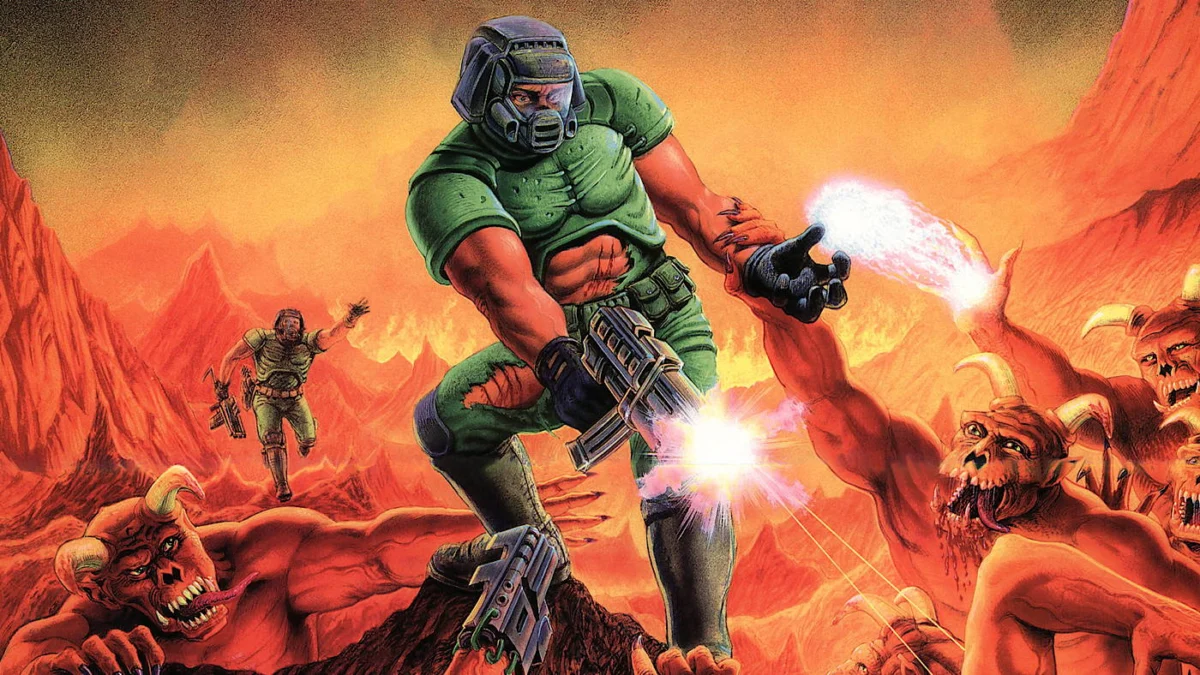
In a monumental recognition of the video game medium’s artistic legitimacy, the Library of Congress has officially inducted the original 1993 Doom soundtrack into the U.S. National Recording Registry. Composed by Bobby Prince, the pulse-pounding, heavy-metal-infused MIDI score is now etched into the annals of American history, joining an elite collection of audio recordings deemed "culturally, historically, or aesthetically significant."
This induction represents more than just a nod to nostalgia; it is a validation of the technical ingenuity and artistic vision that defined the early 1990s PC gaming revolution. Selected from a pool of over 3,000 public nominations, the Doom score now stands alongside legendary works from artists like Taylor Swift, Beyoncé, and Vince Gill.
The Genesis of a Digital Nightmare
To understand the significance of Doom, one must revisit the early 1990s. When id Software—comprised of visionaries like John Carmack, John Romero, and Tom Hall—began developing the game, they weren’t just making a shooter; they were building an immersive hellscape. The game’s frantic, high-octane gameplay required an audio backdrop that could match its blistering speed.
Enter Bobby Prince. A unique figure in the industry, Prince was not only a dedicated musician but also a practicing lawyer. His fascination with the burgeoning MIDI (Musical Instrument Digital Interface) technology of the mid-1980s allowed him to bridge the gap between abstract computer code and emotive soundscapes. While other developers were utilizing primitive beeps and bloops, Prince was leveraging the nuances of MIDI to create complex, guitar-driven melodies that felt aggressive, menacing, and undeniably "metal."
Prince’s brilliance was not just in the composition, but in the implementation. He meticulously assigned sound effects—the roar of a Baron of Hell, the blast of a shotgun, the rhythmic crunch of footsteps—to specific MIDI frequencies. This ensured that the chaotic audio landscape of Doom never became a muddy mess, allowing the player to hear essential gameplay cues without sacrificing the intensity of the soundtrack.
Chronology: From Floppy Disks to the Library of Congress
The journey of Doom from a shared-ware phenomenon to a national treasure spans over three decades.
- 1993: Doom is released, revolutionizing the First-Person Shooter (FPS) genre and cementing the status of the "PC Master Race" era. Its soundtrack becomes synonymous with the adrenaline of demon-slaying.
- 1994-2000: The soundtrack inspires a generation of bedroom composers and modders. MIDI files are ripped, remixed, and shared across early internet forums, spawning a community of fans who would later create professional-grade covers and metal adaptations.
- 2023: Koji Kondo’s iconic Super Mario Bros. theme breaks the barrier, becoming the first video game score to be inducted into the National Recording Registry. This opened the floodgates for the medium to be recognized as a distinct art form by the Library of Congress.
- 2024: The Registry inducts Daniel Rosengeld’s Minecraft: Volume Alpha and the Microsoft Windows reboot chime, signaling a shift toward recognizing the "sonic identity" of software.
- 2025: The Doom (1993) soundtrack is formally added to the registry, marking it as the third major video game audio contribution to be preserved for future generations.
Technical Prowess and MIDI Innovation
The National Recording Registry’s decision highlights a specific technical achievement: the clever manipulation of MIDI. In the early 90s, sound cards like the Sound Blaster were limited in their polyphony—the number of simultaneous sounds they could produce.
Prince understood these hardware limitations intimately. He wasn’t just writing music; he was engineering an audio experience within a rigid memory budget. By utilizing MIDI, he could command the hardware to produce specific textures that mimicked the distorted, aggressive sounds of heavy metal—a genre that captured the spirit of Doom perfectly.
This technical foresight paved the way for future game composers. By proving that computer-generated audio could evoke genuine terror, excitement, and narrative tension, Prince laid the foundation for the high-budget orchestral and synthesized scores we hear in modern titles like Doom Eternal or Cyberpunk 2077.
Official Responses and Cultural Impact
The Library of Congress released a statement detailing why the Doom score was an essential inductee. "Key to Doom‘s popularity was the adrenaline-fueled soundtrack created by Prince," the Registry noted. "The Doom soundtrack would go on to inspire countless remixes and lay the foundation for future generations of game composers."
Bobby Prince’s work is cited by the Registry not only for its influence on gaming but for its role in the popularization of MIDI as a legitimate tool for musical composition. His work remains a testament to the "hacker ethos" of the 90s, where constraints forced creativity rather than stifling it.
Industry veterans have also weighed in. John Romero, the legendary co-creator of Doom, has frequently spoken on the importance of audio in the game’s development. In recent discussions regarding the state of the gaming industry, Romero has pointed to the collaborative, high-pressure environment of id Software as the catalyst for the game’s perfection. While the game industry currently faces significant turbulence—marked by studio closures and layoffs—the preservation of Doom serves as a reminder of the medium’s enduring, timeless appeal.
Implications for the Future of Preservation
The induction of Doom into the National Recording Registry carries profound implications for the preservation of digital culture. For years, video game music was viewed as disposable—an accompaniment to gameplay rather than a work of art in its own right.
By classifying the Doom soundtrack alongside the works of legendary musical icons, the Library of Congress is sending a clear message: games are a critical component of the American cultural landscape. This move encourages archives, museums, and historians to take video game assets—source code, audio files, and design documents—more seriously.
Furthermore, this recognition bolsters the case for "digital archiving." As software becomes increasingly ephemeral, with games disappearing from digital storefronts overnight, the act of preserving these soundtracks ensures that the "sound of an era" is not lost to bit-rot. The Doom soundtrack is no longer just an asset on a dusty 3.5-inch floppy disk; it is an artifact of the information age.
Conclusion: A Lasting Legacy
As we look back at the history of electronic entertainment, it becomes clear that Doom was a turning point. It defined the mechanics of the FPS, pioneered the distribution model of shareware, and now, through its soundtrack, has claimed its place in the history of music composition.
Bobby Prince’s work serves as a reminder that the most impactful art often emerges from the most unexpected places—in this case, from a small office filled with programmers, designers, and a musician who saw the potential for greatness in the hum of a MIDI chip. As future generations explore the history of the late 20th century, they will hear the distorted, driving rhythms of E1M1 ("At Doom’s Gate") and understand exactly why this sound, and this game, mattered so much to the world.
The inclusion of Doom in the National Recording Registry is not the end of its journey; it is the beginning of its life as an immortal piece of cultural history. Whether you are a hardened marine fighting on the moons of Mars or a historian documenting the digital age, the legacy of Doom is, and will remain, loud, proud, and impossible to ignore.


 Siti Muinah
 Suro Senen