Iffa Jayyana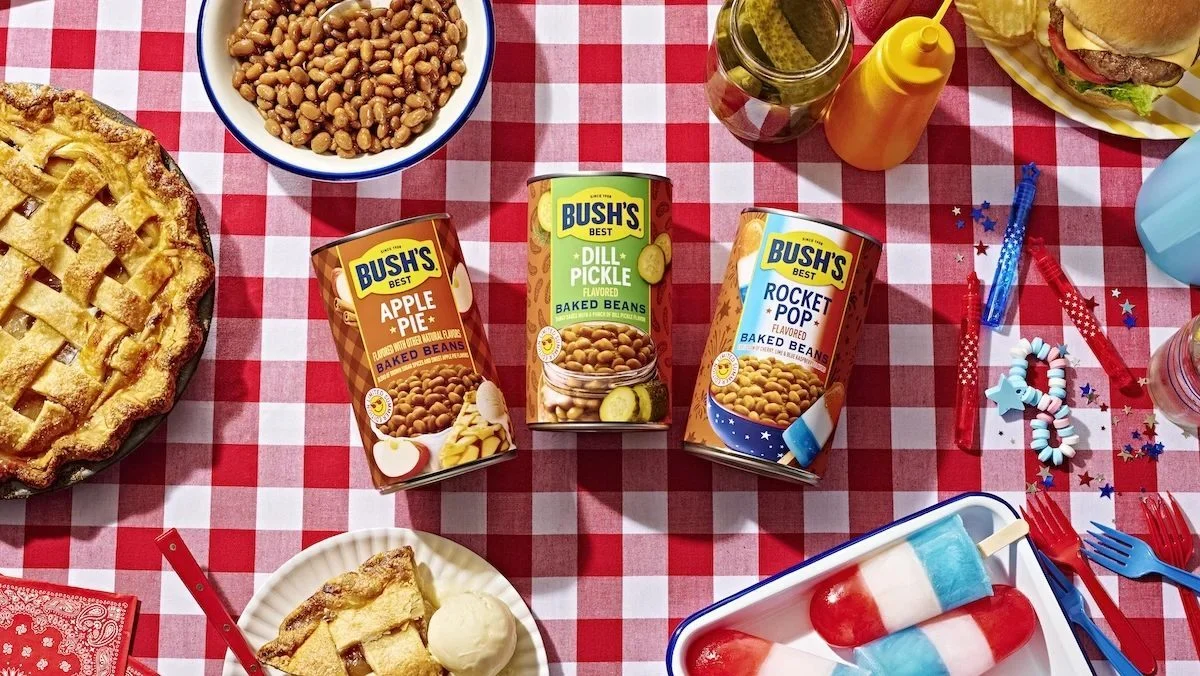
In the world of pantry staples, few brands command the household recognition of Bush’s Baked Beans. For decades, the name has been synonymous with backyard barbecues, slow-cooked savory sides, and the quintessential American picnic. However, as the mercury rises and the nation prepares for the 2026 summer season, the company is departing from its traditional flavor profile. In a move that has sent shockwaves through the food industry and social media alike, Bush’s has announced the launch of three limited-edition, unconventional summertime flavors: Dill Pickle, Apple Pie, and Rocket Pop.
This strategic pivot represents more than just a seasonal promotion; it is a calculated experiment in "flavor-first" innovation, testing the limits of how far consumers are willing to push the boundaries of a classic comfort food.
The Main Facts: A Trio of Unexpected Profiles
The announcement confirms that Bush’s is moving away from the molasses-and-bacon standard to embrace flavors typically reserved for snacks, desserts, and frozen treats. The three new varieties are as follows:
- Dill Pickle: Aiming to capture the zesty, vinegar-forward crunch of a classic picnic side, this variety seeks to bridge the gap between a sandwich topping and a warm side dish.
- Apple Pie: A bold fusion that leans into the nostalgic profile of warm cinnamon, nutmeg, and stewed orchard fruit, theoretically transforming the bean into a sweet-savory hybrid.
- Rocket Pop: Perhaps the most polarizing of the collection, this flavor attempts to replicate the iconic tri-colored popsicle—a blend of cherry, lime, and blue raspberry—within a bean-based delivery system.
While these flavor combinations may seem chaotic at first glance, they reflect a broader trend in the CPG (Consumer Packaged Goods) sector known as "flavor-flipping," where established brands leverage their legacy status to launch high-engagement, limited-run products designed to drive social media buzz and trial purchases.
Chronology: From Legacy Staple to Viral Disruptor
To understand how Bush’s arrived at this point, one must look at the recent evolution of the culinary landscape.
Early 2024: Market research data indicated that while baked beans remained a staple, the demographic for purchase was skewing older. Younger consumers, particularly Gen Z and Millennials, showed lower engagement with traditional canned goods.
Late 2025: Product development teams began experimenting with "flavor layering." The goal was to maintain the integrity of the navy bean’s texture while altering the liquid medium. After hundreds of iterations, the company narrowed down a list of flavors that resonated with "summer nostalgia."
May 2026: The official announcement broke. The campaign was designed to be provocative, intentionally using high-contrast photography—placing actual popsicles and pickles next to cans of beans—to spark debate.
Current Status: The products are currently shipping to major retailers nationwide. The release is timed specifically for the Memorial Day weekend, setting the stage for these items to become the "must-have" (or "must-avoid") curiosity of the summer barbecue season.
Supporting Data: The Science of "Extreme Flavoring"
Food scientists suggest that the success of these products hinges on the psychology of "curiosity consumption." According to industry analysts, a significant portion of food purchases in the "limited-edition" category are driven by the "dare" factor.
Data from similar market disruptions—such as pickle-flavored popcorn or fruit-flavored sodas—suggest that even if the product does not become a daily pantry staple, the brand awareness generated by the launch far exceeds the marketing spend required for a traditional product rollout.

Furthermore, the nutritional profile remains largely consistent with standard canned beans. They provide a high-fiber, plant-based protein source, which offers a unique marketing angle: "The nutritional benefits of beans, with the flavor profile of your favorite summer treat." Whether the sugar content required to mimic a Rocket Pop will offset the nutritional benefits of the legumes is a question that nutritionists are already beginning to debate.
Official Responses and Corporate Strategy
In an internal memo shared with trade publications, a spokesperson for Bush’s noted that the company is "not interested in maintaining the status quo." The spokesperson emphasized that summer is a time for play, and the product line is meant to reflect the spontaneity of the season.
"We wanted to challenge the consumer’s perception of what a bean can be," the statement read. "When you think of a summer picnic, you think of pickles, you think of fruit pies, and you think of frozen popsicles. By bringing those flavors into our kitchen, we are essentially inviting our customers to play with their food."
While the company has remained tight-lipped regarding sales projections, they have signaled that the success of this line will be measured not just in units sold, but in the volume of online engagement and consumer sentiment analysis.
Implications: The Future of Pantry Staples
The release of these specific flavors raises critical questions about the future of traditional food manufacturing. Is this a one-off gimmick, or is it a sign of a permanent shift in how companies like Bush’s will compete for shelf space?
1. The Death of the "Safe" Product
Brands are increasingly realizing that being "boring" is a greater risk than being "weird." In an era of digital discovery, a product that is perfectly fine but uninteresting will fail to capture the attention of a digital audience. Bush’s is opting for the "weird" route, effectively ensuring they stay relevant in the cultural conversation.
2. Cross-Category Merging
The "Apple Pie" and "Rocket Pop" beans represent a blurring of lines between aisles. If these products succeed, we could see a future where beans are marketed as breakfast items, dessert toppings, or even late-night snacks. This could lead to a massive expansion of the canned bean category into previously untapped areas of the supermarket.
3. The Consumer Verdict
Ultimately, the success of the Bush’s seasonal line will rest on the palates of the average American family. If the "Rocket Pop" beans are relegated to the "internet challenge" category—bought, tried, and filmed for social media, then discarded—the experiment will be deemed a marketing success but a culinary failure. However, if these flavors manage to find a niche, even a small one, it could pave the way for a more adventurous era in home cooking.
Conclusion: Ready to Live?
As the summer of 2026 approaches, the decision to stock one’s pantry with Dill Pickle or Rocket Pop beans is an act of culinary bravery. It is an invitation to break the routine of the backyard barbecue.
For the average consumer, these cans represent a paradox: a traditional, reliable, and deeply historic brand attempting to reconcile its past with a hyper-modern desire for novelty. Whether these flavors become the definitive taste of the summer or a cautionary tale in food branding, one thing is certain: Bush’s has successfully ensured that no one will be looking at their bean rack the same way again.
Whether you are a traditionalist who believes beans should only ever see brown sugar and bacon, or an adventurer eager to see if a popsicle-flavored legume can truly satisfy, the opportunity to weigh in arrives this month. It is time to see if you are truly ready to live—by eating the weird.

 Siti Muinah
 Azzam Bilal Chamdy