

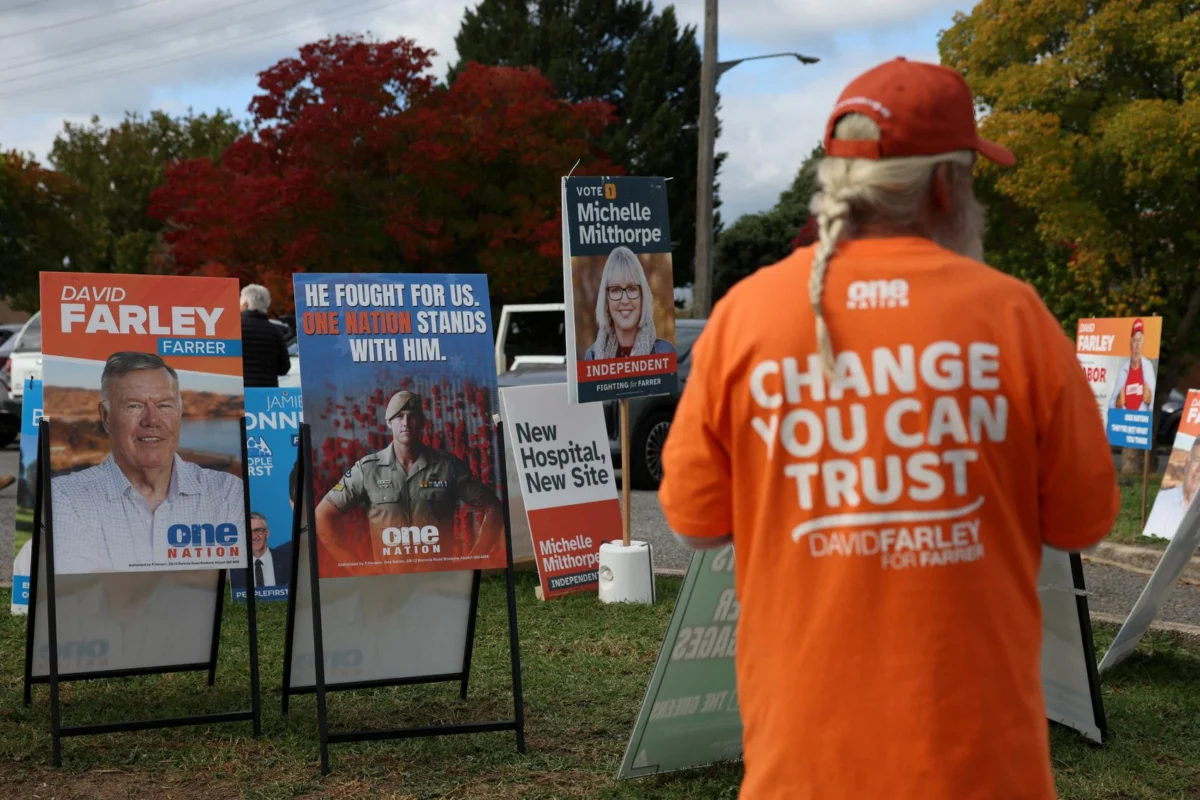
CANBERRA – In a development that has sent shockwaves through the Australian political establishment, the right-wing populist One Nation party has secured its first-ever seat in the House of Representatives. The victory, occurring in the rural electorate of Farrer, marks a pivotal shift in the nation’s political landscape, signaling a growing voter appetite for nationalist policies and a potential realignment of the conservative movement.
As the dust settles on the by-election, the result has emboldened the party’s leadership to push an aggressive agenda focused on curbing mass migration, abandoning net-zero carbon targets, and adopting hardline deportation tactics reminiscent of the "America First" policies championed by former U.S. President Donald Trump.
The Main Facts: A Landmark Breakthrough
The by-election in the rural seat of Farrer, located approximately 550 kilometers south of Sydney, saw farmer David Farley claim victory for One Nation. While the seat was previously held by the Liberal Party—the primary partner in Australia’s mainstream conservative coalition—the loss of this stronghold to a minor party is being viewed as a systemic failure by the traditional opposition.
Although the result does not threaten the parliamentary majority of Prime Minister Anthony Albanese’s center-left Labor government, the symbolic weight of the victory is immense. One Nation has historically been confined to the Senate, where it has acted as a crossbench disruptor. Securing a seat in the lower house—the house of government—provides the party with a legislative platform to influence the national discourse on a daily basis.
Current polling suggests this is not an isolated incident. One Nation is currently tracking second behind the Labor Party in national surveys, consistently outperforming the Liberal-National Coalition. Furthermore, the party’s founder and leader, Senator Pauline Hanson, has seen her personal approval ratings eclipse those of both Prime Minister Albanese and the Liberal leader, underscoring a deepening disillusionment with the political status quo.
A Chronology of the Shift
The rise of One Nation to this milestone was not instantaneous; it is the culmination of years of brewing social tension and shifting political priorities.
- Early 2024: National debates regarding the cost of living and housing shortages begin to link directly to record-high net overseas migration figures.
- Mid-2024: A series of anti-immigration marches occur in major Australian cities, signaling that immigration—long a "third-rail" topic in Australian politics—has moved to the forefront of the public consciousness.
- Late 2024: Public frustration with the "Net Zero 2050" policy begins to manifest in rural electorates, where agricultural communities express concern over the economic impact of energy transitions.
- Early 2025: Pauline Hanson announces a pivot toward the "Trumpian" model of governance, specifically calling for aggressive deportation policies and a moratorium on specific visa categories.
- Saturday, 2026: David Farley wins the Farrer by-election, officially breaking One Nation’s "lower house ceiling."
Supporting Data: The Demographic and Political Climate
Australia, a nation of 27 million, has long been defined by its status as a multicultural success story. With half of the population either born overseas or possessing at least one parent born abroad, the country’s identity is inextricably linked to migration.
However, recent economic pressures are testing this social contract. Data suggests that the influx of migrants, coupled with an acute housing supply crisis, has pushed public sentiment to its most restrictive level in decades.
Public Sentiment Indicators
- Migration Trends: Despite government efforts to manage intake, the net migration figures have remained at historical highs, creating strain on infrastructure and public services.
- The "Cost-of-Living" Factor: Inflation remains a stubborn issue. One Nation’s messaging—blaming migration for wage suppression and rent inflation—has found a receptive audience in rural and peri-urban areas.
- The "Trump" Effect: The adoption of rhetoric similar to the U.S. Republican party is deliberate. By mirroring the populist success of the U.S. right, One Nation has successfully captured the "forgotten" voter demographic, particularly those in the agricultural sector who feel disconnected from the urban-centric policy decisions of Canberra.
Official Responses and Political Reactions
The victory has elicited a range of reactions from across the political spectrum, reflecting the anxiety and opportunism the result has generated.
The Opposition’s Reckoning
Liberal shadow treasurer Tim Wilson acknowledged the severity of the loss during televised remarks on Sunday. "One Nation’s victory is a wake-up call that shows there is a lot of work we have to do," Wilson stated. "We have failed to articulate a bold and confident vision for the country that resonates with the people of Farrer and beyond. We need to be clearer about where we want to take Australia."
The Liberal Party now faces an existential crisis: move further to the right to reclaim voters lost to One Nation, or maintain a moderate course and risk further erosion of their base.
The Labor Government’s Stance
Prime Minister Anthony Albanese’s government has adopted a posture of moral and social condemnation. Labor officials have consistently characterized One Nation’s platform as antithetical to the Australian "social fabric." By refusing to run a candidate in Farrer—a strategic choice aimed at denying the party oxygen—Labor effectively ceded the territory, but their rhetoric suggests they intend to make the next general election a referendum on the nature of Australian identity.
One Nation’s Victory Lap
Senator Pauline Hanson, ever the populist firebrand, took to social media to celebrate the result. "The people of Australia will not be forgotten," Hanson posted on X. "One Nation will fight for you on the floor of Parliament. We will fight to lower the cost of living, end the obsession with net-zero, and stop mass migration."
Implications: What Lies Ahead?
The election of David Farley is not merely a statistical anomaly; it is a catalyst for a broader shift in Australian governance.
1. The Migration Debate
The discourse on immigration has shifted from "how many" to "should we stop." By pushing for aggressive deportations and a hard cap on migration, One Nation has forced mainstream parties to defend policies that were previously considered settled consensus. Expect future parliamentary sessions to be dominated by debates on visa quotas and border security.
2. The Energy Transition
The anti-net-zero sentiment that propelled Farley to victory in rural Farrer is likely to spread. If the Liberal Party feels pressured to match One Nation’s rhetoric to survive, the bipartisan consensus on climate action could fracture, potentially leading to policy reversals or a slowdown in renewable energy implementation.
3. The Reconfiguration of the Right
The most significant implication is the threat to the traditional conservative coalition. If One Nation continues to poll at levels near or above the Liberal Party, the latter faces the risk of becoming a minority force in the conservative sphere. We may see a period of intense instability within the Coalition, potentially leading to new alliances or a total fragmentation of the conservative vote.
4. Societal Polarization
Finally, the rhetoric surrounding the by-election highlights a deepening divide between urban, multicultural centers and rural, traditionalist outposts. As One Nation continues to champion the "forgotten" Australian, the tension between these two demographics is likely to intensify, potentially leading to a more polarized and contentious national election cycle in the coming year.
As the 2026 political calendar progresses, all eyes will be on David Farley’s first days in Canberra. Whether he acts as a bridge for populist sentiment or a disruptor that paralyzes the legislative process remains to be seen. One thing, however, is clear: the Australian political landscape has been permanently altered, and the traditional gatekeepers of power are now firmly on the defensive.
Copyright © Thomson Reuters 2026. All rights reserved.












No comments yet. Be the first to join the conversation!