Muslim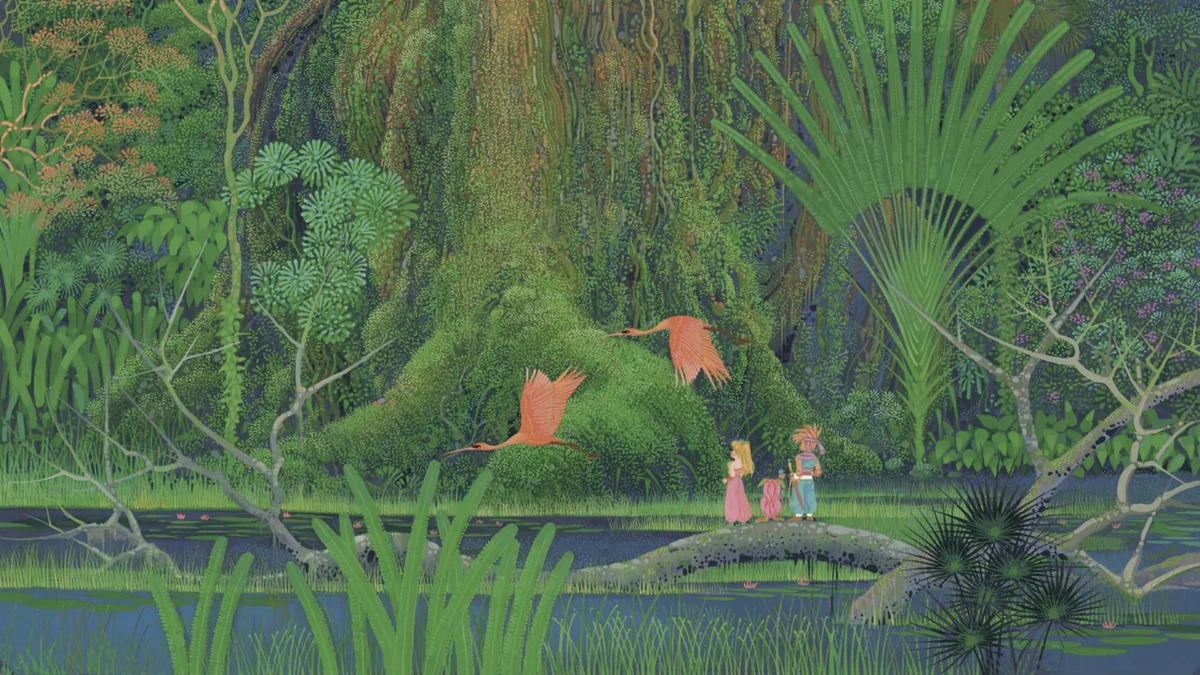
Secret of Mana occupies a paradoxical space in the pantheon of role-playing games. To revisit it today is to engage with a title defined by its contradictions: it is a work of undeniable visual splendor and legendary status, yet it is simultaneously hampered by the archaic friction of its combat mechanics, uneven pacing, and a narrative that often feels like a skeleton waiting for more flesh.
However, beneath these divisive mechanical layers lies the game’s true, beating heart—the soundtrack. Composed by Hiroki Kikuta, the score for Secret of Mana is not merely background accompaniment; it is the atmospheric bedrock upon which the entire experience is built. More than three decades after its initial release, the music remains the primary reason the game continues to captivate new generations of players, elevating the experience from a "pretty" 16-bit curiosity to a work of genuine, sublime artistry.
The Architecture of Sound: The 16-Bit Gold Standard
To discuss the music of Secret of Mana is to speak of a masterpiece that defined the SNES era. While the gaming landscape of the early 90s was filled with competent MIDI-based scores, Kikuta’s work possessed a structural complexity and an emotional range that transcended the limitations of the SPC700 sound chip.
The soundtrack is widely regarded as a pinnacle of video game composition. If the game’s narrative—often hindered by the truncated, somewhat dry English localization of the era—struggles to convey the weight of its own stakes, the music bridges the gap. It performs the heavy lifting of world-building, utilizing exhilarating trills, solemn drones, and unexpected harmonic shifts to communicate gravitas where the dialogue fails. As Samuel Taylor Coleridge famously theorized regarding the "willing suspension of disbelief," the immersion provided by Kikuta’s score forces the player to ignore the game’s mechanical shortcomings in favor of its emotional truth.
A Chronology of Resonance: Three Defining Movements
To understand the genius of this score, one must examine its specific applications. While the entire album is a cohesive journey, three tracks—"Fear of the Heavens," "Into the Thick of It," and "Ceremony"—serve as the primary case studies for how audio can define a player’s psychological state.
I. The Overture: "Fear of the Heavens"
The game does not ease the player into its world; it demands their immediate attention. "Fear of the Heavens" is a masterclass in establishing mythic scale. Following a haunting, ethereal cry that serves as an audio signature for the game’s mysterious, ancient nature, a slow, reverb-heavy piano melody begins to cascade. This is the sound of time itself echoing through the ages.
As the melody shifts into a brighter major key, the music mirrors the text crawl that explains the legend of the Mana Tree. It provides the player with an immediate sense of purpose—a feeling that they are not merely playing a game, but inheriting a legacy. It is a bold, confident beginning that frames the entire adventure as a grand, unfolding history.
II. The Call to Adventure: "Into the Thick of It"
If "Fear of the Heavens" sets the myth, "Into the Thick of It" sets the pace. This is the definitive anthem of the Secret of Mana experience. Played the moment the protagonist is exiled from his village and steps into the vast, untamed wilderness, the piece serves as the perfect companion for the wanderer.
The track is built upon a persistent, ostinato harpsichord pattern. The metallic timbre of the harpsichord is crucial here; it provides a sense of "enduring age," suggesting that the world the player is entering is far older than the character inhabiting it. When the flute-led melody enters, it carries a palpable sense of wonder, but it is a wonder tempered by hesitation. The key changes are abrupt, almost like stumbling on uneven ground, perfectly mirroring the protagonist’s uncertainty as he leaves his known life behind. It is a brilliant marriage of composition and narrative context: the music feels as wild, untamed, and optimistic as the journey ahead.
III. The Descent into Dread: "Ceremony"
Perhaps the most striking departure in the score is "Ceremony," a track that challenges the player’s comfort zone. Eschewing traditional Western harmonic structures, Kikuta utilizes Indonesian gamelan influences, characterized by microtonal clashes and an uneven, rhythmic cadence.
When the player encounters the brainwashed inhabitants of a kingdom held within a dark, demon-adorned temple, the music does not just underscore the scene—it dictates the psychological horror of it. The bowed glass textures and intermittent, animalistic howls evoke a sense of the "alien" and the "profane." It is a rare moment of genuine, spine-crawling dread in a 16-bit RPG, proving that the music is often more effective at creating atmosphere than the limited sprite-based visuals could ever be.
Supporting Data: The Technicality of Immersion
Kikuta’s approach to the Secret of Mana score was rooted in a unique philosophy. In various interviews and retrospectives, it has been noted that the composer treated the game’s sound design as an interactive dialogue rather than a static recording. By utilizing a blend of high-frequency percussion and deep, resonant pads, he created a soundscape that felt "three-dimensional" even on limited hardware.
The "mood-setting" efficacy of the score is not purely subjective; it is rooted in the strategic use of dissonance. Where many contemporary composers focused on melodic earworms, Kikuta leaned into the unsettling nature of the game’s world. His willingness to allow "missteps" in the music—the aforementioned key shifts that sound like a character catching their footing—demonstrates a commitment to the "experiential" nature of the game. It is a form of empathetic composition: the music feels what the player feels.
Industry Perspectives: The Legacy of Kikuta’s Vision
While Square (now Square Enix) has produced many iconic soundtracks, including those of Nobuo Uematsu and Yasunori Mitsuda, Kikuta’s work on Secret of Mana stands as a singular, idiosyncratic pillar. Critics often point to the 2018 remake of the game as a point of comparison; while the remake updated the visuals and attempted to modernize the sound, it struggled to replicate the "soul" of the original.
This reinforces a core implication of game design: that the "perfection" of a game is not found in the resolution of its pixels or the fluidity of its code, but in the harmony of its elements. The original Secret of Mana is a flawed product of its time, yet it succeeds because the music provides a narrative glue that holds the disparate parts together. Industry analysts often cite this as a primary reason for the enduring popularity of retro gaming soundtracks; they are not just nostalgic relics, but complete aesthetic packages that communicate intent more effectively than modern, high-fidelity productions often manage.
Implications for Future Game Development
The enduring impact of Secret of Mana serves as a critical lesson for modern developers. In an era where game development is increasingly focused on technical polish and high-fidelity assets, the "Kikuta Method" suggests that sound is the ultimate equalizer. A game with mediocre pacing or clunky combat can be saved by a score that provides emotional context, fills in narrative gaps, and dictates the psychological tempo of the player.
For developers and composers alike, the lesson is clear: music is not a post-production layer. It is a foundational element that should be integrated into the conceptual stage of world-building. When the score is designed to "feel" the environment—to trip when the path is uneven and to mourn when the world is lost—the player is not just playing a game; they are participating in a sensory dialogue.
Conclusion: A Masterclass in Emotive Design
Secret of Mana remains a controversial title. Its gameplay loops are often cited as repetitive, and its story is frequently viewed as a missed opportunity for deeper character development. Yet, as I finish my fifth playthrough of the original 16-bit version, I am struck by the same shivers I felt decades ago.
This is the power of Hiroki Kikuta’s composition. It is a masterclass in mood-setting, proving that a truly great score does more than accompany a game—it defines its soul. By skillfully bridging the gap between aural sensation and experiential storytelling, Secret of Mana transcends its own limitations. It remains, despite its flaws, one of the most emotionally resonant experiences in the history of the medium, a testament to the fact that while games may age, the music that gives them life is truly timeless.


 Asro
Asro