

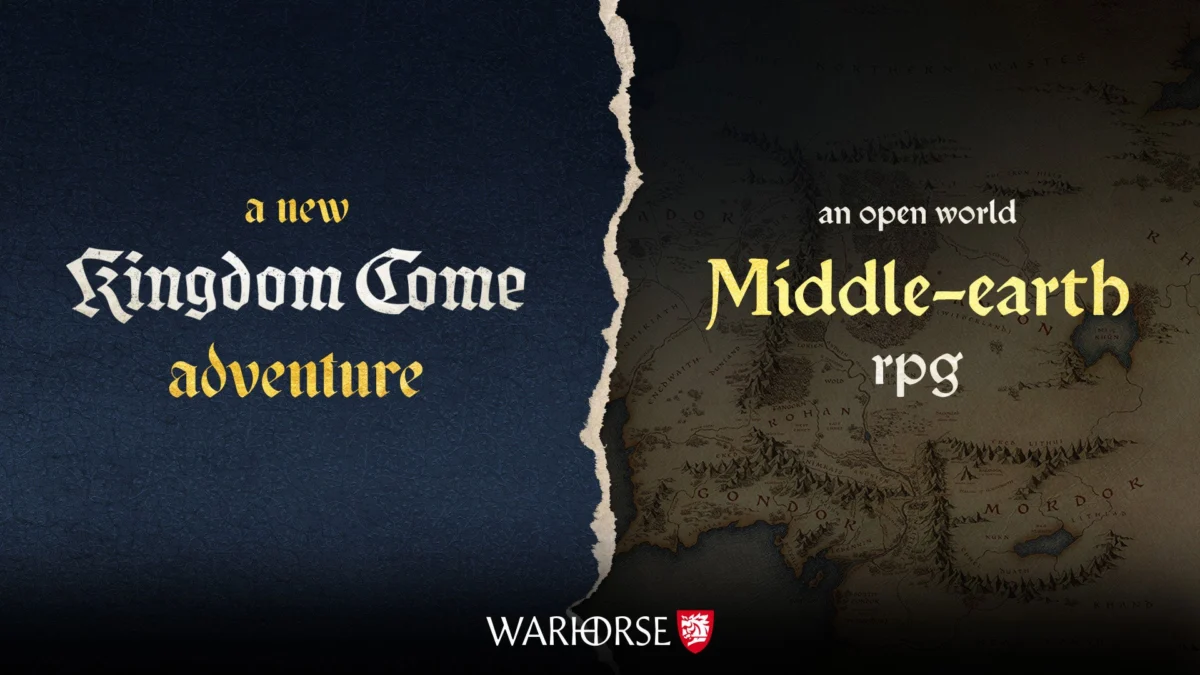
The gaming industry has been buzzing with speculation for months, but the silence has finally been broken. Warhorse Studios, the Czech development powerhouse best known for its hyper-realistic medieval simulation Kingdom Come: Deliverance, has officially confirmed that it is moving into the realm of high fantasy. In a move that has sent shockwaves through the RPG community, the studio announced it is currently in production on a massive, open-world project set within the legendary Middle-earth universe created by J.R.R. Tolkien.
Alongside this ambitious expansion into the lore of Arda, the studio has also confirmed that a new Kingdom Come adventure is in active development. While details remain sparse, the duality of these projects suggests that Warhorse is positioning itself as a titan of narrative-driven, open-world role-playing games.
A Chronology of Speculation and Confirmation
The seeds for this announcement were sown long before the formal reveal. As early as May 1st, whispers began circulating in industry circles that Warhorse Studios was pivoting toward a major intellectual property acquisition. Investigative reporting at the time hinted that the developers were deep in pre-production on a "huge, immersive RPG" tied to the Lord of the Rings license.
For months, the studio maintained a posture of guarded optimism, refusing to confirm or deny the rumors while simultaneously dropping subtle hints about their expansion. The confirmation arrives at a pivotal moment for Embracer Group, the parent entity that acquired the rights to Middle-earth Enterprises in 2022. Following a period of corporate restructuring and financial turbulence, which resulted in Embracer splitting into three distinct entities, the path was cleared for high-profile projects to finally move into active development.
This announcement serves as a bookend to a long period of uncertainty regarding the future of Tolkien’s works in the interactive space. With Amazon recently shuttering its long-gestating Lord of the Rings MMO project—citing a pivot toward "compelling new experiences"—the vacuum for a definitive, high-fidelity Middle-earth RPG has never been more apparent. Warhorse now steps into that void with a proven track record of creating living, breathing historical worlds.
The Dual Vision: A New Kingdom Come Adventure
While the Middle-earth project has stolen the headlines, the announcement of a new Kingdom Come adventure is equally significant. The studio’s phrasing—deliberately ambiguous—has sparked intense debate among the series’ dedicated fanbase.
Does this represent a full-fledged Kingdom Come: Deliverance 3, or a more experimental spin-off? Given the studio’s penchant for "historical authenticity," fans are speculating on everything from new regional settings within the Holy Roman Empire to specialized mechanics that might push the boundaries of their existing simulation engine. Whether this project takes the form of a direct sequel or a thematic evolution, it underscores the studio’s commitment to maintaining its legacy of grounded, realistic storytelling even as they venture into the fantastical.
Middle-earth: A Sandbox for Simulation Experts?
The most compelling question surrounding the new Middle-earth project is how Warhorse will apply their specific design philosophy to a fantasy setting. The studio gained global acclaim for its uncompromising approach to the medieval experience in Kingdom Come: Deliverance. Their worldbuilding is characterized by an obsession with detail—where the superstitions of the peasantry carry as much weight as the political machinations of the nobility.
In Kingdom Come, the developers famously toyed with the concept of "monsters." Players might hear terrifying rumors of a dragon ravaging the countryside, only to discover through diligent investigation that the "dragon" is actually a collection of alligator bones, misinterpreted by a local population governed by folklore rather than zoology.
Translating this "grounded" approach to a world where magic, balrogs, and elven enchantments are literal, verifiable truths will be the studio’s greatest challenge. Will they maintain the "dedication to the bit"—the idea that the inhabitants of Middle-earth perceive their world with the same mixture of awe and pragmatic superstition that 15th-century Bohemians did? If they can capture the sheer scale of Tolkien’s geography while maintaining the granular, interpersonal focus of their previous work, they may well redefine the fantasy RPG genre.
Embracer Group and the Rights Landscape
The corporate architecture behind this project is as complex as the lore of the Silmarillion itself. Following the massive 2022 acquisition of Middle-earth Enterprises, Embracer Group sought to monetize one of the most valuable IPs in fiction. The subsequent implosion of the group’s aggressive expansion strategy necessitated a spin-off of their various assets.
The fact that this project is moving forward under the Warhorse banner—likely supported by the resources of the newly independent Middle-earth Enterprises—suggests a level of creative autonomy that was previously in doubt. By separating the gaming rights into a dedicated entity, the publishers have created a roadmap that allows for long-term, stable development cycles, free from the immediate, short-term pressures that often plague massive multi-media conglomerates.
Implications: Tradition, Representation, and Fantasy
As the excitement builds, the industry is also beginning to discuss the sociological implications of this development. Warhorse Studios has previously navigated a complicated public discourse regarding their creative direction and the political stances of their leadership. Founder Daniel Vávra has been a vocal critic of modern trends in gaming, particularly those he labels as "woke," and has frequently clashed with critics over the portrayal of diversity in historical settings.
With Vávra currently stepping back from active game development to focus on a film adaptation of Kingdom Come, the studio enters a new chapter of its history. This leadership transition comes at a time when the Lord of the Rings IP is itself undergoing a cultural reckoning. Previous adaptations, both on screen and in literature, have often been criticized for their lack of racial and cultural diversity, or for relying on tired, problematic tropes regarding "otherness"—particularly in the depiction of Orcs.
The upcoming RPG presents a fork in the road. It could choose to lean into the traditional, Eurocentric interpretations of Tolkien’s world that have dominated the last century, or it could leverage the "fantasy" aspect of the genre to expand the scope of who lives, works, and fights in Middle-earth. As one industry commentator noted, "Fantasy is whatever the creators want it to be." The freedom inherent in the genre provides Warhorse with a unique opportunity to prove that their rigorous, simulation-heavy design can accommodate a diverse and inclusive vision without sacrificing the "feel" of Middle-earth.
Future Outlook
We are currently in the "announcement phase," where the excitement of the reveal far outpaces the availability of tangible data. We have no release windows, no trailer footage, and no confirmed gameplay mechanics. However, the significance of this project cannot be overstated. By pairing one of the most talented studios in the business with the most storied fantasy IP in history, the gaming industry is setting the stage for a potential genre-defining moment.
Whether this project will look like a hyper-realistic survival simulation, a sprawling political epic, or an action-heavy romp through the Third Age remains to be seen. What is certain, however, is that all eyes are now on the studio in Prague. If they can bring the same level of obsessive, meticulous, and immersive worldbuilding to Middle-earth that they brought to Bohemia, the resulting experience will be one that fans of high fantasy will be talking about for decades to come.
For now, the hooks have been vacated. The wait begins in earnest.












No comments yet. Be the first to join the conversation!