

In the hyper-competitive digital landscape of 2026, social media has evolved from a simple broadcasting channel into the primary engine of business growth. As platforms become more saturated and algorithms prioritize nuanced, high-value interactions, the "post and pray" approach is officially dead. For enterprise teams and growing brands alike, the difference between viral vanity metrics and bottom-line revenue lies in the strategic architecture of their social media goals.
This comprehensive guide examines the essential framework for setting, measuring, and optimizing social media objectives to ensure that every post, video, and comment contributes to long-term business viability.
![How to set social media goals in 2026 [10 examples]](https://blog.hootsuite.com/wp-content/uploads/2026/05/How-to-set-social-media-goals-in-2026-.png)
The Strategic Framework: Aligning Goals with Business Objectives
At its core, a social media goal is a targeted outcome designed to solve a specific business challenge. However, many marketing teams conflate "tactics" with "goals." To achieve success, one must distinguish between the three pillars of digital strategy:
- Goals: The high-level, overarching business aspirations (e.g., "Increase overall brand market share").
- Objectives: The specific, quantifiable milestones that support the goal (e.g., "Grow Instagram referral traffic by 25% by the end of Q2").
- Tactics: The actual mechanics employed to reach those objectives (e.g., "Launch a series of interactive branded hashtag challenges").
When these three elements are harmonized, social media ceases to be an isolated marketing channel and becomes a vital component of the corporate ecosystem. For leadership, this alignment is crucial; it justifies budget allocation, streamlines cross-functional collaboration, and provides the transparent reporting necessary to maintain executive buy-in.
![How to set social media goals in 2026 [10 examples]](https://blog.hootsuite.com/wp-content/uploads/2026/05/How-to-set-social-media-goals-in-2026--556x556.png)
Chronology of Execution: A Five-Step Methodology
Effective goal setting is not a one-time event; it is a recurring process that requires discipline and rigor. To build a scalable strategy, follow this five-step cycle:
Step 1: Business Integration
Before drafting a content calendar, perform an audit of your company’s current pain points. Is the business struggling with brand recognition? Are web conversions stalling? If the organization is entering a new territory, your social goal should be hyper-focused on regional brand awareness. Always let the macro business needs dictate the micro social actions.
![How to set social media goals in 2026 [10 examples]](https://cdn.airops.com/rails/active_storage/blobs/proxy/eyJfcmFpbHMiOnsiZGF0YSI6MTY5MDIwMzQ1LCJwdXIiOiJibG9iX2lkIn19--98b840e78726f21e34503c5d7e358310922582c4/NEW%20Analytics.png)
Step 2: The SMART Framework
The SMART acronym (Specific, Measurable, Achievable, Relevant, Time-bound) remains the gold standard for objective setting. A goal to "get more followers" is vague and ultimately useless. A SMART goal—"Grow our LinkedIn follower count by 15% through organic thought leadership content by December 31"—provides a clear target and a deadline for accountability.
Step 3: Defining KPIs
Your Key Performance Indicators (KPIs) are the compass by which you navigate your strategy. If your goal is conversion-heavy, focus on click-through rates (CTR) and bounce rates. If you are focused on community health, prioritize engagement rates and sentiment analysis.
![How to set social media goals in 2026 [10 examples]](https://cdn.airops.com/rails/active_storage/blobs/proxy/eyJfcmFpbHMiOnsiZGF0YSI6MjgyNDgyMjcxLCJwdXIiOiJibG9iX2lkIn19--af72520ce7dbcb7eff051e22ee55eff080794825/image.png)
Step 4: Tactical Mapping
Once the destination is set, choose the vehicles to get there. Whether it is influencer partnerships, short-form video series, or community-led forums, ensure that your tactics are natively optimized for the platform you are using.
Step 5: Iteration and Optimization
The final phase is the most critical: execution and analysis. Adopt a cadence of weekly metrics check-ins, monthly strategy reviews, and quarterly objective evaluations. If a tactic fails to move the needle, pivot the tactic before you abandon the goal.
![How to set social media goals in 2026 [10 examples]](https://cdn.airops.com/rails/active_storage/blobs/proxy/eyJfcmFpbHMiOnsiZGF0YSI6MTY5MDIwMjM0LCJwdXIiOiJibG9iX2lkIn19--62d450864d15db762fe475ec21a017da162f2caf/Hootsuite%20dashboard.png)
Supporting Data: The 10 Pillars of Social Media Success
In 2026, success is measured through a diverse array of data points. Here are the ten most critical goals for modern brands:
- Brand Awareness: Measured by reach, impressions, and share of voice. This is the foundation for any brand entering a crowded market.
- Reputation Management: Beyond simple mentions, brands must track sentiment scores to ensure that public perception aligns with core brand values.
- Website Traffic: Social media should serve as a high-intent funnel for your owned digital assets.
- Community Engagement: Moving past vanity likes, brands are now focusing on deep interaction rates and meaningful comments.
- Conversion and Sales: With social commerce expected to exceed $100 billion in 2026, direct-to-platform sales are no longer optional.
- Lead Generation: Using gated content and social-native lead forms to fill the top-of-funnel pipeline.
- Thought Leadership: For B2B firms, establishing authority is paramount; 71% of decision-makers now prioritize thought leadership over traditional marketing materials.
- Event/Product Launches: Using countdowns and teaser content to generate anticipation.
- Customer Service: Transforming social channels into a real-time support desk via AI-driven chatbots and rapid-response teams.
- Recruitment: Using social platforms to showcase employer branding, effectively turning employees into brand advocates.
Official Perspectives: The Role of Analytics in Decision Making
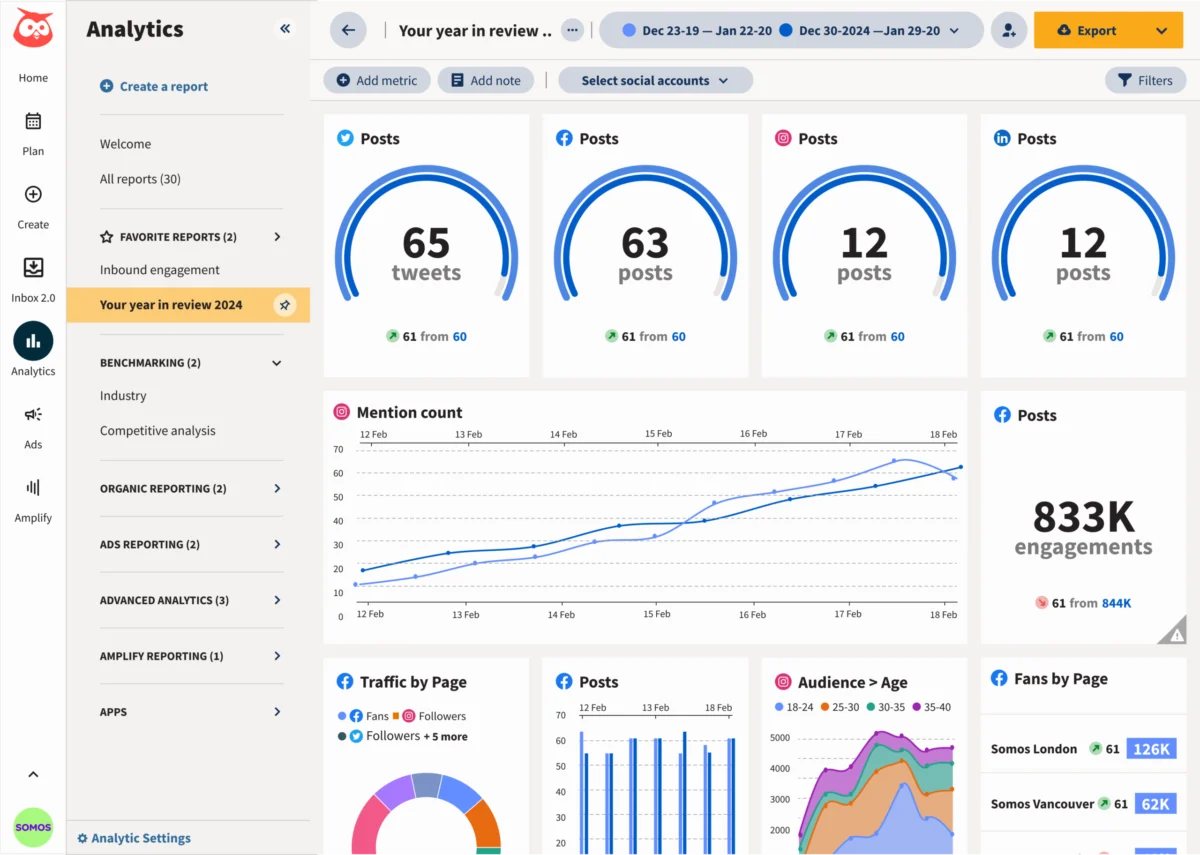
Industry experts emphasize that the "data deluge" is the biggest challenge for modern social media managers. According to recent whitepapers from leading analytics platforms, the most successful brands are those that centralize their data.
![How to set social media goals in 2026 [10 examples]](https://cdn.airops.com/rails/active_storage/blobs/proxy/eyJfcmFpbHMiOnsiZGF0YSI6MjgyNDgyNDQ1LCJwdXIiOiJibG9iX2lkIn19--bc1a00dede5d281d99a24b973e204dec22b387d4/image.png)
"When you switch between native platform dashboards—TikTok’s internal insights, Instagram’s professional dashboard, and X’s analytics—you lose the ability to see the ‘big picture,’" says a lead strategist at a major marketing firm. "Consolidated reporting is no longer a luxury; it’s a prerequisite for understanding the true ROI of your social spend."
By utilizing a unified dashboard, teams can benchmark their performance against competitors in real-time, allowing for agile shifts in content strategy that can save thousands in wasted ad spend.
![How to set social media goals in 2026 [10 examples]](https://blog.hootsuite.com/wp-content/uploads/2024/06/Hootsuite-Analytics-Brand-Awareness-620x503.png)
Strategic Implications: Moving Toward 2027
The implications of these goal-setting practices are profound. Brands that adopt a data-driven, goal-oriented approach see a higher lifetime value (LTV) for their social audiences. Conversely, those that continue to prioritize follower counts over engagement and conversion metrics risk becoming irrelevant.
As we look toward the remainder of 2026 and into 2027, several trends are emerging:
![How to set social media goals in 2026 [10 examples]](https://blog.hootsuite.com/wp-content/uploads/2024/08/Listening-Inpost-CTA.png)
- Zero-Click Content: Brands are increasingly providing value directly on the platform, rather than forcing users to click through to external sites, which ironically increases brand trust and long-term traffic.
- AI-Enhanced Listening: Social listening is becoming more predictive. Instead of just monitoring what has been said, tools are now identifying sentiment trends before they reach a boiling point.
- The Rise of Employee Advocacy: Humanizing the brand through employee-led accounts is proving to be more effective than high-production corporate advertising.
Conclusion
Setting social media goals is not merely a bureaucratic exercise; it is the act of defining the future of your brand’s presence in the digital world. By aligning every tweet, post, and video with clear business objectives, utilizing the SMART framework, and rigorously measuring performance against your KPIs, you ensure that your social strategy is not just active, but profitable.
In a landscape where attention is the most valuable currency, clarity of purpose is your greatest competitive advantage. Whether you are a local boutique or a global enterprise, the path to success remains the same: define your targets, measure your progress, and never stop optimizing.











No comments yet. Be the first to join the conversation!