Asep Darmawan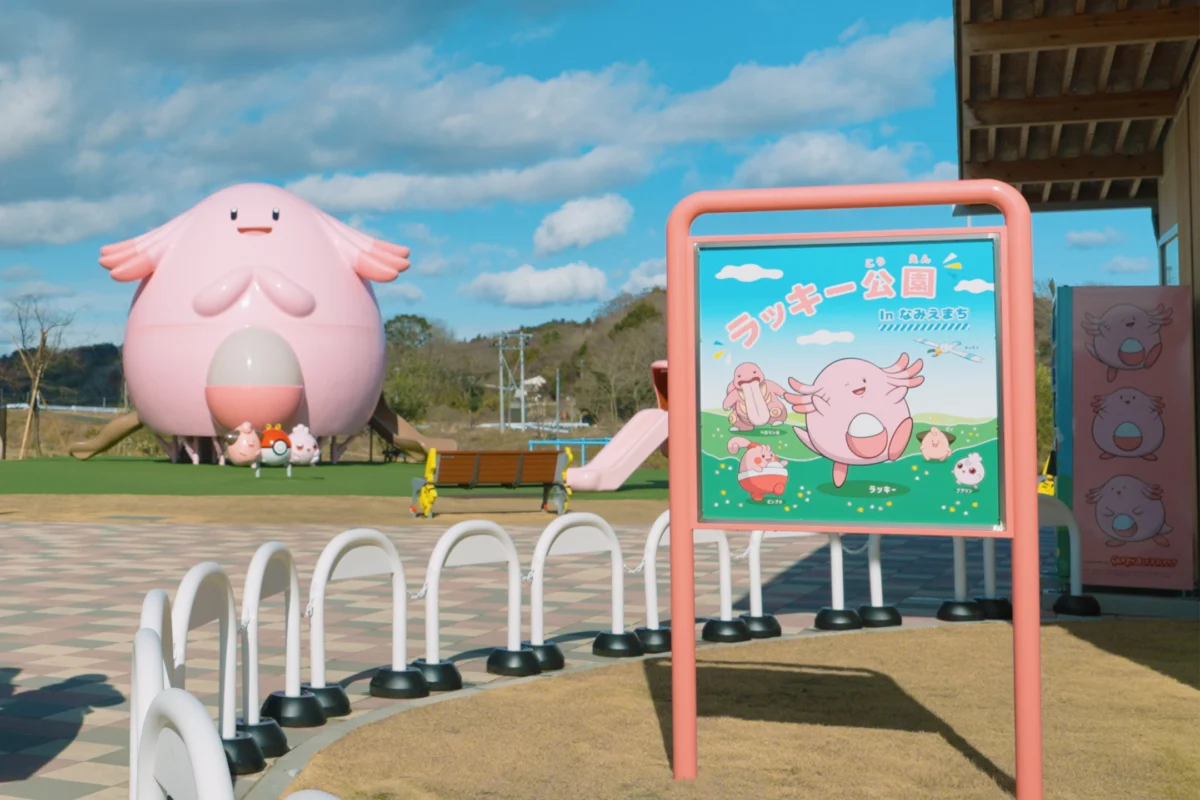
While the global launch of PokéPark Kanto earlier this year signaled a new era for permanent, immersive Pokémon-themed amusement, the true magic of the franchise in Japan lies in its decentralized, community-driven integration. Beyond the massive, centralized attractions, a quieter yet more profound revolution is taking place across the Japanese archipelago. Through the Pokémon Local Acts project, the Pokémon Company has transformed mundane public spaces, roadside stations, and regional parks into vibrant, nostalgia-infused oases that serve as both tourist destinations and symbols of local pride.
The Genesis of Pokémon Local Acts
Launched in 2018, the Pokémon Local Acts initiative was designed with a dual purpose: to stimulate regional tourism and to deepen the emotional connection between local communities and the beloved Pokémon franchise. The strategy is nuanced; rather than choosing characters at random, the Pokémon Company carefully pairs specific species with prefectures based on linguistic puns, cultural similarities, and shared environmental characteristics.
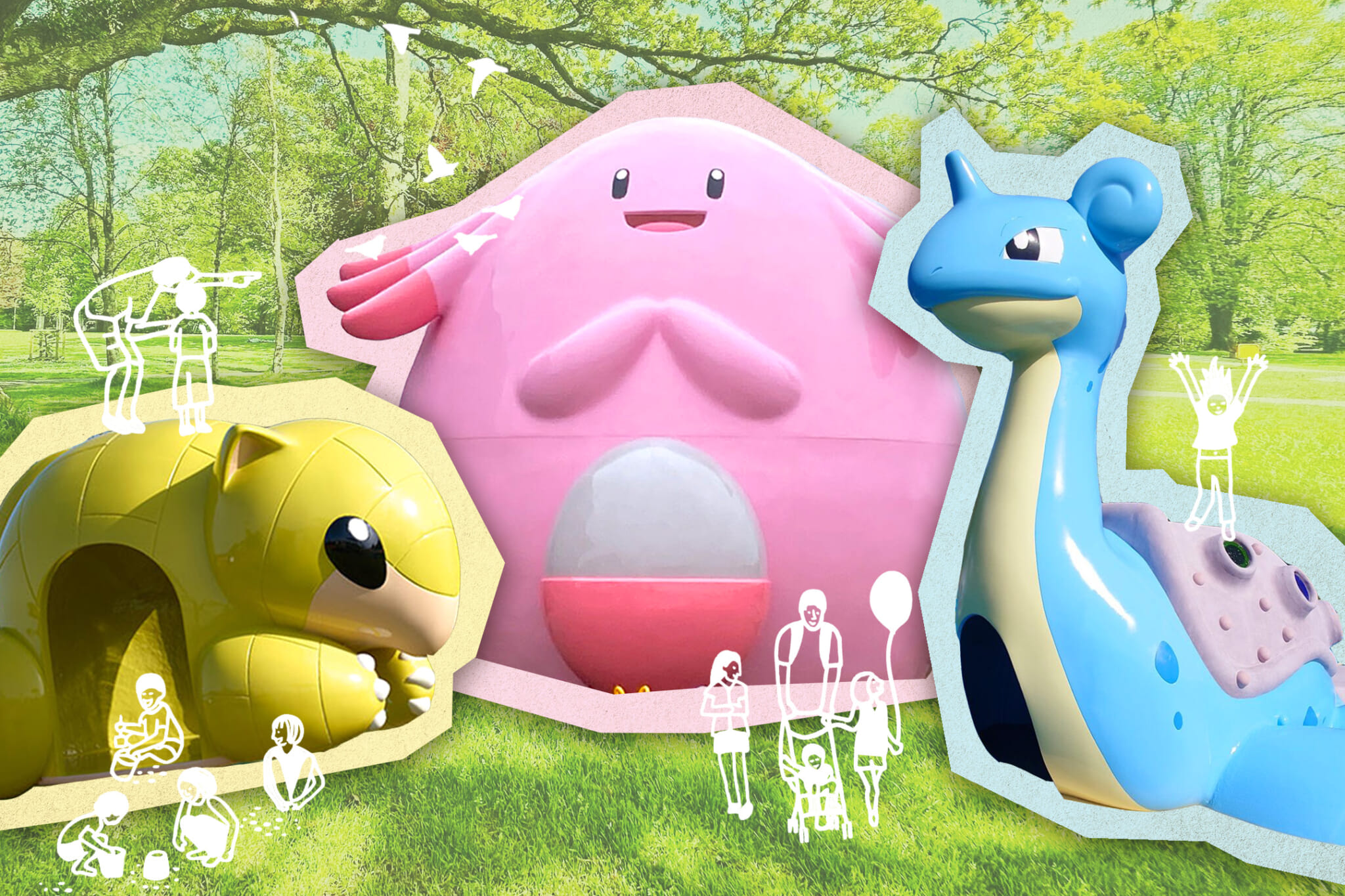
This initiative is a sophisticated evolution of Japan’s yuru-kyara (mascot) culture. Just as regional mascots provide a face for local governments, Ambassadorial Pokémon—now numbering 12 across Japan—have become the literal face of their respective regions. They appear on everything from manhole covers and public transport to vending machines and exclusive merchandise. However, the most significant developments have been the installation of dedicated Pokémon playgrounds, which offer families a tangible way to engage with the characters in the wild.
Chronology of a Playground Phenomenon
The project’s shift from 2D branding to 3D architectural play began in earnest in 2021, marking a turning point in how corporate IP can be utilized for public good.
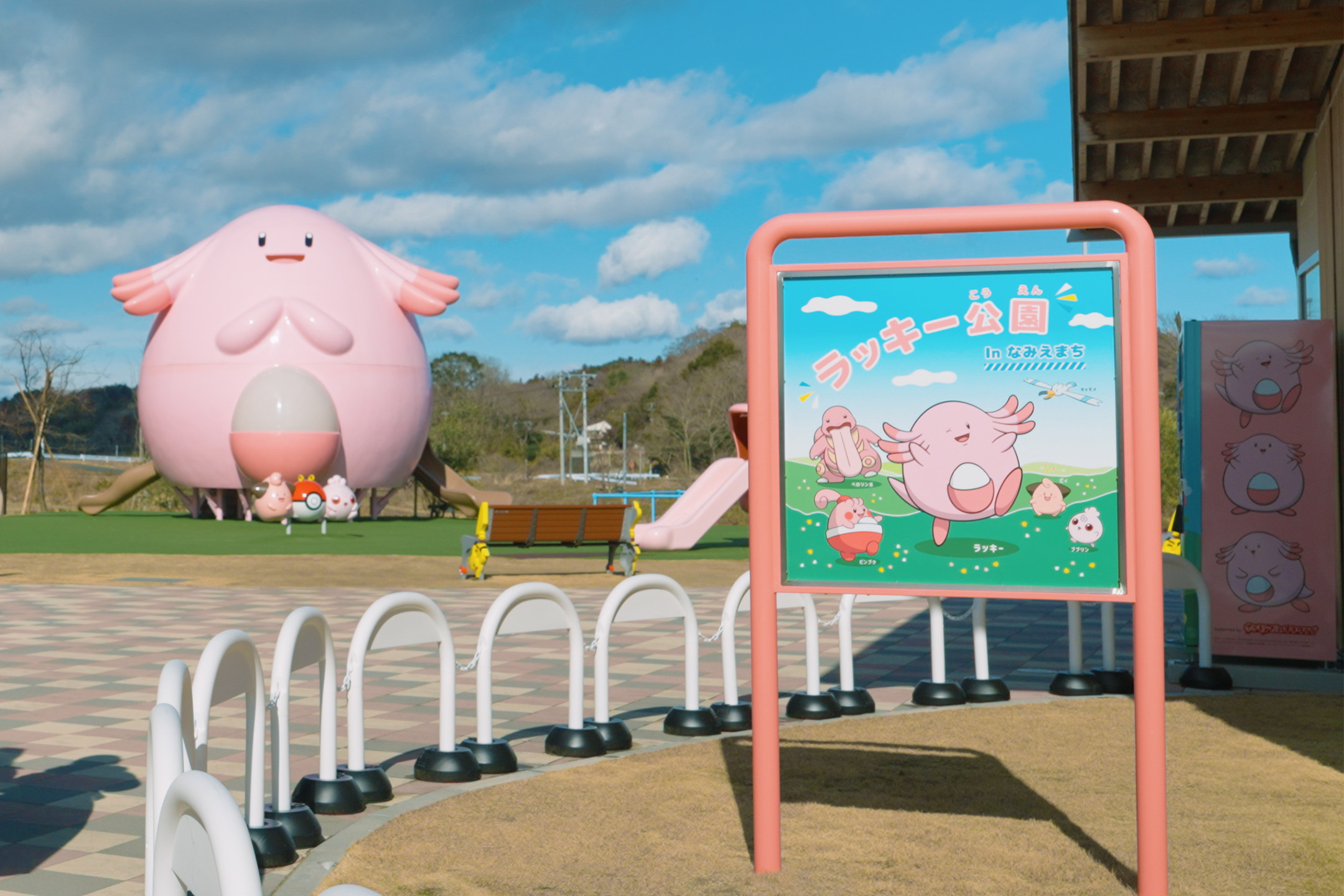
- 2021 (Fukushima): The debut of "Chansey Park" at Michi-no-Eki Namie. This set the standard for the project, proving that a themed playground could serve as a centerpiece for regional recovery and community healing.
- 2023 (Iwate): The inauguration of the first Geodude-themed park in Kuji, expanding the reach of the initiative into the northern Tohoku region.
- 2025 (Miyagi & Mie): A massive expansion year. Miyagi opened its first Lapras-themed park, while Mie Prefecture simultaneously unveiled two Oshawott parks, solidifying the project’s commitment to water-themed environments.
- 2026 and Beyond: The project continues to evolve, with ongoing discussions about integrating more interactive technology and expanding the network of "ambassadorial" sites to include less-visited prefectures.
The Pillars of Regional Identity
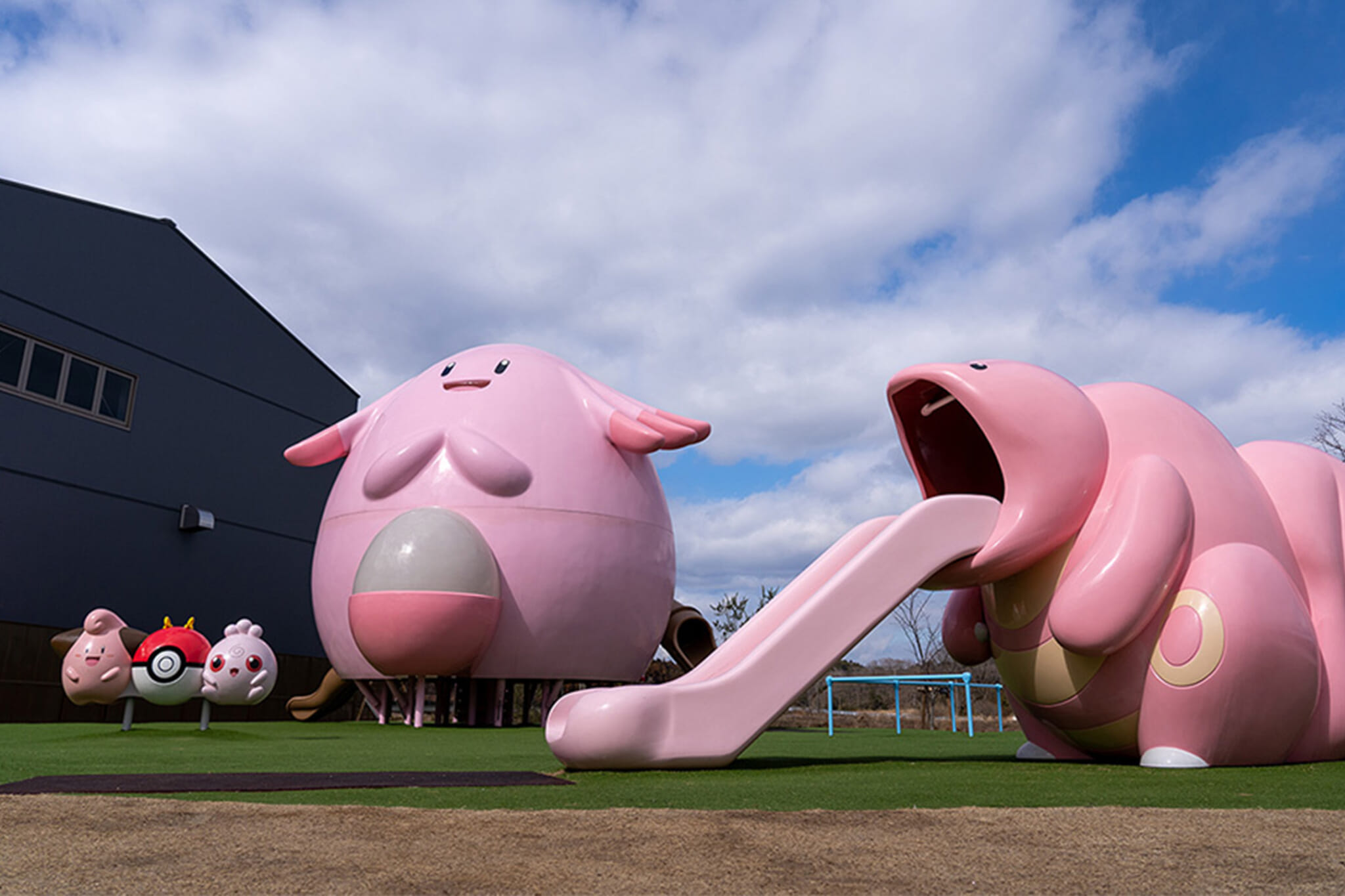
Chansey’s Lucky Parks (Fukushima Prefecture)
The choice of Chansey for Fukushima was a stroke of marketing and cultural genius. In Japanese, the Pokémon’s name is "Lucky," which shares a phonetic and kanji-based affinity with "Fuku" (good fortune) in Fukushima. More importantly, as a nurturing, healing-type Pokémon, Chansey was the perfect ambassador for a prefecture still recovering from the 2011 Great East Japan Disaster.
The playground equipment in Namie is more than just plastic; it is a 6-meter-tall landmark. The park includes a Wingull swing set, a Clefairy and Igglybuff seesaw, and a Lickitung slide that allows children to slide down the character’s tongue. This site, located near the home of Pokémon creator Satoshi Tajiri’s father, serves as a poignant reminder of how entertainment can breathe life back into areas scarred by tragedy.
Geodude Parks (Iwate Prefecture)
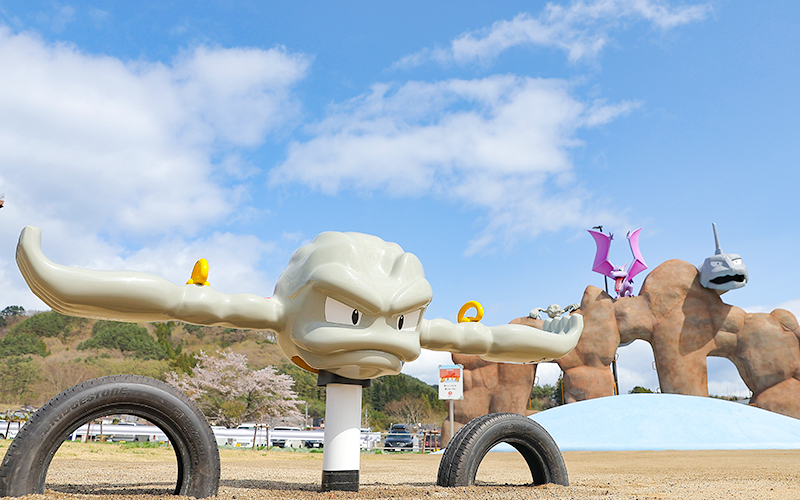
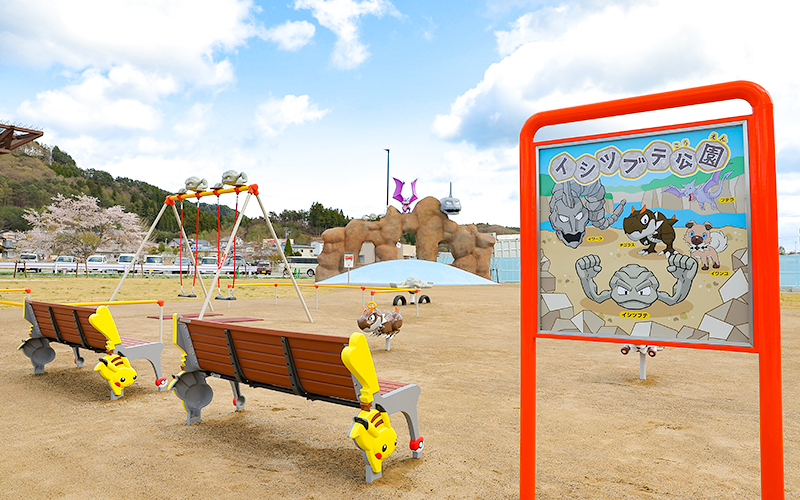
Iwate, whose name translates to "rock hand," was the natural home for the Rock-type Pokémon, Geodude. The Ishitsubute Park in Kuji represents a rugged, high-energy take on the concept. The centerpiece—a rock-climbing structure featuring Geodude, Aerodactyl, Onix, and the legendary Ogerpon—encourages physical activity. It brilliantly uses the playground geometry to mimic the rock-type’s natural habitat, reinforcing the local geography through the lens of the game.
Lapras Parks (Miyagi Prefecture)
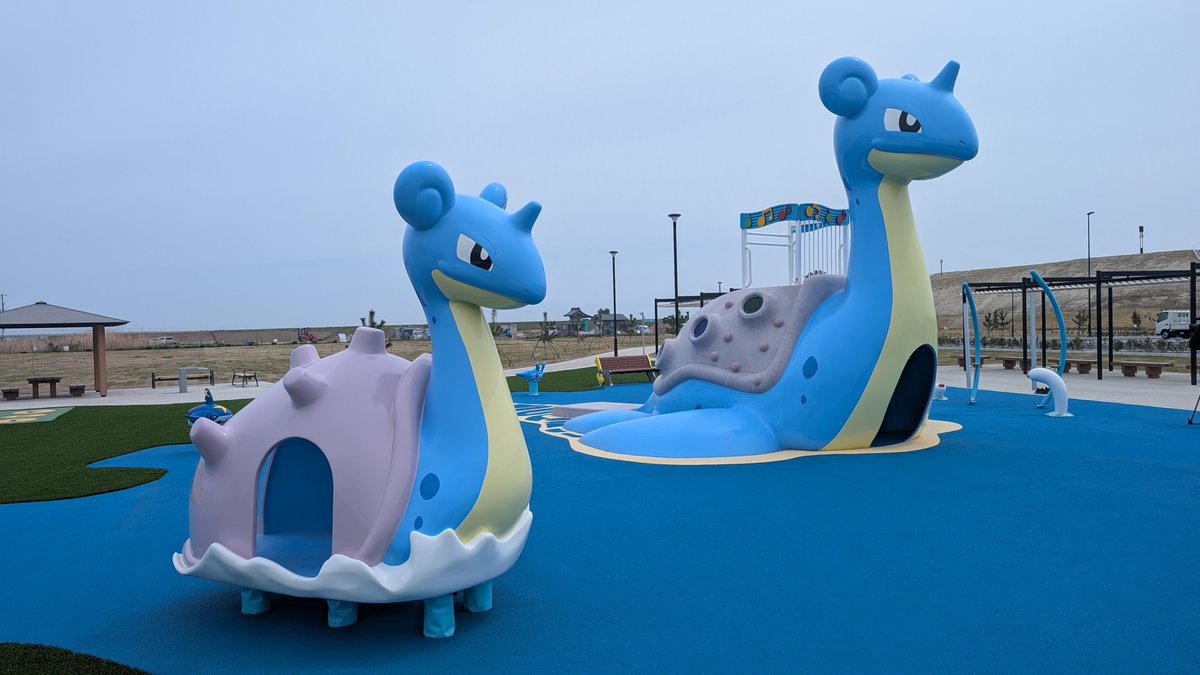
Miyagi’s coastal beauty is mirrored in its Lapras-themed park in Moririn Kasenuma. The design team went to great lengths to simulate the sea, utilizing blue ground materials with white ripple detailing to suggest that the massive, 4-meter-tall Lapras structure is actually "swimming." By incorporating rideable Mantyke and Wailmer equipment, the park captures the spirit of exploration that defines the Lapras character in the Pokémon anime.
Slowpoke Park (Kagawa Prefecture)
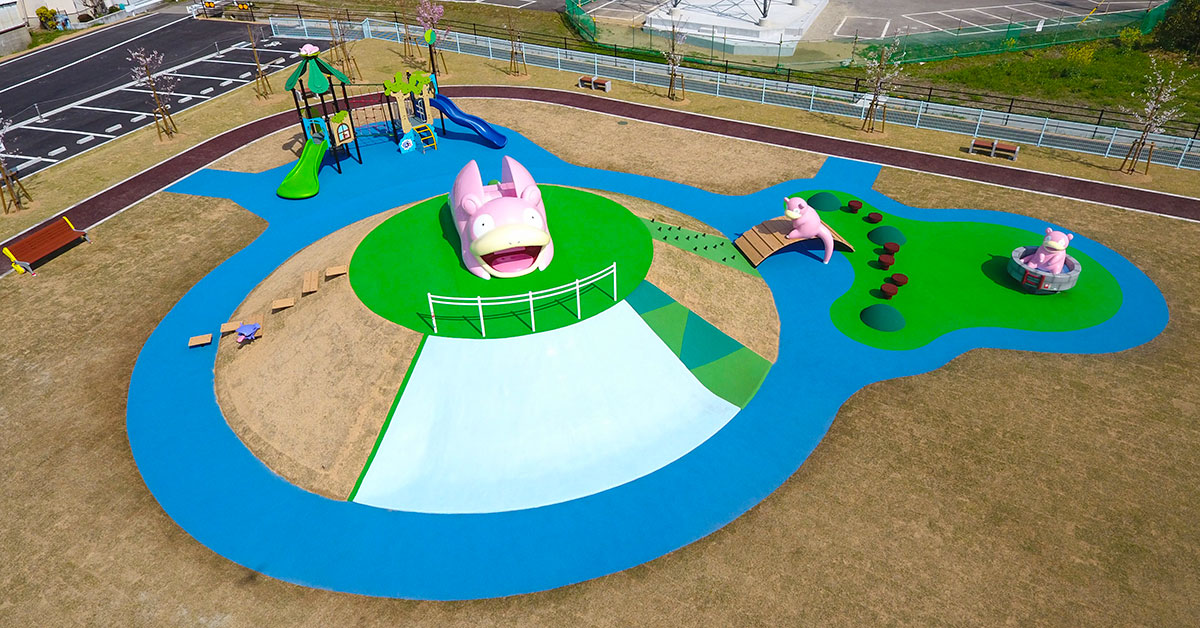
Perhaps the most whimsical of the bunch is Kagawa’s Slowpoke Park. The association here is rooted in linguistic play: "Yadon" (Slowpoke’s Japanese name) sounds remarkably like "Udon," the specialty noodle dish for which Kagawa is famous. The park is a masterclass in thematic design, featuring a giant Slowpoke on a hill that serves as a walk-through tunnel. It even nods to Kagawa’s industry, referencing the prefecture’s status as a world leader in "rare sugar" research by highlighting the syrupy sap Slowpoke is known to secrete.
Sandshrew Park (Tottori Prefecture)
Tottori, home to Japan’s largest sand dunes, naturally selected Sandshrew and Alolan Sandshrew as its ambassadors. Unlike other locations, this park is integrated into the Tottori Sakyu Kodomonokuni—a larger, paid amusement facility. While it requires an admission fee (capped at ¥500 for adults), the quality of the infrastructure—including a specialized sandbox for construction play and a Bunnelby puzzle wall—provides a high-value experience that justifies the cost.
The Philosophy of the Pokémon Company
The corporate reasoning behind these installations is stated clearly on the Pokémon Company’s official channels: "Our foremost aim was to give children attractive places to play outdoors." By focusing on michi-no-eki (roadside stations) and public parks, the company is effectively decentralizing tourism. These sites are not just destinations; they are "break points" for road-tripping families, designed to turn long, tedious car rides into memorable, interactive adventures.
The Local Acts project also functions as a sophisticated branding exercise. By aligning the Pokémon brand with the specific, authentic characteristics of a region—whether it be the seafood of Mie, the noodles of Kagawa, or the resilience of Fukushima—the Pokémon Company creates a symbiotic relationship. The region gains a powerful, globally recognized symbol, and the Pokémon brand embeds itself into the very fabric of Japanese civic life.
Economic and Social Implications
The data suggests that this strategy is working. Regional tourism boards have reported an uptick in foot traffic, particularly among millennial parents who grew up with the franchise and are now introducing it to their own children. Furthermore, the inclusion of "Instagrammable" spots—like the phone stands at the Lapras park—ensures that the project gains organic social media reach, essentially acting as free, global advertising for these often-overlooked Japanese prefectures.
These parks also combat the "screen time" critique often leveled at the gaming industry. By moving the Pokémon experience from the Nintendo Switch to the physical playground, the company encourages cardiovascular activity, social interaction, and outdoor exploration.
Conclusion: A Blueprint for the Future
The success of the Pokémon Local Acts project offers a compelling blueprint for how global intellectual property can be localized to foster community development. By avoiding the temptation to simply "slap a sticker on a swing set," the Pokémon Company has demonstrated that deep, thoughtful design can create cultural landmarks.
As Japan continues to manage the balance between over-tourism in major hubs like Tokyo and Kyoto and the decline of rural areas, these playgrounds represent a hopeful path forward. They are a testament to the idea that with enough creativity, even the most remote, quiet corner of a prefecture can become a "must-visit" destination, proving that in the world of Pokémon, the most rewarding experiences are often found off the beaten path.


 Neng Nana
 Asro
Asro