

For the average motorist, the traffic signal is an unremarkable piece of urban infrastructure—a silent arbiter of flow and safety that demands obedience. While the universal language of red, yellow, and green provides a baseline of order across the globe, the operational philosophy behind these lights reveals a profound divergence between American and European engineering. Understanding these differences is more than a trivial study in international customs; it is an examination of how cultural driving habits, vehicle transmission preferences, and urban planning priorities have shaped the way we navigate the modern world.
The Core Operational Divergence: Red-to-Green Sequences
The most striking difference between the two systems lies in the transition sequence from a stop (red) to a go (green).
In the United States, traffic signal logic is binary and straightforward. A red light signifies a full stop, and a green light grants the right of way. The yellow (or amber) signal serves as a cautionary buffer, warning drivers that the light is about to turn red, allowing them to clear the intersection or decelerate safely.
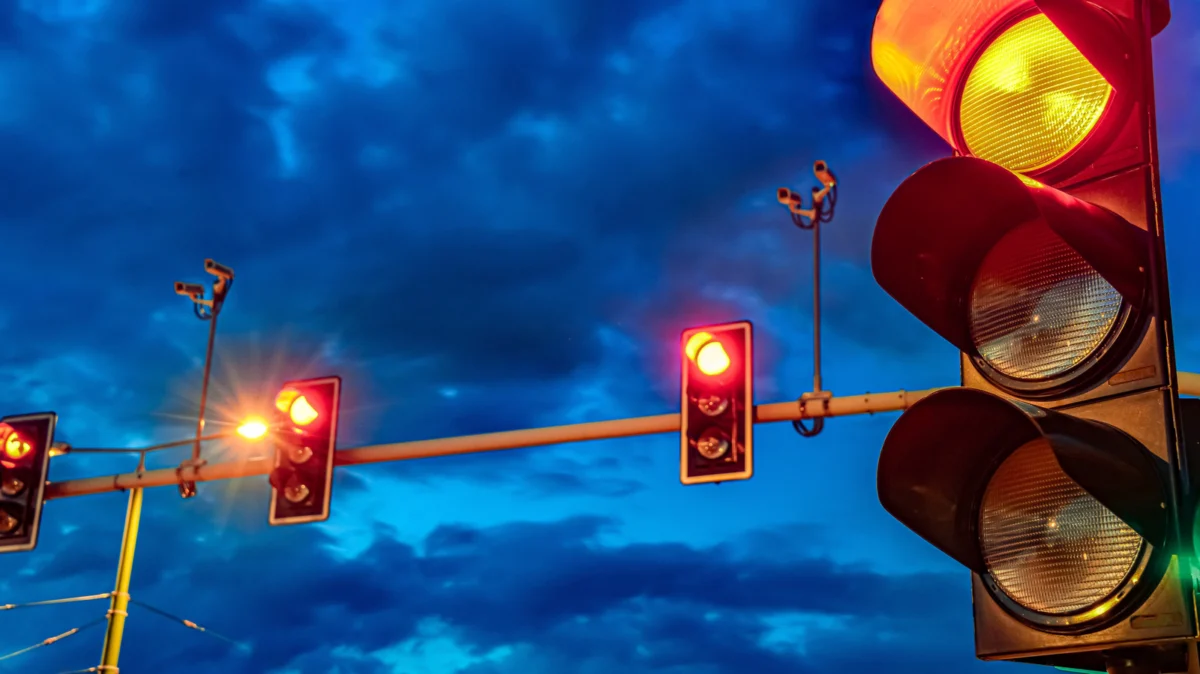
Conversely, many European jurisdictions employ a "Red-Amber" phase. Before the signal turns green, the red and amber lights illuminate simultaneously. This specific signal is not a suggestion to move, but a preparation phase. It serves a practical purpose rooted in the prevalence of manual transmissions across the continent. By illuminating the red and amber together, the signal provides a clear, two-second warning that the green light is imminent. This allows the driver to disengage the parking brake, shift into first gear, and prepare the clutch, ensuring a smoother and more efficient transition into the intersection.
In the U.S., the sudden jump from red to green often leads to varying reaction times, as drivers may be distracted or caught off guard, potentially leading to "dead air" in traffic flow or, conversely, aggressive acceleration. Furthermore, some European nations incorporate a "flashing green" phase before the light turns yellow, acting as a final "countdown" for motorists to decide whether to stop or proceed, a feature notably absent in the American standard.
Chronology: The Birth of the Modern Signal
The journey of the traffic light began long before the age of the automobile. The first recorded traffic signal was installed in London in 1868 near the Houses of Parliament. Designed by railway engineer John Peake Knight, it was a gas-lit semaphore system—an adaptation of railway signaling technology. However, its lifespan was short; a gas leak explosion injured the operator, and the project was abandoned for several decades.
The true birth of the modern electric traffic light is often attributed to James Hoge, who installed a system in Cleveland, Ohio, in 1914. This was followed by Garrett Morgan’s patent in 1923, which introduced a three-position traffic signal, adding the crucial yellow light to regulate the flow of traffic more safely.
As Europe recovered from the devastation of the mid-20th century, urban planners there faced different challenges than their American counterparts. While the U.S. focused on the rapid expansion of the highway system and suburban sprawl, Europe—with its centuries-old city layouts—prioritized high-density efficiency and multimodal integration. This necessitated a more nuanced approach to traffic control, leading to the sophisticated, signal-phased systems that define European roads today.
Supporting Data: Infrastructure and Multimodal Design
The differences extend far beyond the lights themselves. The physical design of signal poles and the hierarchy of road users reveal distinct priorities.
The Pedestrian and Cyclist Focus
In the United States, traffic signals are frequently mounted on large, overhead masts that span multiple lanes. This is a design predicated on the dominance of the private passenger vehicle. Pedestrian signals, when present, often utilize the "Walk/Don’t Walk" text format.
European infrastructure, by contrast, is frequently designed with the assumption that cyclists and pedestrians are primary road users. Signals are often mounted on smaller, localized poles at the corner of intersections, keeping the line of sight focused on the individual lane rather than the entire intersection. European signals utilize universal symbols—the iconic stick figure—which transcends language barriers. Moreover, the integration of auditory cues, such as rhythmic clicking or beeping, is significantly more standardized across the European Union to assist visually impaired pedestrians, reflecting a mandate for universal accessibility.
The Role of Flashing Yellows
The interpretation of a flashing yellow light serves as a critical point of confusion for international travelers. In the U.S., a flashing yellow usually acts as a warning: "Proceed with caution," often indicating a turn where one must yield to oncoming traffic or a pedestrian crossing.
In many European countries, a flashing yellow has a more systemic meaning: the signal has been disabled or is in "night mode." In this scenario, drivers must look to the physical road signs (yield or stop signs) mounted above or beside the signal. This requires a higher level of situational awareness, as the signal is no longer directing the flow, but rather deferring to the rules of the road marked by signage.
Official Responses and Regulatory Frameworks
Regulatory bodies, such as the Federal Highway Administration (FHWA) in the United States and the European Commission’s various transport directorates, maintain strict protocols for signal timing and placement.
The U.S. approach is heavily governed by the Manual on Uniform Traffic Control Devices (MUTCD). This document ensures that a driver in Maine experiences the same signal logic as a driver in California. The standardization is intended to reduce cognitive load and prevent accidents caused by driver error.
In Europe, while the Vienna Convention on Road Signs and Signals provides a framework for member states to align their systems, there is still significant variation. For instance, the exact timing of the red-amber phase can vary between the United Kingdom, Germany, and France. European traffic authorities argue that their system, while more complex, creates a "rhythm" to city driving that increases throughput and decreases the incidence of intersection-related collisions.
Implications: Speed, Safety, and Enforcement
The integration of automated enforcement represents the final major frontier in traffic signal technology. While the U.S. has faced significant public and legal pushback regarding red-light cameras, their usage is ubiquitous across Europe.
In many European cities, the signal pole is not just a light source; it is a sensor platform. Speed cameras are often integrated into the traffic light housing, meaning the penalty for speeding through a yellow light is automated and immediate. In the U.S., enforcement remains largely reliant on police intervention, though camera technology is increasing in select metropolitan areas.
The implications for safety are clear: European systems, by incorporating the red-amber start, the flashing green end, and high-visibility pedestrian cues, aim to minimize the "uncertainty window" that causes many accidents. By giving drivers more information about the signal’s status, the system seeks to reduce the panic-braking or late-acceleration common at American intersections.
Conclusion
The contrast between American and European traffic lights is a microcosm of their respective societal priorities. The American system is built for simplicity, high-speed flow, and the primacy of the automobile. The European system, shaped by narrower streets, manual-transmission vehicles, and a dense mix of commuters, is built for precision, caution, and multimodal integration.
As autonomous vehicle technology advances, these differences will likely begin to blur. AI-driven cars will not require the "human-friendly" cues of a red-amber start or a flashing green to time their acceleration. However, until that era fully arrives, the traffic light remains a cultural marker—a testament to how different regions of the world have solved the same problem: how to bring order to the chaos of the modern road. Whether you are waiting for the click of a European pedestrian signal or looking for the familiar steady glow of an American green, the goal remains the same: safe passage to the other side.












No comments yet. Be the first to join the conversation!