

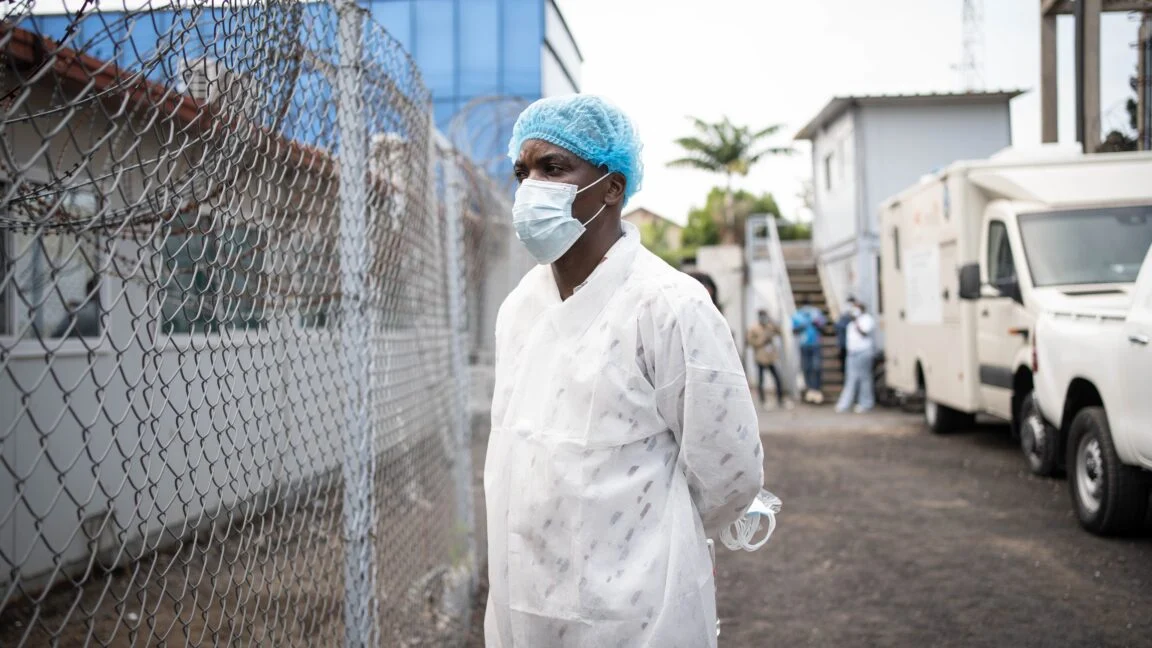
The recent handling of American citizens exposed to the Ebola virus has ignited a fierce debate regarding the United States’ commitment to its citizens abroad and the efficacy of its broader public health containment strategy. As the administration faces mounting scrutiny over the decision to divert patients to European facilities rather than repatriating them, questions of logistical capacity, diplomatic transparency, and the ethics of global health policy have moved to the forefront of the national conversation.
The Core Controversy: Repatriation or Rejection?
At the center of the current political firestorm is the case of Stafford, an American national exposed to Ebola. Reports suggesting that the White House actively sought to block Stafford’s return to the United States for medical treatment have drawn sharp condemnation from critics and fueled accusations of a shifting federal policy regarding the repatriation of Americans during infectious disease outbreaks.
White House spokesperson Kush Desai has categorically denied these allegations, characterizing the narrative as a fabrication by the Washington Post. In a pointed email response, Desai stated, "This is absolutely false and another reason why the Washington Post is no longer worth the paper it’s printed on."
Desai further emphasized that the administration’s primary directive is the preservation of public health and national safety. He lauded the medical capabilities of the German facility currently treating Stafford, suggesting that the decision to utilize European resources was based on the standard of care rather than a policy of exclusion. However, the administration’s insistence that the move was purely medical has failed to quell skepticism from observers who note that the United States possesses several world-class containment centers specifically designed for the management of viral hemorrhagic fevers.
Chronology of the Crisis
The unfolding situation, characterized by rapid developments over the past weekend, has left the public searching for a clear timeline.
- Initial Exposure: As the Ebola outbreak intensified in the region, the need for immediate medical evacuation for exposed American personnel became critical.
- The Weekend Mobilization: According to White House officials, the situation required "rapid mobilization" to address the health needs of the affected individuals.
- The Diversion: Rather than activating domestic transport protocols to bring the citizens home, the administration coordinated with European partners.
- The Press Briefing: On Wednesday, administration representative Pillai faced a barrage of questions regarding the logic behind the diversion. Throughout the briefing, Pillai avoided confirming or denying whether the US had formally refused entry, citing the "rapid set of circumstances" as the primary driver for the decision-making process.
- Implementation of Restrictions: Concurrently, the US government announced new travel restrictions, signaling a shift toward a more isolationist approach to managing the threat of Ebola imported from the DRC, Uganda, and South Sudan.
Official Responses and Bureaucratic Obfuscation
During Wednesday’s press briefing, the administration’s messaging appeared strained. When pressed on why Germany and the Czech Republic—nations not traditionally associated with specialized Ebola treatment protocols—were chosen as the primary destinations for American patients, Pillai provided little clarity.
Critics have pointed out that the lack of transparency surrounding the selection of these specific facilities suggests a geopolitical motive rather than a strictly clinical one. When asked directly if the White House had made a conscious decision to bar the citizens from returning, Pillai’s response was notably circumspect: "Right now, what I would say is that the plans for these individuals that have moved were made based on the conditions on the ground, the need to rapidly mobilize… And so, what I can tell you right now: this is what the situation was and this is how we responded as quickly as we could."
This evasion has done little to satisfy public health experts who argue that the US government has an implied duty of care to its citizens that supersedes the convenience of international partnerships, particularly when domestic infrastructure is capable of handling the risk.
Travel Restrictions: A Conflict of Strategy
The administration’s response to the outbreak has extended beyond the treatment of individuals to the implementation of stringent border controls. Under the new policy, Americans returning from the DRC, Uganda, or South Sudan are subject to rigorous health screenings. More drastically, non-US passport holders who have visited these nations within the previous 21 days are now barred from entry entirely.
This policy has put the United States at direct odds with the Africa Centres for Disease Control and Prevention (Africa CDC). In a formal statement released Tuesday, the organization challenged the efficacy of such measures.
"The position is clear: generalized travel restrictions and border closures are not the solution to outbreaks," the Africa CDC asserted. The organization warned that these measures often produce negative externalities:
- Fear and Stigmatization: Promoting panic rather than organized, science-based responses.
- Economic Disruption: Severing critical supply lines and hindering local commerce.
- Decreased Transparency: Discouraging nations from reporting outbreaks for fear of immediate isolation.
- Informal Routes: Pushing travel underground, which makes it harder for health authorities to track the movement of potentially infected individuals.
Jean Kaseya, the Director-General of the Africa CDC, emphasized a philosophy of global health security rooted in collaboration rather than segregation. "The fastest path to protecting all countries in the world is to aggressively support outbreak control at the source," Kaseya noted. "Global health security cannot be achieved through borders alone. It is achieved through partnership, trust, science, and rapid investment in preparedness and response capacity."
Implications for Global Health Policy
The current controversy highlights a growing tension between domestic political pressure and international public health obligations. The US strategy—diverting citizens and closing borders—is viewed by many epidemiologists as a "fortress" mentality. While this approach may provide a veneer of safety for the domestic population, it undermines the global cooperation necessary to eradicate Ebola at its point of origin.
The Role of Infrastructure
The US boasts specialized biocontainment units, such as those at the National Institutes of Health (NIH) and various university hospitals, which were developed specifically to handle pathogens of this nature. By opting for overseas care, the administration has effectively sidelined these facilities, raising questions about whether the government is prepared to utilize its own resources in a worst-case scenario.
The Diplomatic Fallout
By unilaterally imposing travel restrictions, the US has bypassed the collaborative frameworks championed by the World Health Organization (WHO) and the Africa CDC. This "go-it-alone" approach risks alienating regional partners in Africa, whose cooperation is essential for data sharing, sample analysis, and the containment of the virus. If the US is seen as a fair-weather partner—one that abandons its own citizens and closes its doors during a crisis—its influence in global health governance is likely to diminish.
The Political Narrative
For the White House, the messaging battle is just as important as the clinical outcome. By framing the Washington Post report as a political attack, the administration is attempting to shift the focus from their specific policy decisions to the credibility of the press. However, as the Ebola outbreak evolves, the reality of the situation on the ground will continue to challenge the administration’s narrative.
Conclusion
The controversy surrounding the treatment of Ebola-exposed Americans and the subsequent imposition of travel restrictions serves as a case study in the complexities of modern pandemic management. While the administration maintains that its actions were dictated by speed and the necessity of the moment, the scientific community and international health partners suggest that the strategy lacks the depth and collaborative spirit required to manage a global health threat effectively.
As the situation develops, the fundamental question remains: Can a nation secure its own borders and ensure the safety of its citizens by distancing itself from the international community, or is the path to safety found in the very partnerships the current administration appears so willing to strain? The answers to these questions will have long-lasting implications for both the management of the current outbreak and the future of American leadership in global health.












No comments yet. Be the first to join the conversation!