

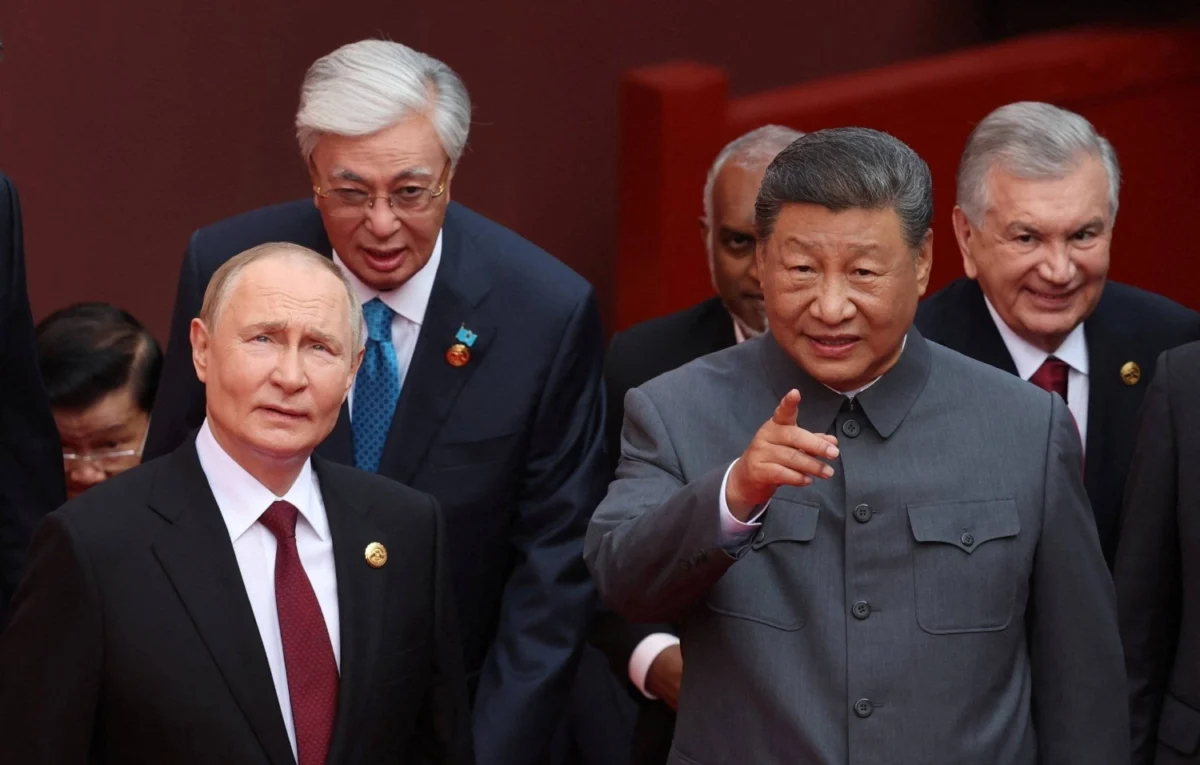
MOSCOW — In a move underscoring the rapidly shifting tectonic plates of global geopolitics, the Kremlin announced on Saturday that President Vladimir Putin will embark on a pivotal two-day state visit to China beginning May 19. The trip, intended to solidify the “no-limits” partnership between the two nuclear-armed powers, arrives mere days after a high-profile visit to Beijing by U.S. President Donald Trump, setting the stage for a dramatic display of competitive diplomacy on the world stage.
Main Facts: Cementing the Moscow-Beijing Axis
The Kremlin’s statement, released to international press agencies, confirms that the primary objective of Putin’s visit is to "further strengthen the comprehensive partnership and strategic cooperation" that has become the bedrock of Russian foreign policy since the isolation imposed by Western sanctions.
The agenda is packed with high-level dialogues between the Russian delegation and President Xi Jinping’s administration. Officials from both sides have indicated that the leaders will "exchange views on key international and regional issues," a diplomatic shorthand for coordinating responses to U.S.-led policy initiatives, the ongoing conflict in Eastern Europe, and the restructuring of global supply chains.
The summit is scheduled to conclude with the signing of a joint declaration. While the specific text remains under wraps, analysts anticipate it will emphasize mutual support against perceived external interference and propose new mechanisms for bilateral trade, specifically aimed at circumventing the U.S. dollar-denominated global financial system.
A Chronology of Growing Convergence
The relationship between Moscow and Beijing has evolved from a cautious post-Cold War detente into a robust strategic alignment. Understanding the current summit requires a look at the trajectory of the last several years:
- September 2025: President Putin and President Xi appeared together in Beijing for a military parade commemorating the 80th anniversary of the end of World War II. This event served as a symbolic reset, highlighting shared historical narratives and a joint rejection of what both leaders term the "revisionist history" of the West.
- Early 2026: Following a series of intensified economic sanctions, Russia pivoted heavily toward Chinese technology, energy markets, and financial infrastructure.
- May 2026 (The Current Week): President Donald Trump completes his visit to Beijing, marking an attempt to reset the U.S.-China trade and security relationship.
- May 19, 2026: President Putin arrives in Beijing. The proximity of these two visits is widely viewed by intelligence analysts as a "bidding war" for Chinese favor, with Russia aiming to reassure Beijing that the Moscow-Beijing axis remains the primary priority for the Kremlin.
Supporting Data: The Economic and Military Backdrop
The deepening of ties is not merely rhetorical; it is backed by significant shifts in trade and logistics data.
Trade and Energy Integration
According to recent trade reports, bilateral trade between Russia and China has surged to record levels. Russia has effectively become the primary supplier of crude oil and liquefied natural gas (LNG) to the Chinese market, replacing former suppliers and providing China with a stable, land-based energy corridor that is less susceptible to maritime interdiction by the U.S. Navy.
Financial Decoupling
Data from the Bank of Russia indicates that over 70% of transactions between the two nations are now settled in Chinese yuan or Russian rubles. This represents a seismic shift from the reliance on the SWIFT messaging system and the U.S. dollar, effectively shielding both nations from certain types of Western financial punitive measures.
Military Cooperation
Recent joint naval exercises in the Pacific and joint long-range bomber patrols over the Sea of Japan provide empirical evidence of the military-to-military cooperation. While both countries stop short of a formal mutual defense treaty—a relic of the Cold War they prefer to avoid—the level of tactical integration is at its highest point in over half a century.
Official Responses: The Global Reaction
The announcement of the summit has triggered a flurry of diplomatic reactions in global capitals.

The Kremlin’s Perspective
Kremlin spokesperson Dmitry Peskov emphasized that the trip was planned long before the U.S. presidential visit was confirmed. "Our relations with China are not directed against third parties," Peskov stated in a press briefing. "They are built on mutual respect and a shared vision of a multipolar world order."
Washington’s Stance
In Washington, the White House has maintained a posture of caution. While President Trump’s administration has sought to engage China on trade, officials have expressed concern over the "deepening military and technological collusion" between Moscow and Beijing. A spokesperson for the U.S. State Department noted, "The world is watching to see if Beijing chooses to align itself with the destabilizing actions of the Kremlin or with the international rules-based order."
European Union Concerns
Brussels has expressed "deep unease" regarding the summit. European leaders are particularly worried about the potential for dual-use technology transfers—equipment that could be used for both civilian and military purposes—that would aid Russia’s defense industrial base.
Implications: A Bipolar World Reborn?
The upcoming summit carries profound implications for the global order, signaling the end of the post-Cold War era of American hegemony.
The Challenge to the Dollar
The most significant long-term implication is the erosion of the dollar’s status as the world’s reserve currency. If Russia and China can successfully create a sustainable, parallel financial architecture, other nations in the Global South may feel emboldened to follow suit, significantly reducing the efficacy of U.S. economic statecraft.
The "Security Architecture" of Eurasia
By coordinating their positions on regional conflicts, Putin and Xi are effectively creating a "security bloc" in the heart of Eurasia. This complicates U.S. efforts to pivot toward the Indo-Pacific, as Washington must now contend with a synchronized challenge across two major theaters: Eastern Europe and the Taiwan Strait.
The Technological Divide
The meeting is expected to result in deeper cooperation in artificial intelligence, space exploration, and semiconductors. By pooling their R&D resources, Russia and China hope to achieve technological self-sufficiency, insulating themselves from the restrictive export controls imposed by the U.S. and its allies.
Conclusion: The Path Ahead
As Vladimir Putin prepares to land in Beijing, the eyes of the world are fixed on the optics of the meeting. The handshake between Putin and Xi will be more than a diplomatic pleasantry; it will be a statement of intent.
For the international community, the summit serves as a stark reminder that the global geopolitical map is being redrawn. Whether this partnership evolves into a formal alliance or remains a marriage of convenience, its impact on trade, security, and global stability will define the latter half of the 2020s. As the Kremlin looks to ensure its strategic longevity, and as Beijing navigates its delicate dance with the United States, the meeting in Beijing will undoubtedly be analyzed for years to come as the moment the new "Great Power" competition moved into its most decisive phase.
The success of this visit will be measured not just by the joint declaration, but by the tangible steps taken to move away from Western-dominated systems, signaling a new, more fragmented, and perhaps more dangerous chapter in 21st-century diplomacy.












No comments yet. Be the first to join the conversation!