

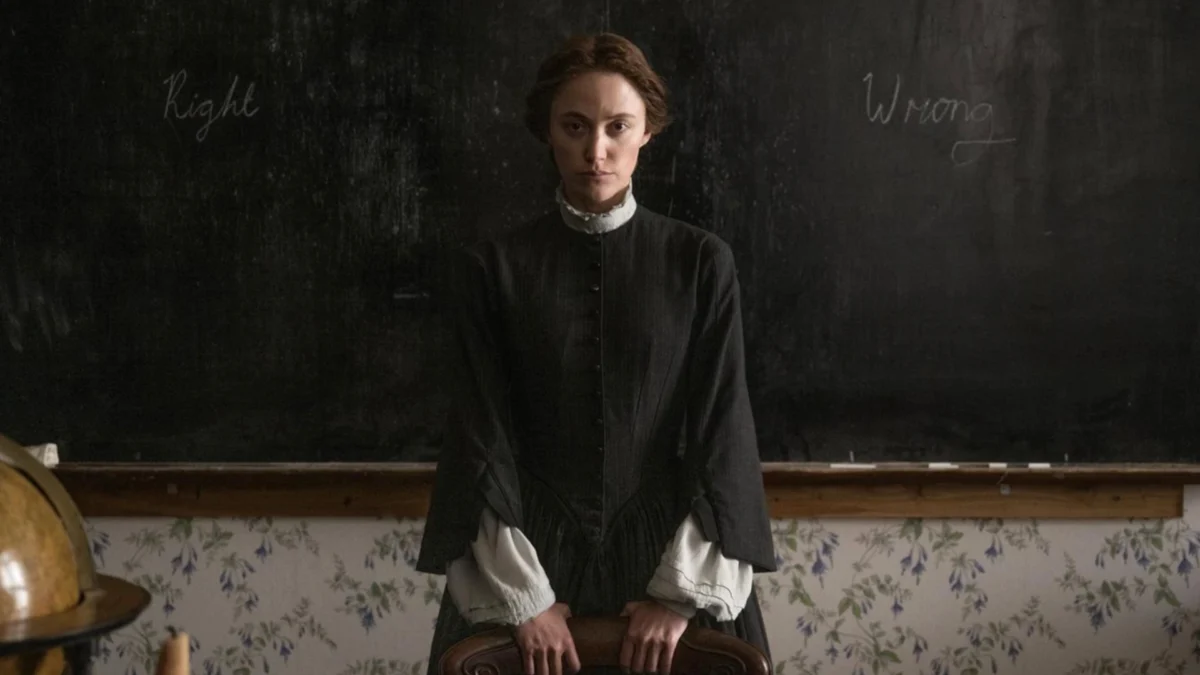
The horror landscape has a new reigning monarch, and her name is Maika Monroe. Following the massive critical and commercial success of the occult thriller Longlegs, which effectively cemented her status as the modern generation’s premier "Scream Queen," Monroe is pivoting from contemporary paranoia to period-piece terror. In the newly released teaser for Victorian Psycho, Monroe trade the neon-soaked dread of the Pacific Northwest for the claustrophobic, fog-drenched corridors of an 1858 gothic estate.
Directed by Zachary Wigon and produced by the team behind the breakout hit Longlegs, Victorian Psycho promises to be a psychological masterclass in obsession, isolation, and bloodlust. As the film makes its highly anticipated world premiere at the Cannes Film Festival’s Un Certain Regard section, the industry is buzzing about what appears to be the most demanding and transformative role of Monroe’s career to date.
The Premise: Gothic Horror Meets Modern Psychopathy
Based on Virginia Feito’s 2025 novel of the same name, Victorian Psycho transports audiences to the mid-19th century. The story centers on a young, enigmatic governess named Winifred (Monroe), who arrives at the sprawling, isolated Ensor House.
While the aesthetic of the film leans heavily into the tropes of the gothic genre—dimly lit manor rooms, flickering candlelight, and the oppressive silence of the English countryside—the narrative subverts expectations by placing a predator at the center of the household. As Winifred begins to integrate herself into the lives of the estate’s inhabitants, the domestic atmosphere turns toxic. Staff members begin to vanish without a trace, and the owners of the manor find themselves gripped by a creeping, inexplicable dread. The central question of the film is not merely what is haunting the halls of Ensor House, but whether the threat is supernatural or embodied entirely within the fragile, unpredictable psyche of the new governess.
Chronology of Development and Production
The journey of Victorian Psycho from page to screen has been swift, signaling the high confidence studios have in the project’s commercial viability.
- Literary Foundation: The project is anchored by the anticipation surrounding Virginia Feito’s 2025 novel, which has been praised for its dark, satirical take on class structure and the "governess in peril" trope.
- The Longlegs Momentum: The success of Longlegs earlier this year provided the perfect tailwind for the production. By tapping into the same production talent, the studio effectively marketed Monroe as the definitive face of high-concept, elevated horror.
- The First Look: The Hollywood Reporter unveiled an exclusive first look at the film during the early days of the Cannes Film Festival, generating significant international buzz among distributors and critics alike.
- The Cannes Debut: The world premiere in the Un Certain Regard category serves as the official launchpad for the film’s festival run, positioning it as an awards-season contender in the specialized horror category.
- The Fall Release: Following its festival circuit, the film is slated for a wide theatrical release in the fall, positioning it to capitalize on the audience appetite for dark, atmospheric cinema as the nights grow longer.
Supporting Data: An All-Star Ensemble
While Monroe is the face of the film, Victorian Psycho boasts an ensemble cast that suggests a high level of prestige for the production. The casting choices emphasize a mix of veteran gravitas and rising talent:
- Thomasin McKenzie: Known for her nuanced work in Last Night in Soho and Jojo Rabbit, McKenzie’s presence suggests a complex dynamic between the governess and the residents of Ensor House.
- Jason Isaacs: A master of the menacing and the authoritative, Isaacs brings a level of gravitas that will be essential for grounding the film’s gothic atmosphere.
- Supporting Cast: The inclusion of Ruth Wilson, Amy De Bhrun, Jacobi Jupe, and Evie Templeton rounds out a cast that indicates a focus on intense, character-driven performances rather than mere jump scares.
The film is produced by the same creative team that shepherded Longlegs, a project that proved horror could be both a box-office powerhouse and a critical darling. This continuity of production ensures that Victorian Psycho will maintain a visual and atmospheric consistency that fans of the "elevated horror" subgenre have come to expect.
Official Responses: Behind the Mask of Winifred
In an exclusive interview with The Hollywood Reporter, Maika Monroe offered a rare glimpse into the psychological toll required to inhabit the role of Winifred. For an actress known for playing characters who are often reacting to external threats, the shift to playing a serial killer—a character who is the threat—was profound.
"It terrified me," Monroe confessed. "I knew that it would be the hardest role that I have ever done—and so incredibly different from anything I’ve ever done."
Monroe explained that her typical process involves finding a piece of herself within a character to create a grounding element. However, with Winifred, she found no such sanctuary. "There’s always a little part of me in roles that I do, something that I can ground it with or connect it with within my own personal life—but this role was really a departure from that. It was working from the ground up, creating this character where I couldn’t rely on my own self. It really, in the most magical way, took a toll on me. I felt it every day."
Director Zachary Wigon echoed this sentiment, noting that the character of Winifred is defined by a paradoxical internal struggle. He described her as an outsider who is fundamentally unable to bridge the gap between herself and the world she aspires to join. "It’s a very, very deep paradox," Wigon told THR. "She will never belong—and she will never stop wanting to belong."
This desire to belong, when paired with the psychopathic tendencies of the character, creates a tension that promises to define the film’s pacing. Wigon’s direction focuses on the tragedy of the outsider, framing the horror not just as a series of violent acts, but as an inevitable collision between a fractured individual and a rigid social structure.
Implications for the Horror Genre
The production of Victorian Psycho represents a broader trend in the horror genre: the "Prestige Period Horror." As audiences continue to shift away from traditional slasher fare, there is a growing demand for historical settings that allow for deeper explorations of trauma, classism, and social isolation.
- The "Scream Queen" Reimagined: Maika Monroe is redefining the trope. In the past, the "Scream Queen" was defined by her survival instincts. Monroe is shifting the archetype toward the "Scream Villain," an actor who commands the screen through a menacing, controlled presence.
- Literary Adaptations: By pulling from upcoming and high-profile literature, studios are ensuring that their horror projects have a built-in narrative architecture that supports more complex character development than traditional screenplays might allow.
- The Cannes Influence: The selection of Victorian Psycho for Un Certain Regard is a testament to how far the horror genre has come. Once considered a B-movie staple, high-concept horror is now being recognized as a legitimate medium for serious artistic inquiry.
Conclusion
As the teaser trailer for Victorian Psycho suggests, the film is poised to be a dark, visually arresting, and deeply unsettling addition to the modern horror canon. With a director like Zachary Wigon at the helm and a performer of Maika Monroe’s caliber pushing herself into uncharted territory, the film promises to be more than just a seasonal thrill ride. It is an exploration of the darkness inherent in the human desire to fit into a world that doesn’t want us.
As the film moves toward its fall release, the industry will be watching closely to see if Victorian Psycho can replicate the lightning-in-a-bottle success of Longlegs. If the initial buzz from Cannes is any indication, Monroe’s reign as the queen of modern horror is only just beginning, and she has no intention of being a gentle ruler. Audiences should prepare themselves: in the halls of Ensor House, the most dangerous thing in the room is the woman holding the candle.











No comments yet. Be the first to join the conversation!