

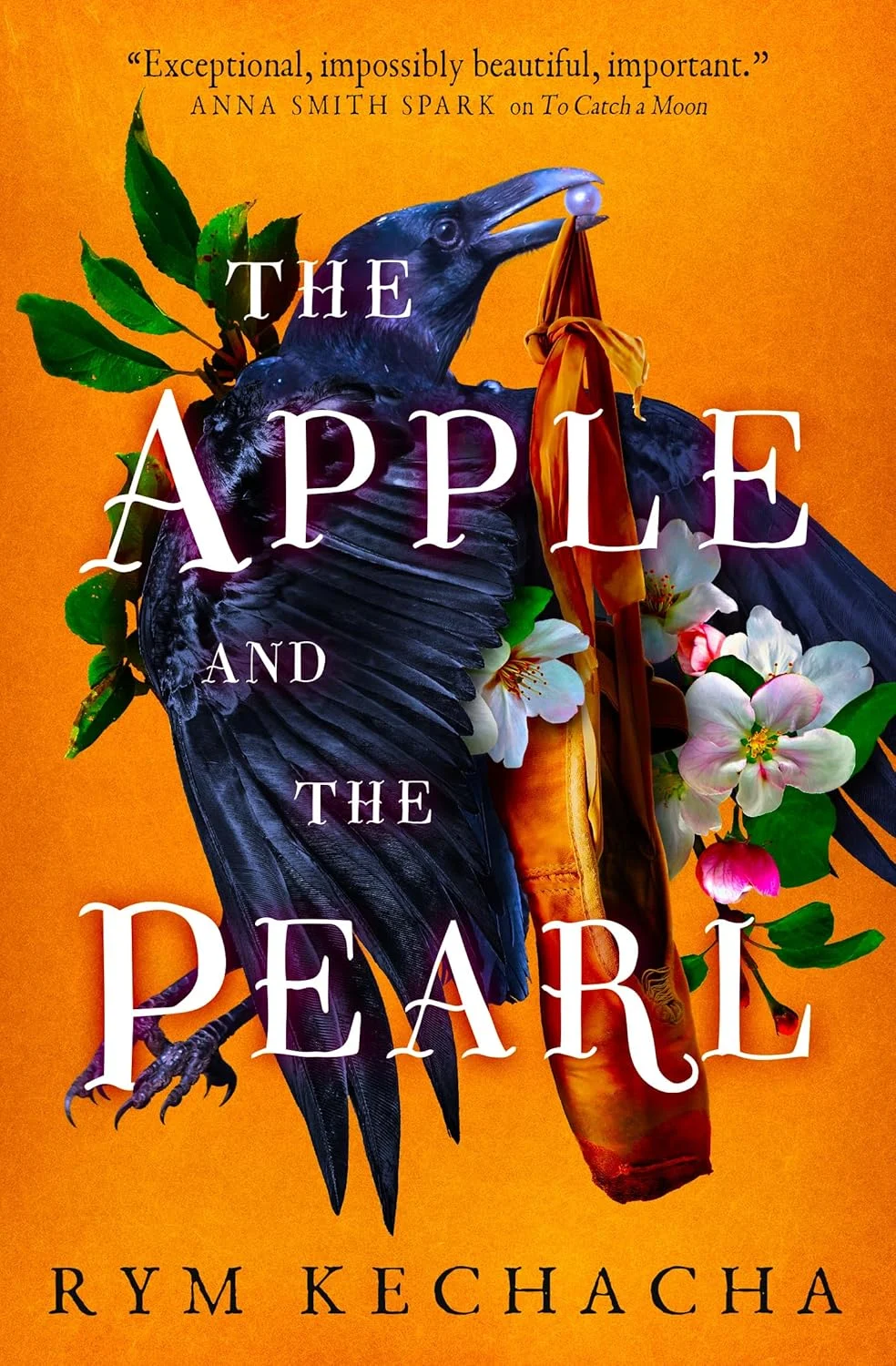
In the landscape of contemporary speculative fiction, few novels capture the friction between the mundane and the metaphysical quite like Rym Kechacha’s latest work, The Apple and the Pearl. The novel invites readers aboard "The Grub"—a shape-shifting train that traverses the British landscape, carrying a traveling ballet troupe into the dark, hidden pockets of the world. It is a story that oscillates between the gritty reality of theatrical labor and the ethereal, dangerous allure of the fae.
The Premise: A Troupe Bound by the Crow
The narrative architecture of The Apple and the Pearl is built upon a foundation of folklore and existential dread. Each night, at the stroke of midnight, a bell tolls thirteen times aboard the train. This signal heralds the troupe’s arrival at a new location, where they perform a single, recurring ballet—the titular Apple and the Pearl—for an audience composed primarily of the fae.
Central to this operation is the "Crow," an enigmatic, omniscient entity that acts as director, patron, and jailer. The troupe members, a collection of "misfits and mavericks," are lured into this cycle by the Crow’s siren song. To survive, they must swear an oath to the troupe for a year and a day, strictly adhering to the rules of a nocturnal curfew. Failure to comply is not merely a breach of contract; it is an invitation to be "snatched" by forces that exist outside the human sphere.
Chronology of a Liminal Day
The novel unfolds over a meticulously paced twenty-four-hour period. Kechacha utilizes fluid, present-tense prose to track the troupe as they prepare for a performance on All Souls’ Day. The train has pulled into a desolate spot near a graveyard, leading to "The Grit"—the theatre space, described as a "speck of dirt trapped in an oyster shell."
- The Morning Ritual: The day begins with the arrival of the train and the collective acknowledgement of their surroundings. We see the mundane realities of the crew: the cook, the wardrobe mistress, and the stagehands navigating the cramped, industrial quarters of the train.
- The Afternoon Rehearsals: As the hours tick toward the performance, the perspective shifts between characters. We witness the grueling rehearsals, where the ballet director pushes the dancers to the point of exhaustion, refining movements that are intended to be "perfect" for an otherworldly audience.
- The Evening Tension: As the fog rolls in and the atmosphere thickens, the anxiety of the performers becomes palpable. The "invisible" presence of the fae, though rarely seen, exerts a suffocating pressure on the company.
- The Climax: The night concludes with the performance itself, a moment where the lines between the human dancers and the supernatural audience blur entirely.
The Anatomy of a Dancer: Mara and the Cost of Perfection
Perhaps the most piercing perspective in the novel belongs to Mara, a senior dancer tasked with the role of the Queen. Through Mara, Kechacha—herself a classically trained dancer—deconstructs the "glittering, toxic nature" of the ballet industry.
Mara’s internal monologue serves as a bridge between the reader and the broader themes of the book. She questions why anyone would sacrifice their body and selfhood to an art form that is "over in the blink of an eye." For Mara, the ballet is a "daylily blooming for just one day before withering." The novel posits that this suffering is exactly what the fae crave; they are drawn to the "space between pain and beauty," feeding on the human striving for an ideal that can never truly be achieved in the mortal realm.
Supporting Themes: Community, Madness, and the Void
Kechacha explores why individuals would willingly enter such a precarious, liminal existence. For many, the train represents a refuge from a society that does not understand them.
- The Search for Belonging: Many troupe members are outsiders who have found a sense of "madness" shared by their peers. As one character notes, "If he is mad then here, at last, are people as mad as him."
- The Utility of Routine: The rigid structure of the train—the daily classes, the constant touring, the strict curfews—acts as a psychological life-raft. It provides a certainty that allows the dancers to ignore the encroaching dangers of the world outside.
- The Existential Query: Throughout the narrative, characters stop to ask, "What do we make here?" The lack of a satisfying answer is exactly what leads some to leave the troupe once their pledge expires. It is a haunting look at the cycle of artistic creation and the toll it takes on the creator.
The Invisible Audience: The Fae as a Narrative Force
A critical stylistic choice by Kechacha is the decision to keep the fae largely off-stage. They are an "all-suffusing unease" rather than characters with dialogue. This absence heightens the tension; the threat is not a villain in a cape, but the fundamental, unbridgeable gap between the human performers and the supernatural beings they serve.
By focusing on the "terribly human problems" of the crew, Kechacha makes the underlying horror of the situation more potent. The troupe is cocooned within a bubble, and the serrated edges of that bubble are constantly pressing inward. This mirrors the reader’s experience: we are kept at a distance, viewing the spectacle through a veil, unable to fully grasp the true nature of the Crow’s game.
The Implications of "The Apple and the Pearl"
The novel serves as a powerful allegory for the artistic process. It raises difficult questions regarding the ethics of performance and the "diamantine" nature of art—equal parts beauty and cruelty.
The "Ship of Theseus" Theatre
The troupe likens their theatre to the Ship of Theseus, where every part is eventually replaced, yet the identity remains. This raises questions about the legacy of art. If the dancers are constantly changing, and the performance is ephemeral, what is the value of the "production"? Kechacha suggests that the value lies not in the result, but in the communal act of trying to reach for the unattainable.
The Role of the Crow
The Crow functions as the ultimate gatekeeper of this narrative. It is the conduit between the mortal and the magical. By the climax, it becomes clear that the Crow is not merely an observer; it is the entity holding the threads of the story together. The spectacle of the finale reveals that the ballet is not just entertainment—it is a necessary ritual, a transaction of energy between the human spirit and the fae void.
Conclusion: A Masterclass in Atmosphere
The Apple and the Pearl is a haunting, ambitious work that defies easy categorization. It is a book about the "border spaces"—the gaps between who we are and who we want to be, between the stage and the wings, and between the human and the otherworldly.
Rym Kechacha has crafted a narrative that is both a love letter to the rigors of ballet and a chilling exploration of what happens when we sell our time to entities that do not share our values. As the train pulls away into the night, heralded by the thirteen tolls of a midnight bell, the reader is left with the lingering sense that while the show must go on, the cost of that performance is a mystery that is perhaps better left unsolved. For those who choose to step onto the train, the advice of the lighting director holds true: "There’s a point where you have to accept it or go home." It is a journey into the dark heart of art, and it is entirely worth the ticket.









No comments yet. Be the first to join the conversation!