

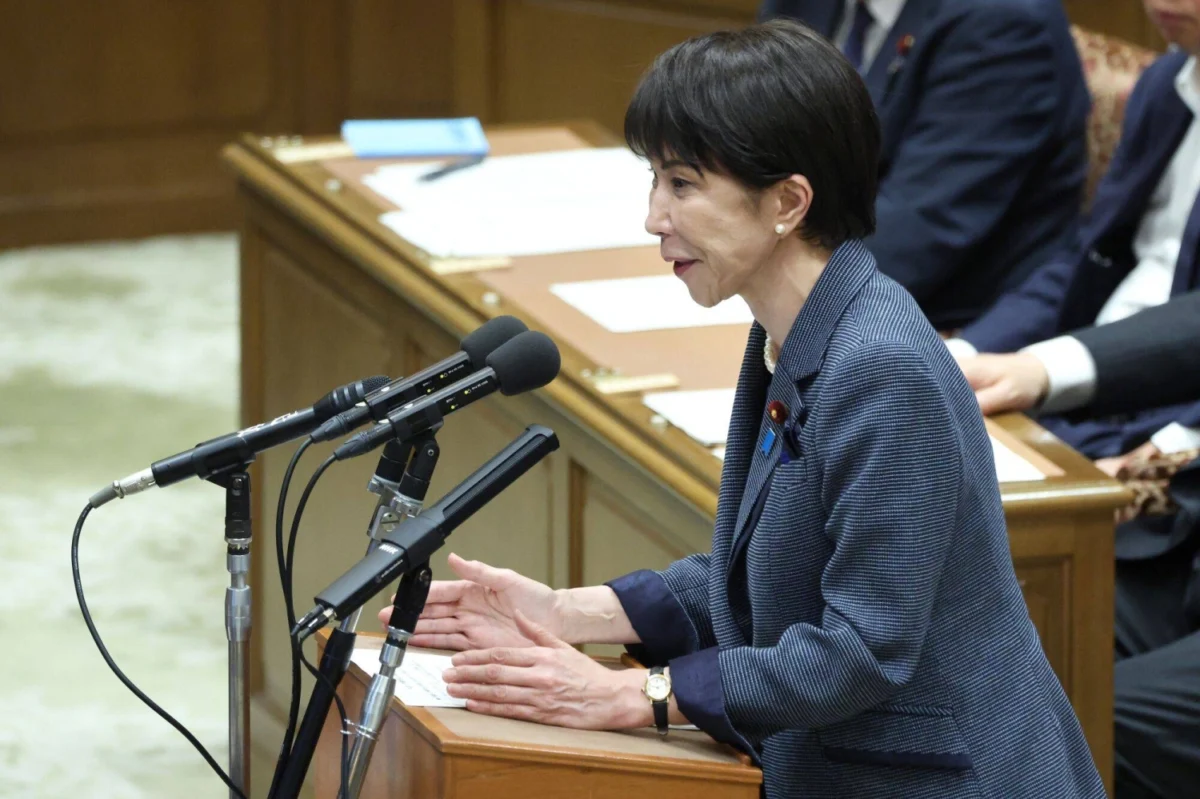
TOKYO — Prime Minister Sanae Takaichi’s administration has demonstrated a remarkable degree of resilience in the face of a complex domestic political landscape. According to the latest monthly survey released by Jiji Press on Thursday, public support for the Takaichi Cabinet saw a marginal uptick, rising 0.3 percentage points to 59.4% for the month of May.
This latest data suggests that despite the hyper-polarized nature of contemporary Japanese politics and the persistent challenges facing the administration, the Prime Minister continues to retain a solid base of public trust. As the government navigates critical legislative debates in the Lower House, these numbers serve as both a mandate and a barometer for the administration’s policy trajectory.
Main Facts: A Snapshot of Public Sentiment
The survey, conducted over a four-day period ending Monday, provides a detailed view of how the electorate perceives the current executive leadership. While the support rate climbed to 59.4%, the opposition to the Cabinet—or those who signaled their dissatisfaction—also saw a minor increase.
- Support Rate: 59.4% (up 0.3 percentage points from April).
- Non-Support Rate: 19.7% (up 0.5 percentage points from April).
- Survey Methodology: Conducted via Jiji Press over four days through May 18, reflecting the most recent pulse of the Japanese public.
The data indicates a relatively stable political environment where neither drastic swings in support nor widespread disillusionment have taken root. However, the slight increase in the non-support rate—though statistically negligible—indicates that the administration is not immune to the scrutiny of a critical public.
Chronology: The Road to May
To understand the current standing of the Takaichi administration, one must look at the preceding months of the fiscal year.
- Early 2026: Prime Minister Takaichi took office with a mandate centered on economic revitalization and national security reform. Her initial months were characterized by high expectations and a robust legislative agenda.
- April 2026: The previous Jiji Press survey reflected a period of consolidation. The administration faced hurdles regarding inflation and energy policy, which saw support levels stabilize in the high 50s.
- May 20, 2026: Prime Minister Takaichi appeared at the Lower House of parliament to participate in a high-stakes debate. This session served as a focal point for the public to gauge her rhetoric and policy clarity regarding regional security and the domestic economic outlook.
- May 21, 2026: The release of the Jiji Press survey solidified the current narrative: that the public remains largely confident in the Prime Minister’s personal brand, even if they remain cautious about specific policy outcomes.
Supporting Data: Why the Public Backs Takaichi
The Jiji Press survey provided granular insight into the motivations of respondents. When asked why they supported the Takaichi Cabinet, participants were allowed to select multiple reasons, revealing a multifaceted perception of her leadership.
Key Drivers of Support
- Perceived Leadership (30.5%): The leading reason for support remains the Prime Minister’s perceived ability to command authority and direct the national agenda. In an era where strong, decisive governance is often prioritized, Takaichi’s assertive style appears to resonate with nearly a third of her supporters.
- Personal Trust (18.9%): A significant segment of the electorate expressed a fundamental trust in Takaichi. This suggests that her long-standing political career and public persona have cultivated a "trust equity" that protects her against minor policy missteps.
- Lack of Alternatives (16.3%): Tied with the "good impression" metric, 16.3% of respondents admitted that they support her simply because they do not see a viable alternative. This reflects a broader trend in Japanese politics where the ruling party’s stability is often bolstered by the perceived weakness or fragmentation of the opposition.
- Positive Impression (16.3%): A baseline level of approval, likely stemming from the Prime Minister’s public appearances and media presence, continues to act as a floor for her popularity.
Official Responses and Political Context
The Prime Minister’s office has largely remained focused on the parliamentary agenda following the survey release. Speaking from the Lower House, the administration has emphasized its commitment to the "three pillars" of its current platform: economic resilience, technological innovation, and diplomatic strength.
Political analysts suggest that the stability in the polls provides the Takaichi Cabinet with the "political oxygen" necessary to pursue sensitive reforms. With a support rating hovering near 60%, the administration is in a strong position to negotiate with coalition partners and push through legislative items that might otherwise be stalled by political friction.

However, the administration is also keenly aware of the 19.7% non-support rate. Cabinet officials have noted privately that they cannot afford complacency, particularly as inflationary pressures continue to impact the cost of living for average households. The government’s strategy in the coming weeks is expected to focus on targeted relief measures, which are designed to address the concerns of the demographic segments most likely to drift into the "non-support" category.
Implications: The Path Forward
The stability of the Takaichi Cabinet carries several implications for Japan’s domestic and international policy.
Domestic Implications
For the administration, the survey results offer a mandate to continue its current course. There is no immediate pressure for a cabinet reshuffle or a change in party leadership. Instead, the focus will likely shift to the upcoming Diet sessions, where the government aims to pass several key economic bills. The challenge will be to maintain this support while navigating the realities of a global economy that remains volatile.
International Implications
From a geopolitical perspective, the consistency of Takaichi’s domestic support is a signal to Japan’s allies, particularly in the G7 and the Quad, that Tokyo remains a stable and predictable partner. When a Prime Minister enjoys high, stable approval ratings, it grants them greater leverage in international negotiations, as foreign leaders can be confident that the policies agreed upon will not be subject to sudden domestic political reversal.
The Role of Media and Information
The context in which these polls are delivered is as important as the numbers themselves. In an age of information overload, the Prime Minister’s ability to communicate her vision clearly—a trait cited by 30.5% of her supporters—is a vital skill. As noted in the broader discourse on journalism today, the ability of the public to distinguish between nuanced policy impacts and superficial political noise is being tested. The reliance on established, credible polling data like that from Jiji Press is, therefore, more essential than ever for the health of Japanese democracy.
Conclusion
The May 2026 survey presents a snapshot of a nation that, while facing persistent questions about the economy and security, remains largely supportive of its current leadership. Prime Minister Sanae Takaichi has successfully navigated the first half of the year, maintaining a near-60% approval rating through a combination of assertive leadership and a lack of clear opposition.
As the administration looks toward the summer, the challenge will be to translate this public trust into tangible legislative achievements. Whether the Cabinet can maintain this equilibrium—or whether the slight rise in the non-support rate is a precursor to a deeper shift—will depend on the administration’s ability to address the granular, daily concerns of the citizenry while maintaining its broader vision for Japan’s future.
For now, the Takaichi Cabinet remains in a position of strength, firmly ensconced in the center of Japanese political life, ready to tackle the challenges of the coming months with a stable base of public approval behind it.












No comments yet. Be the first to join the conversation!