

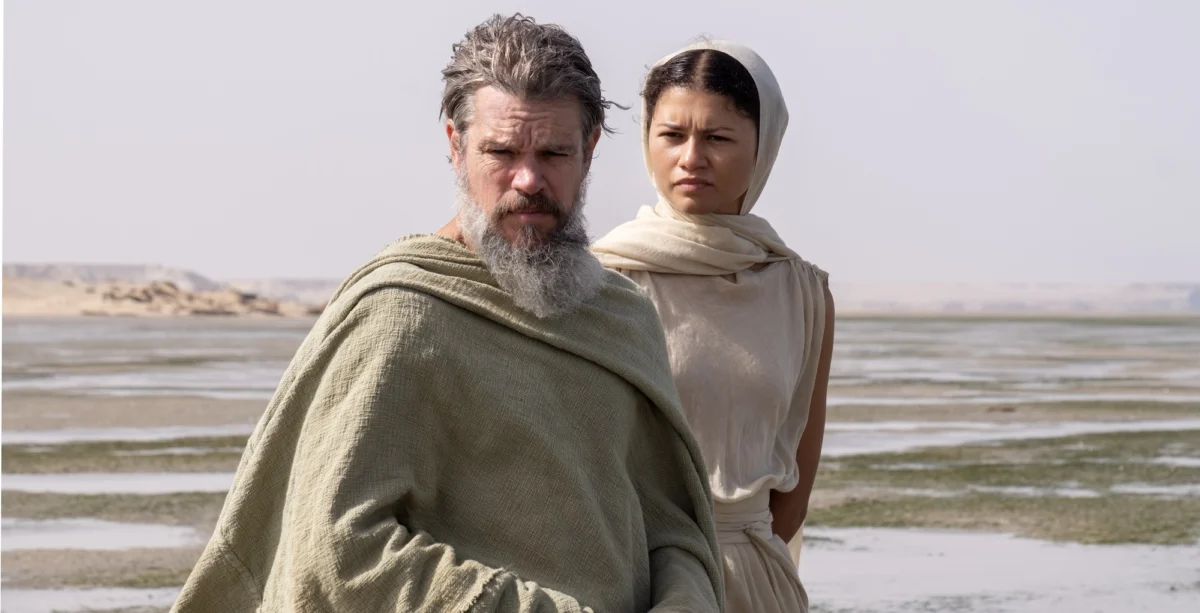
By David Crow
May 21, 2026
The ancient Greeks offered a warning that has echoed through three millennia: "Beware of Greeks bearing gifts." While the sentiment is popularly attributed to Homer, it actually finds its roots in Virgil’s The Aeneid, written over 700 years after the Homeric epics were first committed to parchment. The warning is as relevant today as it was in the age of the Trojan War: when those with dubious intentions offer a "wooden horse" of cultural outrage, it is wise to examine what lies beneath the surface.
Today, that metaphorical wooden horse is the online discourse surrounding Christopher Nolan’s upcoming adaptation of The Odyssey. In an era where cultural flashpoints are manufactured with industrial efficiency, Nolan’s latest project has become the season’s primary punching bag for those claiming to defend the sanctity of classical literature. However, a deeper examination of the history of these texts—and the reality of modern filmmaking—suggests that the loudest voices in this debate are, ironically, the least familiar with the source material they claim to protect.
The Anatomy of a Manufactured Controversy
The latest wave of vitriol reached a fever pitch following a Time magazine cover story published on Tuesday, which offered a deep dive into Nolan’s creative vision. The primary trigger for the online outrage was the confirmation that Oscar-winner Lupita Nyong’o has been cast as Helen of Troy—the figure famously described as "the face that launched a thousand ships."
This casting decision, paired with unconfirmed rumors regarding Elliot Page potentially portraying the legendary warrior Achilles, has ignited a firestorm on social media. Among the most vocal critics is Elon Musk, who has utilized the platform X (formerly Twitter) to voice his disdain for the project. Musk, sharing posts from users who decried Nolan as someone "stomping on Homer’s grave," has frequently compared the upcoming film unfavorably to Wolfgang Petersen’s 2004 blockbuster, Troy.
Yet, this "controversy" is predicated on a fundamental misunderstanding of what adaptation is, and more importantly, a revisionist memory regarding the very film the critics are holding up as the "gold standard" of Homeric accuracy.
A Chronology of Distortion: The Troy Myth
To understand why the current backlash against Nolan is so misplaced, one must look back to 2004. When Wolfgang Petersen released Troy, it was not greeted by the classical community as a bastion of historical or literary fidelity. To the contrary, it was met with arched eyebrows and outright derision from academics, classicists, and literary historians worldwide.
- The De-Godding of the Epic: Troy famously stripped away the very essence of the Iliad: the intervention of the Olympian gods. In Homer, the war is a plaything of the divine; by removing Aphrodite, Athena, and Apollo, Petersen transformed a cosmic tragedy into a gritty, earthbound war movie that lacked the spiritual stakes of the original.
- Narrative Sacrilege: The film took staggering liberties with the timeline and character fates. Paris, who dies in the source material, was allowed a heroic survival in the 2004 film. Achilles, the "Breaker of Men," was sanitized into a relatable action hero, granted a redemption arc that effectively neutered his legendary, destructive hubris.
- The Fate of Briseis: In the classical tradition, Briseis was a spoil of war—an object to be bartered, traded, and passed between men. The film’s attempt to give her a "heroic" escape from the burning city of Troy was a departure that served Hollywood’s demand for a happy ending, rather than the brutal, inevitable reality of the Homeric cycle.
If Troy was an attempt to cash in on the "sword-and-sandal" resurgence sparked by Ridley Scott’s Gladiator, it did so by sanding down the jagged edges of antiquity. It was a product of its time—a Hollywood blockbuster that prioritized the aesthetic of the 2000s over the nuance of the 8th century BCE.
The Nolan Approach: A Return to the Source?
Christopher Nolan’s The Odyssey stands in stark contrast to the populist impulses of his predecessors. While the film has yet to be released, early reports indicate a commitment to the "weirdness" and the profound, supernatural elements of the original texts that Troy deliberately avoided.
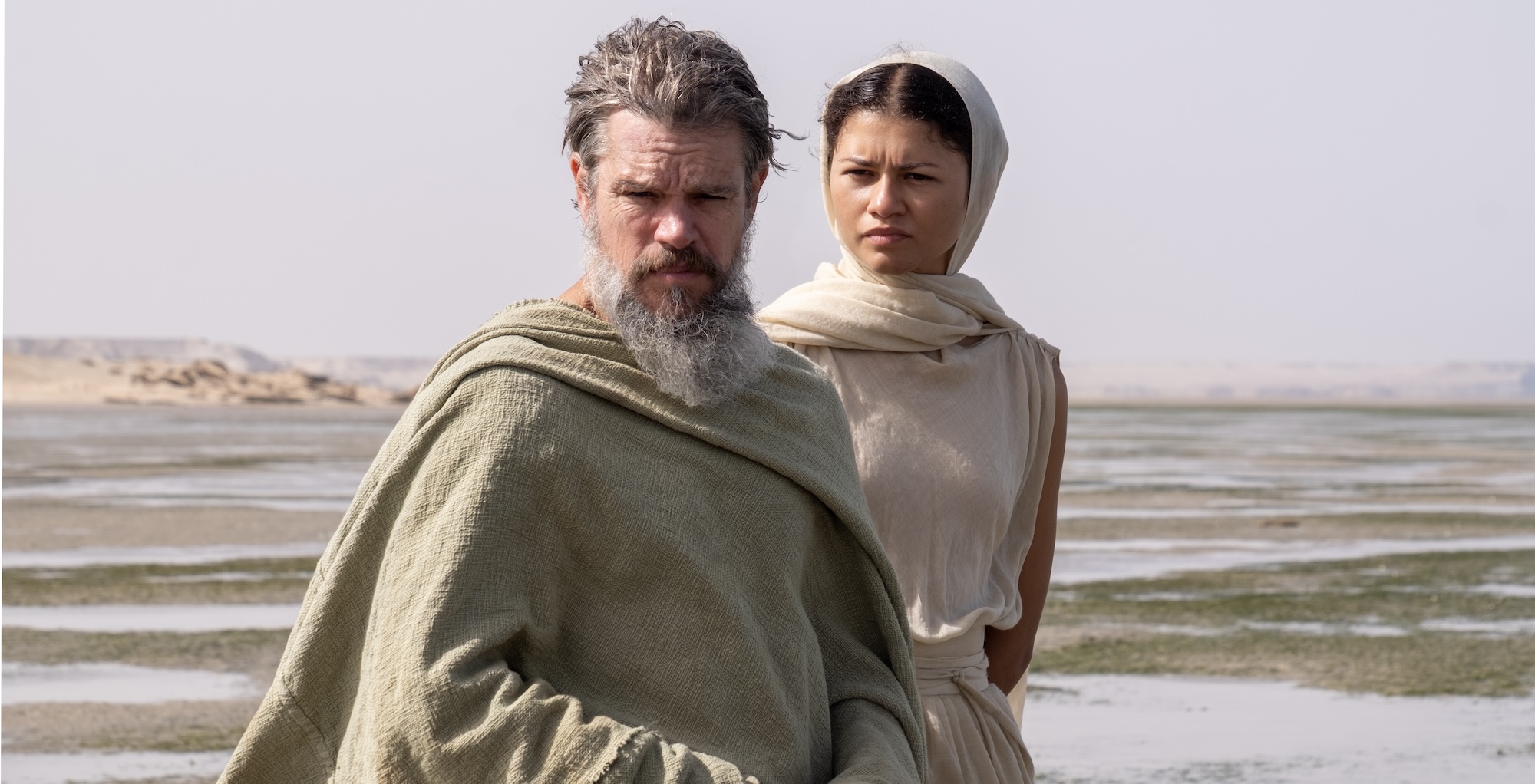
The inclusion of the Greek gods—not as distant symbols, but as active participants—is a return to form. Reports confirm that Zendaya has been cast as Athena, the goddess of wisdom and war, who serves as a guiding force for Odysseus. Furthermore, the inclusion of iconic mythological beats, such as the Sirens’ song serving as a psychological torture device for Matt Damon’s Odysseus, suggests a film that is interested in the internal, philosophical journey as much as the external spectacle.
This thematic consistency is a hallmark of Nolan’s career. From the labyrinthine memory structures of Inception to the temporal distortion of Interstellar, Nolan has long been preoccupied with the "Odyssean" theme: the hero’s desperate, often painful struggle to return home to his family. By centering the film on these primal human experiences, Nolan is engaging with the spirit of Homer, even as he updates the cast to reflect a modern, global perspective.
Implications of the "Culture War" Lens
The aggressive rejection of diverse casting in The Odyssey reveals more about the current state of digital discourse than it does about the film itself. The demand for "accuracy" in a story that involves gods, monsters, and a ten-year voyage is often a thinly veiled proxy for ideological gatekeeping.
By insisting that Helen of Troy must look exactly like a specific, westernized interpretation of beauty, critics are ignoring the fluidity of the Homeric tradition itself. Homer was not a single author, but a repository of oral tradition—a collection of stories that were adapted, changed, and embellished by every bard who recited them for centuries. Even Virgil, as noted, altered the narrative to suit his own era’s political needs.
The implications of this movement are clear: when history and literature are weaponized as static, unchangeable artifacts, they cease to be "classics" and become monuments to a narrow, exclusionary worldview. By rejecting any variation from a preconceived image of the ancient world, these critics are actually denying the very vitality that has allowed these stories to survive for three millennia.
Toward a More Thoughtful Engagement
If Nolan’s The Odyssey succeeds, it will likely be because it understands that the power of the Odyssey does not lie in the physical appearance of its actors, but in its exploration of human fragility. It is a story about a broken man trying to bridge the gap between who he was when he left and who he has become after the horrors of war.
For those who genuinely care about the legacy of the classics, the reaction should be one of curiosity, not hostility. If a modern filmmaker is willing to engage with the actual, uncomfortable, and transcendent aspects of Homeric poetry—rather than just the "cool" parts—then we are witnessing an attempt to bring these stories back into the mainstream consciousness in a meaningful way.
History, like the sea in the Odyssey, is vast and ever-shifting. To try to freeze it in place, as the loudest voices on the internet are currently attempting to do, is a fool’s errand. The classics were never meant to be preserved in amber; they were meant to be wrestled with, adapted, and experienced anew by every generation. Christopher Nolan’s film may be a departure from the visual aesthetics of the past, but in its ambition to tackle the soul of the work, it may well prove to be the most "classical" interpretation we have seen in decades.
Whether the film ultimately succeeds as a cinematic achievement remains to be seen. But the debate surrounding it has already provided a valuable lesson: the true threat to the legacy of the Greeks is not a change in casting, but the willful ignorance of the complex, brutal, and beautiful myths that form the bedrock of our culture.











No comments yet. Be the first to join the conversation!