

For decades, the name Bungie has been inextricably linked to the evolution of the first-person shooter. From the cult-classic origins of Marathon in the 90s to the cultural phenomenon of Halo and the decade-spanning service model of Destiny, the studio has defined what it means to experience science fiction through a controller. However, the gaming landscape has shifted dramatically since the 2014 launch of Destiny. With the player base for their space-faring live service dwindling, Bungie pivoted back to its roots in 2023, announcing a total reimagining of the franchise that started it all: Marathon.
Now that the dust has settled on its March 5, 2026, release, the verdict is in. Marathon arrives not as a triumphant return to form, but as an identity-starved experiment that struggles to justify its place in an increasingly crowded extraction-shooter market.
The Evolution of an Icon: A Chronological Retrospective
To understand the weight of expectations surrounding this title, one must look at Bungie’s trajectory. In the 2000s, Halo: Combat Evolved and its sequels transformed the FPS genre, setting the gold standard for console-based competitive and cooperative play. Following the departure from the Halo franchise after Reach, Bungie sought to capture lightning in a bottle again with Destiny.

By 2023, however, the "Bungie Magic" seemed to be waning. Public interest in Destiny 2 was flagging, and internal studio challenges were beginning to leak into the public discourse. The announcement of a Marathon reboot was positioned as a strategic reset—a way to leverage a dormant intellectual property while tapping into the burgeoning popularity of extraction shooters. Yet, in the three years of development between its announcement and its March 2026 launch, the market became saturated with titles like Escape from Tarkov, Delta Force, and Arena Breakout, leaving Marathon to compete in a genre where players are already deeply entrenched in their preferred ecosystems.
Core Gameplay: The Extraction Dilemma
At its heart, Marathon is an extraction shooter that tasks players—or "Runners"—with deploying onto the hostile world of Tau Ceti IV. The objective is simple: loot, survive, and reach an extraction point before the environment or opposing players end your run.
The immediate problem facing the player is a lack of onboarding. The tutorial, while serviceable for basic mechanics, leaves critical questions unanswered. There is no clear instruction on the permanent consequences of failure. In a genre defined by the "high-stakes" loss of gear, this opacity feels less like a design choice and more like a lack of polish. Players are forced into a cycle of trial and error that feels punishing rather than rewarding.

Furthermore, the game’s narrative is buried beneath layers of grinding. Story beats are locked behind faction reputation levels, meaning the average player, driven by the desire to quickly deploy for another round of loot, will likely miss the world-building entirely. In many cases, the narrative feels like an afterthought—a secondary layer of paint on a structural frame that wasn’t designed to support it.
Technical Hurdles and Server Stability
Bungie has historically been a titan of network architecture, yet Marathon suffers from persistent technical inconsistency. During testing, nearly 25% of all expeditions were compromised by server-side lag. In a genre where a single stutter can result in the loss of thirty minutes of progress and hard-earned equipment, such instability is inexcusable.
When half of a team’s sessions are plagued by connectivity issues that directly result in "downed" status, the competitive integrity of the game evaporates. It is a jarring departure from the studio’s reputation for tight, responsive gunplay. While the core shooting mechanics are undeniably "Bungie-esque"—reminiscent of the refined, fluid combat found in Destiny—the surrounding infrastructure fails to provide the stable foundation required for a high-stakes, player-versus-player-versus-environment (PvPvE) experience.

Visual Identity: A Mismatched Aesthetic
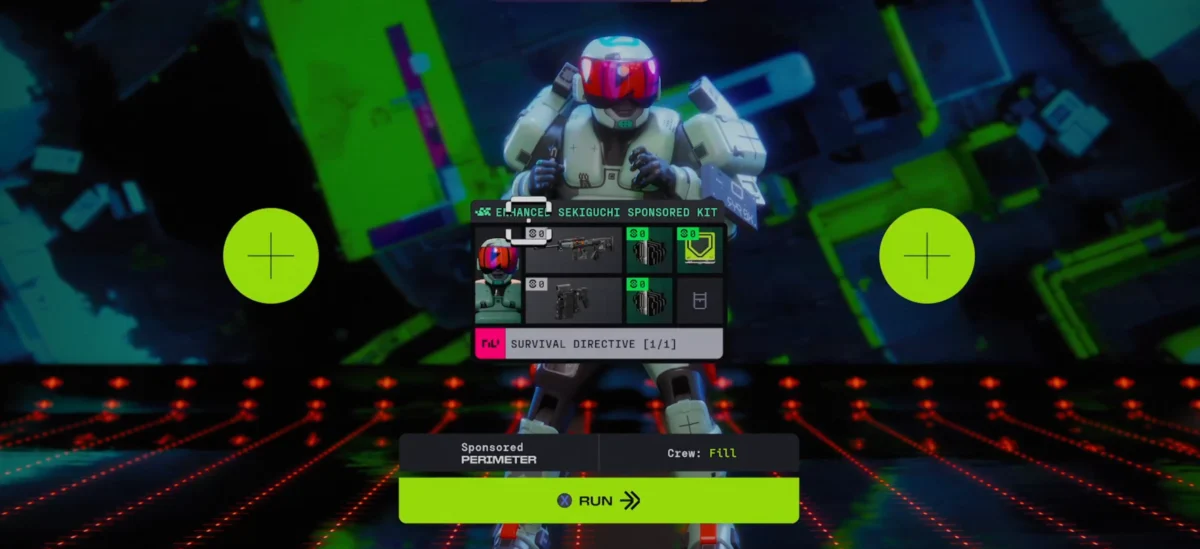
The visual direction of Marathon is perhaps its most polarizing attribute. The game utilizes a high-contrast, neon-heavy palette that, at first glance, feels jarring and over-saturated. While the intention was likely to create a distinct, futuristic aesthetic, the execution often feels like a stylistic clash.
More concerning is the design of the assets themselves. The runners, weapons, and environmental props suffer from a "blocky" design language that feels strangely retro-fitted. Unlike the sleek, ergonomic designs of Destiny, the gear in Marathon often looks rudimentary—reminiscent of low-fidelity floppy disk-era assets rather than a modern sci-fi epic. This "acquired taste" does little to immerse the player in the world of Tau Ceti IV, often making the environment feel like a collection of disparate, disconnected assets rather than a cohesive, living ecosystem.
Implications for Bungie’s Future
The implications of Marathon’s lackluster reception are significant. As a studio, Bungie is at a crossroads. By attempting to chase the trends of the extraction shooter genre, they have diluted the very elements that made their previous work legendary: compelling world-building, intuitive player progression, and technical reliability.

The current state of the game suggests a lack of clear vision. It is a product that tries to be a hardcore survivalist experience for the Tarkov crowd while retaining the "pick-up-and-play" accessibility of a console shooter, ultimately satisfying neither group. If the game is to survive beyond 2026, Bungie must address the fundamental lack of map variety and the absence of meaningful player agency within the game’s loop.
Summary of Key Performance Indicators
- Player Retention: Currently low, as the "grind" to "reward" ratio is skewed heavily toward the former.
- Narrative Integration: Fails to engage the player base, with most lore hidden behind tedious reputation gates.
- Server Reliability: Poor. Lag-related deaths remain a significant deterrent for competitive players.
- Artistic Direction: Divisive. The neon-heavy aesthetic lacks the cohesive design language expected of a AAA title.
Final Verdict: A Missed Opportunity
Marathon (2026) is a testament to the fact that brand legacy is not a substitute for refined game design. While the gunplay remains technically proficient, it is trapped within a structure that feels both derivative and hollow. For players looking for a change of pace, Marathon may offer a few hours of entertainment, but it lacks the "sticky" factor required to retain a dedicated community in the long term.
Unless Bungie pivots toward a more transparent, content-rich model—one that elevates the story, stabilizes the server architecture, and reconsiders the visual identity of its assets—this reboot is destined to be a footnote in the studio’s history. Marathon captures the skeletal remains of the original series’ premise, but it fails to breathe new life into the franchise, leaving us with a hollow shell that is, unfortunately, quite easy to forget.

Game Specifications:
- Developer/Publisher: Bungie
- Platforms: PC (Steam), PlayStation 5, Xbox Series X|S
- Release Date: March 5, 2026
- Players: 1 to 3
- Price: $39.99 USD











No comments yet. Be the first to join the conversation!