

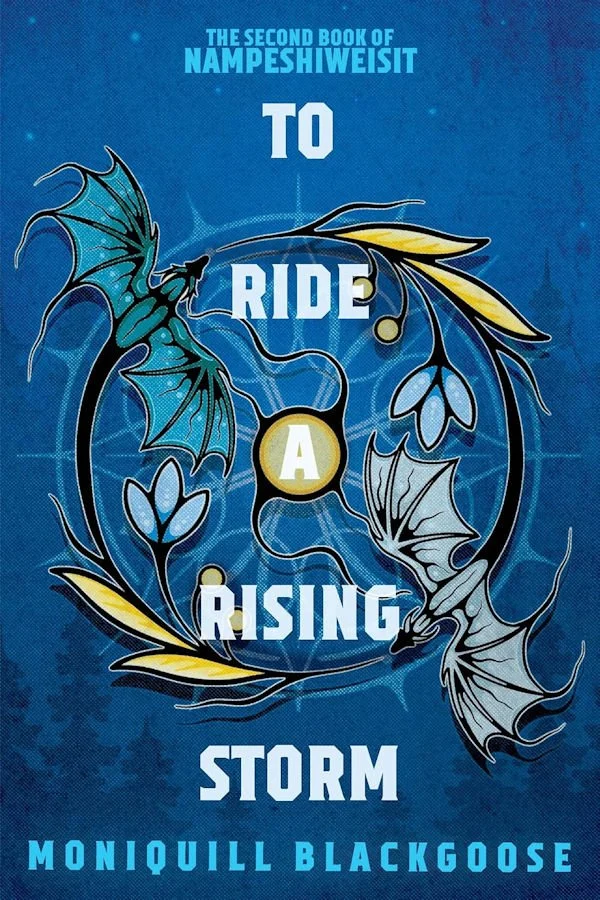
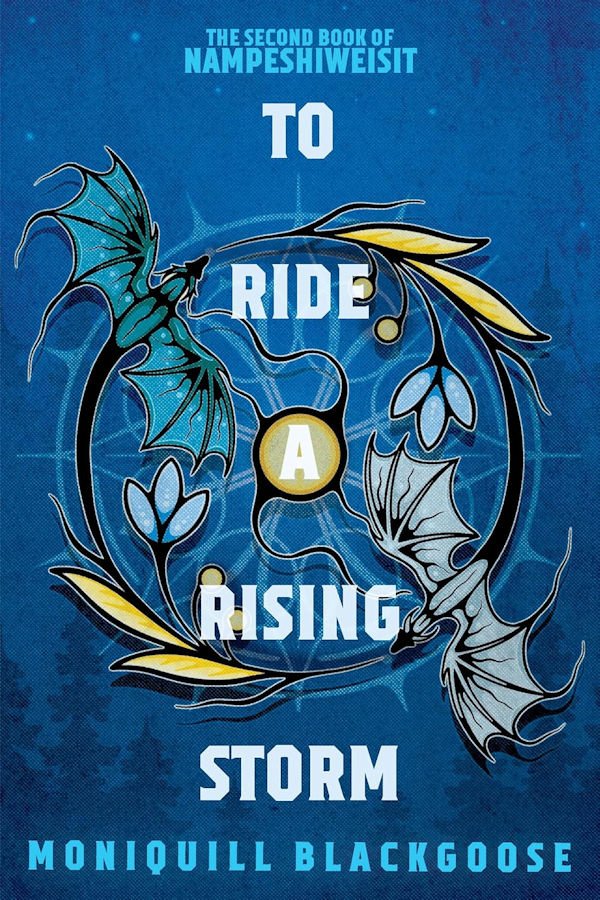
The landscape of modern fantasy is undergoing a tectonic shift, and at the epicenter of this movement is the Nampeshiweisit series. Following the breakout success of To Shape a Dragon’s Breath, author Moniquill Blackgoose returns with the highly anticipated sequel, To Ride a Rising Storm. Picking up immediately after the harrowing events of the debut, this installment transitions from the academic confines of Kuiper’s Academy to the volatile political landscape of the protagonist’s homeland, Masquapaug. As the series matures, Blackgoose deepens her exploration of the intersection between colonial power structures, indigenous resistance, and the symbiotic, often perilous, bond between humans and dragons.
The Narrative Arc: A Summer of Unrest
The story begins with a deceptive sense of accomplishment. Anequs, the series’ indomitable protagonist, has not only survived her inaugural year at the prestigious Kuiper’s Academy but has done so with academic honors, shattering the prejudiced expectations of her imperialist professors. Accompanied by her dragon, Kasaqua, and her fellow indigenous student, Theod, Anequs returns to her home island of Masquapaug expecting a period of respite.
However, the summer break is far from tranquil. Anequs’s newfound notoriety has inadvertently invited an unwelcome guest: a permanent Anglish presence on Masquapaug. This colonial incursion serves as the primary catalyst for the book’s central conflict. Anequs, steadfast in her commitment to her people’s right to self-governance and traditional autonomy, finds herself forced into a confrontation that threatens to ignite a full-scale civil war. The narrative trajectory moves from the individual struggle of a student seeking an education to the collective struggle of a nation fighting for its survival against an encroaching, restrictive empire.
Chronology of Escalation: From Classroom to Conflict
The progression of To Ride a Rising Storm can be mapped through three distinct phases:
- The Homecoming: The initial act focuses on the cultural clash between Anequs’s expectations of her home and the reality of the Anglish occupation. This section provides necessary world-building, grounding the reader in the immediate consequences of the first book’s climax.
- The Sociopolitical Deepening: The middle chapters expand the scope of the world. We are introduced to new characters, including a dragon-rider from a culture that has successfully resisted the Anglish mould. This provides a foil to Anequs’s journey, offering readers a glimpse of what indigenous survival looks like outside of the Academy’s influence.
- The Climax: The final quarter of the book accelerates sharply. The simmering tensions between the conservative imperialist forces and the indigenous population boil over into violence. While some critics suggest this final act feels rushed compared to the deliberate pacing of the preceding chapters, it succeeds in delivering a high-stakes cliffhanger that effectively pivots the series toward a larger, more revolutionary conflict in the inevitable third volume.
Supporting Data: Linguistic and Cultural Nuance
One of the most distinct features of Blackgoose’s world-building is her utilization of German linguistic markers to represent the Anglish culture. For non-German speaking readers, terms like Frau and technical jargon involving Salzsäure (hydrochloric acid) and Essigsäure (acetic acid) serve as markers of an exotic, imposing colonial force.
For German-speaking readers, the effect is slightly different. The use of archaic, accurate German provides a layer of authenticity that is rarely seen in mainstream fantasy. By grounding the "Anglish" colonizers in a recognizable linguistic framework, Blackgoose creates a visceral sense of historical parallel. The world does not just tell the reader that the Anglish are imperialists; it shows the reader through the rigid, bureaucratic, and highly codified language they impose upon the world. This linguistic precision acts as a metaphor for the broader colonial project: the attempt to order, name, and control the untamed elements of society.
Official Character Dynamics and Inclusivity
Blackgoose continues to receive critical acclaim for the "matter-of-fact" inclusivity woven into her narrative. The world of Nampeshiweisit is populated by a diverse cast of LGBTQIA+ individuals, neurodivergent characters, and those navigating various physical disabilities, such as the use of a writing board for a functionally mute character.
Perhaps the most refreshing aspect of the book is its handling of Anequs’s romantic life. Rather than falling into the tired trope of the "love triangle" or agonizing over a binary choice between suitors, the narrative treats Anequs’s non-monogamous leanings with a refreshing, pragmatic grace. Her potential partners—one shaped by the strict, repressive Anglish upbringing and another far more open to new paradigms—respond to her lifestyle in ways that feel organic to their backgrounds. The book respects the difficulty of changing one’s worldview, allowing these characters to grow at a realistic pace rather than forcing sudden, convenient shifts in perspective.
Implications: A Critique of Power and Resistance
The core implication of To Ride a Rising Storm is that true resistance requires more than individual excellence. In the first book, Anequs’s success was defined by her ability to master the Anglish system. In the sequel, she learns that mastering the system is not the same as dismantling it.
The inclusion of a secondary dragon-rider who remains unbowed by the Anglish influence is a critical turning point. It suggests that the "Anglish way" is not the only path to power, nor is it the only way to coexist with dragons. This realization is what drives the inevitable conflict of the story. The imperialists desire to keep indigenous peoples in a state of subjugation, and the friction caused by Anequs’s refusal to "stay in her place" creates a ripple effect that touches every character.
Expert Review: A Series to Watch
In a review for Fantasy Faction, critic Julia Kitvaria Sarene notes that while Anequs remains an "absolute joy to spend time with," the character’s greatest strength is her capacity for growth. She is morally calibrated and capable, yet the narrative allows her to make genuine mistakes. This humanity makes her an effective conduit for the reader to explore themes of colonialism and systemic oppression without the story feeling like a didactic lecture.
Sarene observes: "The clash between characters who can and cannot see past their own position in society adds real depth, and it does so on two levels: characters shape the world, and the world shapes the characters right back."
Conclusion: The Horizon of the Third Installment
To Ride a Rising Storm is a testament to the growth of a writer hitting their stride. By moving beyond the "school setting" trope, Blackgoose has opened the floodgates for a much larger, more dangerous story. The cliffhanger ending leaves no doubt that the third book will be defined by the repercussions of the violence ignited in this volume.
For fans of character-driven fantasy, political intrigue, and meticulous world-building, the Nampeshiweisit series has solidified its place as a mandatory read. Blackgoose is building something truly special—a narrative that understands the weight of history and the explosive potential of those who refuse to be defined by their oppressors. As the storm continues to rise, the literary world waits with bated breath to see if Anequs will become the beacon of change her people so desperately need.










No comments yet. Be the first to join the conversation!