

By Investigative Staff | Cultural & Tech Desk
Date: May 2026
In the wake of a scandal that has left the Imperial Palace in disarray, scholars and technologists are grappling with the unsettling aftermath of the "Nightingale Incident." What began as a technological endeavor to preserve the majesty of nature through synthetic duplication has devolved into a cautionary tale regarding the limitations of data and the persistence of the intangible. The recent publication of Death of the Emperor’s Nightingale, a poetic account by Romie Stott and Shantell Powell, has brought to light the disturbing reality of a state-sponsored attempt to digitize a living soul, resulting in what many are calling a "haunting of the digital age."
Main Facts: The Intersection of Biology and Simulation
The incident centers on a historic Imperial nightingale, a bird renowned for its song, which famously vacated its royal perch when the Emperor replaced it with a jeweled, mechanical simulacrum. This decision, intended to provide a permanent, unwavering performance for the court, backfired when the automaton suffered a catastrophic mechanical failure.
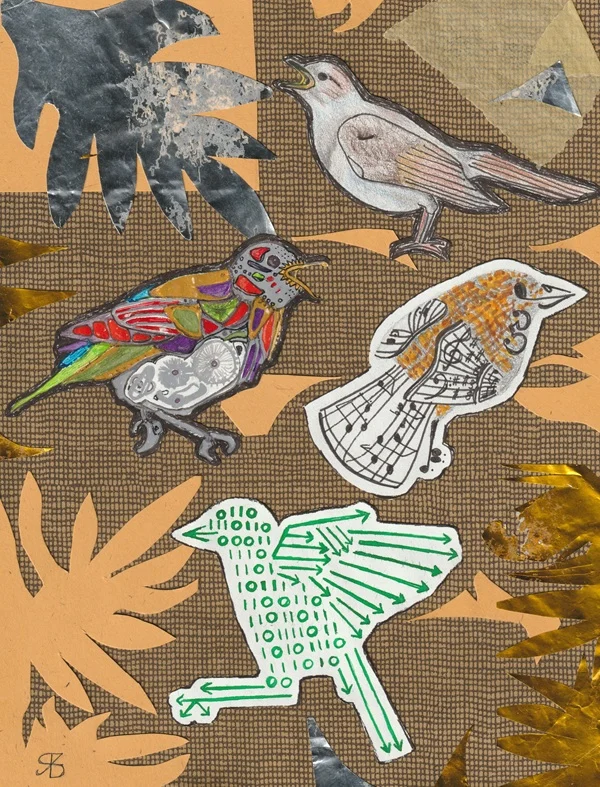
In an act of hubris, the Imperial scientific establishment captured the original, flesh-and-blood nightingale in a net and forcibly sequestered it within a high-security laboratory. There, the creature underwent an invasive process of "digital mapping." Every biological facet—from the intricate architecture of its vocal cords to the chemical composition of its plumage—was scanned, digitized, and uploaded into an experimental database. However, while the project succeeded in capturing the bird’s physical architecture, it failed to replicate the "spirit"—the essential, indefinable quality that animated its song.
Chronological Breakdown: From Artifice to Apparition
The timeline of the Nightingale Incident provides a grim view of the transition from nature to artifice and back to something far more haunting.
Phase I: The Age of Mechanical Replacement
The Emperor, seeking to decouple his aesthetic pleasure from the unpredictable cycles of biology, commissioned a jeweled automaton. The original nightingale, sensing the degradation of its environment, fled the palace. For a period, the court was satisfied with the cold, rhythmic precision of the clockwork bird.
Phase II: The Laboratory Interregnum
Following the structural failure of the mechanical bird, the original nightingale was retrieved. Over several weeks, the bird was subjected to exhaustive forensic analysis. Technicians reduced the avian form to millions of lines of machine language, attempting to create a "perfect" digital loop. The bird was effectively disassembled in the service of data.
Phase III: The Ghost in the Palace
Upon the completion of the digital archive, the bird—now effectively a displaced entity—was discarded. However, the data remained, and so, it seems, did the bird’s memory. Witnesses describe a period where the palace was plagued by an unseen presence. The "ghost" of the nightingale returned to the palace, bypassing the digital archives entirely to roost, invisibly, upon the Emperor himself.
Phase IV: The Shattering
The manifestation of the bird’s spirit had a physical impact on the environment. The jewels of the broken automaton began to lose their luster, turning into dead, dull stone. Faced with an inexplicable psychological torment, the Emperor smashed the automaton into pieces, distributing the rubies and diamonds to his subjects in a desperate, performative gesture of charity.
Supporting Data: The Failure of the Digital Archive
The technical failure of the Nightingale project serves as a significant case study for contemporary ethicists. The researchers attempted to analyze the bird through a variety of lenses:

- Acoustic Spectrograms: Every note of the nightingale’s song was mapped to sound waves.
- Biological Scanning: Detailed cellular and structural mapping of the bird’s body.
- Machine Language Integration: The attempt to create an algorithmic "consciousness" that could output a song identical to the original.
Despite these efforts, the "digital recordings playing on loop" were rejected by the spirit of the bird. The data was found to be functionally hollow. As the poetic record notes, the recordings were met with silence by the entity itself, which sought connection not with the bank of ones and zeroes, but with the seat of power—the Emperor. The "strident new song" that began to haunt the Emperor’s dreams was not a product of the database, but a visceral, piercing melody that functioned as a psychic arrow, striking at his "power-hardened heart."
Official Responses and Administrative Fallout
The Imperial response was swift and indicative of a state in panic. Following the nights of sleeplessness and the persistent, haunting melodies that the Emperor claimed to hear in his dreams, the following executive orders were issued:
- Deletion Protocols: All files associated with the Nightingale project were to be purged from the central servers. The "digital simulacra" were destroyed in a systematic effort to erase the experiment.
- Protection Mandates: The Emperor officially declared the nightingale a protected species, effectively banning any further attempts at capture or digital mapping.
The move is widely viewed as a "guilt-driven" policy shift. By creating a sanctuary for the species, the Emperor sought to appease the spirit he had so recklessly dissected. He now sleeps in relative peace, though the palace remains a site of recurring ecological significance.
Implications: The Ethics of Digital Preservation
The Nightingale Incident poses fundamental questions about the nature of life in an era of rapid technological advancement. Does a "perfect" digital recording of a living being constitute a continuation of that life, or is it merely a desecration?
The "Spirit" Gap
The fact that the nightingale’s spirit refused the digital record highlights the "spirit gap"—a term now being used in academic circles to describe the failure of technology to account for subjective experience. The digital nightingale could sing, but it could not be. The haunting of the Emperor suggests that when we attempt to replace the living with the simulated, we do not escape the consequences of our actions; we merely invite them to return in a more potent, intangible form.
The Progeny of the Displaced
Perhaps the most telling aspect of this saga is the current state of the palace grounds. Each season, the flesh-and-blood progeny of the original nightingale return to nest outside the Emperor’s bedroom window. They do not sing to serve the court, nor are they subject to the laws of the laboratory. They are wild, persistent, and unquantifiable.
The Emperor, having once attempted to master the bird, now lives in a state of constant, seasonal surveillance by the descendants of his victim. The nightingale has moved from being a captive, to an automaton, to a ghost, and finally, to a perennial, living critic.
Reflections from the Creative Community
Shantell Powell, an Aurora finalist and resident at the Banff Centre for Arts and Creativity, notes in her recent work that stories of this nature serve as a necessary check on human arrogance. Her background in off-grid living and horror writing provides a unique lens on the incident: the "strange" is not something to be contained in a lab, but something to be respected in its natural habitat. By writing the history of this "Death of the Emperor’s Nightingale," Powell and Stott have ensured that the lesson remains: data is not a substitute for the soul, and power is no defense against the truth of a song.
As we look toward the future of digital preservation and biological integration, the Nightingale Incident stands as a stark reminder. We can copy the bird, we can map the song, and we can build the jewels—but the spirit, it seems, will always find its way back to the heart, whether that heart is ready for the music or not.









No comments yet. Be the first to join the conversation!