

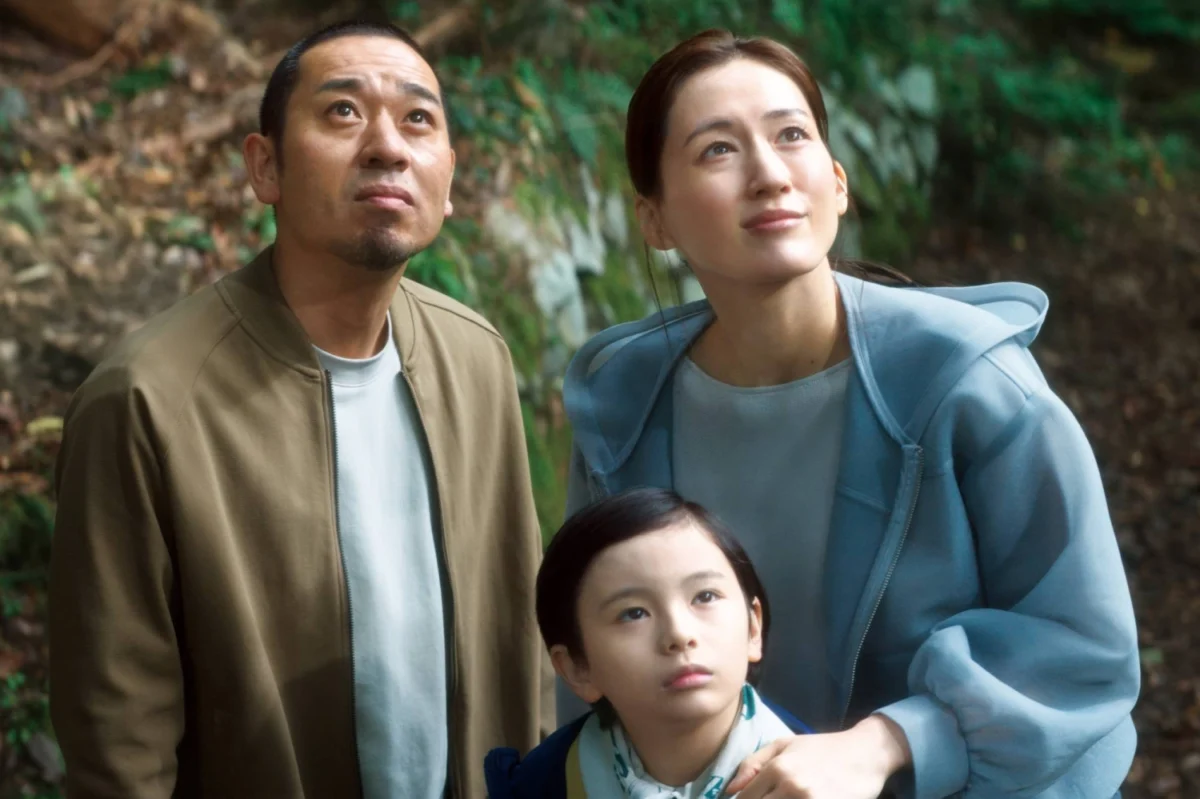
In the opening sequence of Hirokazu Kore-eda’s latest cinematic offering, Sheep in the Box, the mundane intersection of technology and tragedy is starkly rendered: a drone descends upon a quiet, suburban home, dropping a glossy brochure that promises the impossible. For a couple paralyzed by the lingering shadows of a dead child, the advertisement offers a radical, if unsettling, remedy: a humanoid avatar, bio-engineered to mimic the personality and memories of their lost son.
It is a premise that feels plucked from the darkest corners of speculative fiction, yet in the hands of Kore-eda—a filmmaker renowned for his humanist empathy—it becomes a meditation on the limits of mourning. Currently competing for the Palme d’Or at the 79th Cannes Film Festival, Sheep in the Box marks a significant milestone in the director’s career. Not only is it his eighth appearance in the prestigious festival’s main competition, but it also signals his return to writing an original Japanese-language screenplay, a feat he has not attempted since the 2018 global phenomenon Shoplifters.
The Narrative Core: A Fable of Modern Loss
The story centers on Otone (played by Haruka Ayase) and Kensuke (the mononymous Daigo), a couple whose lives have been defined by the absence of their 7-year-old son, Kakeru, who passed away two years prior. Their household, once vibrant, has become a museum of static memories.
The entry of the "humanoid" into their home—portrayed with haunting, minimalist precision by newcomer Rimu Kuwaki—serves as the catalyst for the film’s philosophical inquiry. Kore-eda explores the volatile friction between human grief and technological facsimile. As the couple attempts to integrate this artificial entity into their daily routines, the film asks a fundamental, uncomfortable question: Can love exist in a loop, or is it only valid when it is tethered to the mortality of its recipient?
Chronology of a Cinematic Journey
The path to Sheep in the Box has been as deliberate as the film’s pacing. Following the international success of Shoplifters, Kore-eda expanded his horizons with projects in France (The Truth) and South Korea (Broker). While these films were lauded for their technical prowess, cinephiles and critics alike speculated on when the director would return to his native tongue and the specific domestic landscapes of Japan that define his most celebrated works.
- 2024–2025: Development phase. Kore-eda began drafting the screenplay, deeply influenced by the rapid acceleration of generative AI and the cultural anxiety surrounding death-tech and "digital resurrection."
- January 2026: Production commences in Tokyo. The casting of Haruka Ayase and Daigo was finalized, with the director emphasizing the need for actors who could convey profound emotional interiority without relying on overt melodrama.
- April 2026: Official announcement of the film’s selection for the 79th Cannes Film Festival, triggering significant anticipation among international distributors.
- May 29, 2026: The scheduled wide release in Japan, positioning the film as one of the most significant cultural events of the year.
The Science of Sentiment: Data and Trends
While Sheep in the Box is a work of fiction, its thematic foundation is rooted in a burgeoning real-world industry. The "death-tech" sector—which includes AI-driven chatbots trained on the digital footprints of the deceased—has seen a 40% increase in venture capital investment over the last three years.
Sociologists point to a shift in how society handles bereavement in the digital age. Where death was once a private, final event, it is now increasingly mediated by platforms that allow for the "persistence" of the dead. According to data from the Japan Institute for Future Studies, roughly 22% of surveyed individuals in urban centers expressed an interest in "digital memorialization" technologies, provided the ethical guardrails were sufficient.
Kore-eda utilizes this data as a backdrop. His film does not judge the technology so much as it observes the psychological erosion that occurs when a person substitutes a living relationship with a simulated one. The "humanoid" in the film is not just a tool; it is a mirror, reflecting the parents’ own inability to move forward.
Official Perspectives and Industry Reception
The film’s production team, a consortium involving Fuji Television, Gaga, Toho, and Aoi Pro, has maintained a disciplined silence regarding the film’s conclusion, emphasizing that the "ending is not a solution, but an experience."

In a press statement released ahead of the Cannes premiere, Hirokazu Kore-eda remarked:
"We live in an era where we are tempted to edit our memories, to trim the rough edges of grief until only the pleasant parts remain. Sheep in the Box is about the necessity of the ‘rough edges.’ It is about the realization that a perfect copy of a person is, in fact, the ultimate absence of them."
Critics who have viewed early screenings at Cannes have been quick to praise Rimu Kuwaki’s performance. To play an artificial being that is meant to feel like a human child requires a degree of restraint that borders on the ascetic. Kuwaki’s portrayal—avoiding the uncanny valley tropes of sci-fi cinema—has been described by Variety as "the most chillingly effective performance of the festival."
Implications for a Changing Society
The implications of Sheep in the Box extend far beyond the silver screen. As AI becomes more integrated into the domestic sphere, the film acts as a cautionary, yet empathetic, warning. If society adopts the habit of replacing what is lost, do we lose the capacity to mourn? And if we lose the capacity to mourn, do we lose the capacity to fully cherish what is currently in our lives?
The film highlights the "commodification of intimacy." By placing a price tag on a humanoid child, the company in the film transforms grief from a human experience into a consumer transaction. This mirrors modern concerns about Big Tech’s intrusion into the most sacred spaces of human existence: birth, marriage, and death.
Furthermore, the film challenges the Japanese cultural landscape—a society that has traditionally placed high value on the memorialization of ancestors—to consider what happens when those ancestors are no longer memories, but programmable entities.
Conclusion: A Masterwork in the Making
Sheep in the Box is poised to be more than just a contender for the Palme d’Or; it is a definitive text on the human condition in the mid-2020s. By returning to his roots, Kore-eda has found a new way to examine the same questions that have haunted his filmography for three decades: What makes a family? What constitutes a life? And, perhaps most importantly, what are we willing to sacrifice to avoid saying goodbye?
As the film prepares for its Japanese release on May 29, audiences are encouraged to look beyond the sci-fi premise. At its heart, the film is a quiet, devastating, and ultimately beautiful story about two people trying to learn how to live in a world where the past can be summoned at the touch of a button, but the future must be built through the difficult, messy process of letting go.
Whether it walks away from Cannes with the top prize or not, Sheep in the Box has already secured its place as a landmark achievement, forcing us to confront the ghosts we build, and the ones we must eventually set free.












No comments yet. Be the first to join the conversation!