

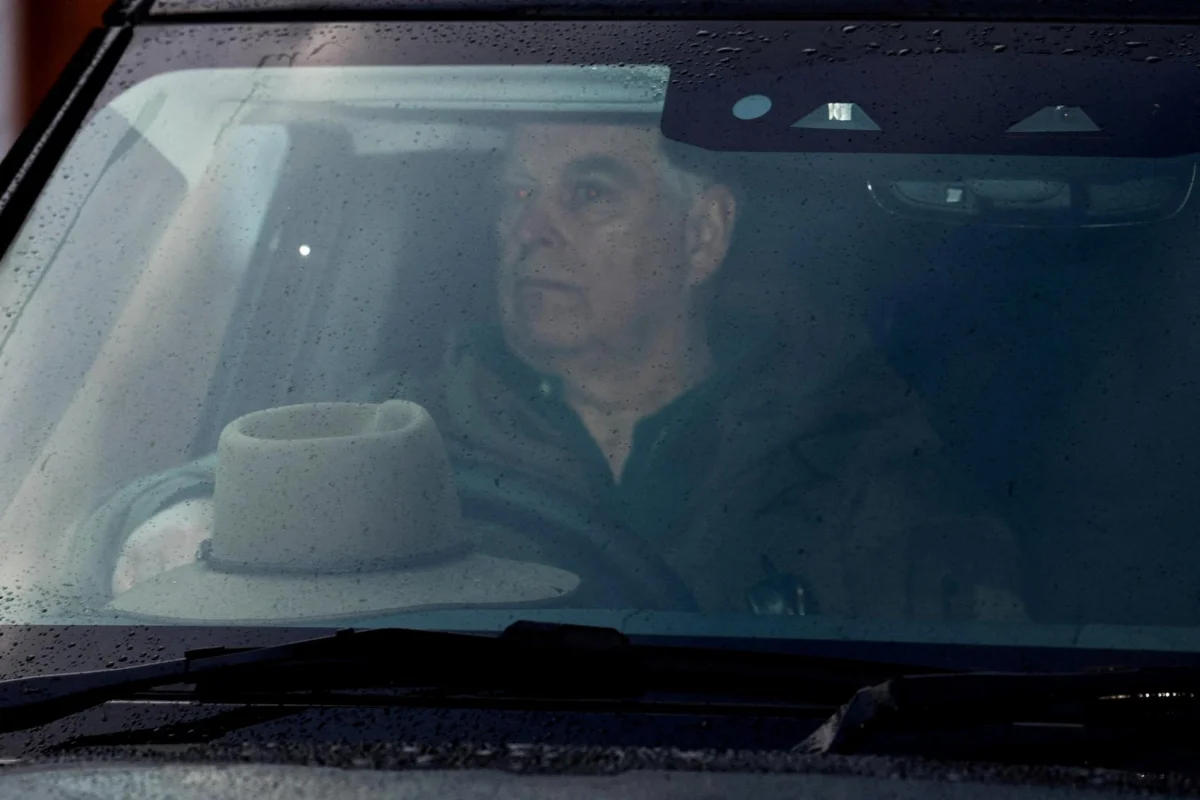
The British legal landscape is currently grappling with an unprecedented constitutional and criminal crisis as police investigations into Andrew Mountbatten-Windsor—the 66-year-old brother of King Charles III—intensify. Following his arrest earlier this year, senior law enforcement officials have signaled that the inquiry into allegations of misconduct in public office is far from reaching a conclusion, describing the process as a “long and complex” undertaking that could take years to resolve.
The arrest of the royal, who remains eighth in line to the throne, represents a seismic shift in how the British establishment handles its most senior members. As the investigation deepens, it has cast a long shadow over the monarchy, raising uncomfortable questions about royal privilege, the influence of the late Queen Elizabeth II, and the lingering, toxic legacy of the American sex offender Jeffrey Epstein.
The Scope of the Investigation
The investigation, led by the Thames Valley Police, is being treated as a major crime inquiry, utilizing resources and investigative protocols typically reserved for high-stakes homicide cases. Assistant Chief Constable Oliver Wright, who is overseeing the operation, has emphasized that the inquiry is being conducted with extreme thoroughness.
"The investigation is by necessity hugely thorough and will take time," Wright stated during a press briefing on Friday. "It’s not going to be a quick investigation by any means."
The crux of the police focus lies in Mountbatten-Windsor’s decade-long tenure as the United Kingdom’s Special Representative for International Trade and Investment, a role he held from 2001 to 2011. The Department of Justice (DOJ) in the United States released millions of documents following Epstein’s death, which reportedly contain email correspondence suggesting that the former prince shared sensitive, confidential government information with the convicted predator.
Under British law, "misconduct in public office" is a grave offense that carries a maximum penalty of life imprisonment. While the legal term is broad, it encompasses a spectrum of wrongdoing, ranging from the unauthorized disclosure of state secrets and institutional corruption to the potential for sexual impropriety.
Chronology of a Royal Downfall
The current situation is the culmination of years of mounting public and legal pressure. The timeline of this collapse provides a stark look at how the former prince’s association with Epstein eventually led to his isolation from the Firm:
- 2001–2011: Mountbatten-Windsor serves as the UK’s Special Representative for International Trade and Investment, a role that saw him travel extensively and interact with global power brokers, including Epstein.
- 2019: Following a disastrous BBC interview in which he attempted to distance himself from Epstein, public backlash forces the prince to step back from public duties.
- October 2025: King Charles III, acting to protect the reputation of the monarchy, takes the historic step of stripping his brother of his remaining honorary military titles and royal patronages.
- February 2026: Acting on information gleaned from the U.S. DOJ archives, Thames Valley Police arrest the former prince at his residence in Norfolk. He is interviewed under caution for several hours.
- March 2026: The British government releases declassified documents revealing that the late Queen Elizabeth II had personally lobbied for her son to receive his trade envoy appointment, complicating the narrative of his official duties.
The Epstein Connection and Public Testimony
The arrest in February was captured in a now-iconic photograph of an ashen-faced Mountbatten-Windsor leaving a police station, an image that dominated global media. Despite the intensity of the investigation, the prince has maintained a position of silence since his detention. His legal team has consistently denied any wrongdoing, with the prince having previously stated that he regrets his association with Epstein, though he maintains that their friendship did not cross into criminal territory.
However, the police investigation is looking beyond the emails. Investigators are actively assessing claims regarding an incident in 2010, where a woman was allegedly transported to an address in Windsor for sexual purposes. Lawyers for the alleged victim have claimed that she was sent to Britain by Epstein specifically for a sexual encounter with the royal.
While the woman has not yet formally reported the offense to British authorities, the police are actively encouraging victims to come forward. Assistant Chief Constable Wright noted the significant barriers to engagement for survivors of such high-profile figures. "In terms of Epstein victims and survivors, we hope that anyone with relevant information will come forward," he said. "I really want to stress that our door is open whenever a victim survivor is ready to engage with us."
The Complexity of International Cooperation
One of the most significant challenges for the Thames Valley Police is the cross-border nature of the evidence. While the DOJ has released massive amounts of data, the formal transfer of specific evidentiary documents to the UK remains a work in progress.
"That is ongoing, and it’s a fairly complex thing to do, but we’re working very hard on that," Wright explained. The diplomatic and legal channels required to ensure the admissibility of U.S.-sourced documents in a British court of law are proving to be a logistical bottleneck. Furthermore, the investigation is not limited to the Thames Valley force. Surrey Police have confirmed they are investigating two separate allegations of child sex abuse dating back to the 1980s and the mid-1990s, though they have not disclosed if these cases are directly linked to the Mountbatten-Windsor inquiry.
Implications for the Monarchy
The implications for the British Crown are profound. The recent release of confidential government papers highlighting the late Queen’s personal involvement in securing her son’s trade role has shifted the focus from the individual to the institution. It raises questions about the degree to which the royal family shielded the prince from scrutiny during his tenure as a public official.
King Charles III has attempted to navigate these turbulent waters by publicly distancing the monarchy from his brother. Upon the arrest, a spokesperson for the King stated that the family was "deeply concerned" and that the authorities had the palace’s "full and wholehearted support and cooperation."
However, the damage to the institution’s image is palpable. In an era of increased demand for transparency and accountability, the spectacle of a senior royal under investigation for life-altering crimes threatens to alienate the public. The government’s decision to release the documents regarding the trade appointment suggests that there is a move toward greater openness, even at the risk of damaging the legacy of the late Queen.
Conclusion: A Long Road Ahead
As the investigation enters its next phase, the British public and the international community remain in a state of suspense. The legal process will likely be protracted, characterized by motions, document reviews, and the careful vetting of witnesses.
For the Thames Valley Police, the task is twofold: they must maintain the integrity of a high-profile criminal investigation while managing the immense pressure of public expectation. For Mountbatten-Windsor, the road ahead is uncertain, as the weight of the evidence continues to mount. Whether this investigation leads to a historic trial or remains a cautionary tale of institutional failure, the legacy of the "Epstein years" will continue to cast a dark, inescapable shadow over the House of Windsor for the foreseeable future.












No comments yet. Be the first to join the conversation!