

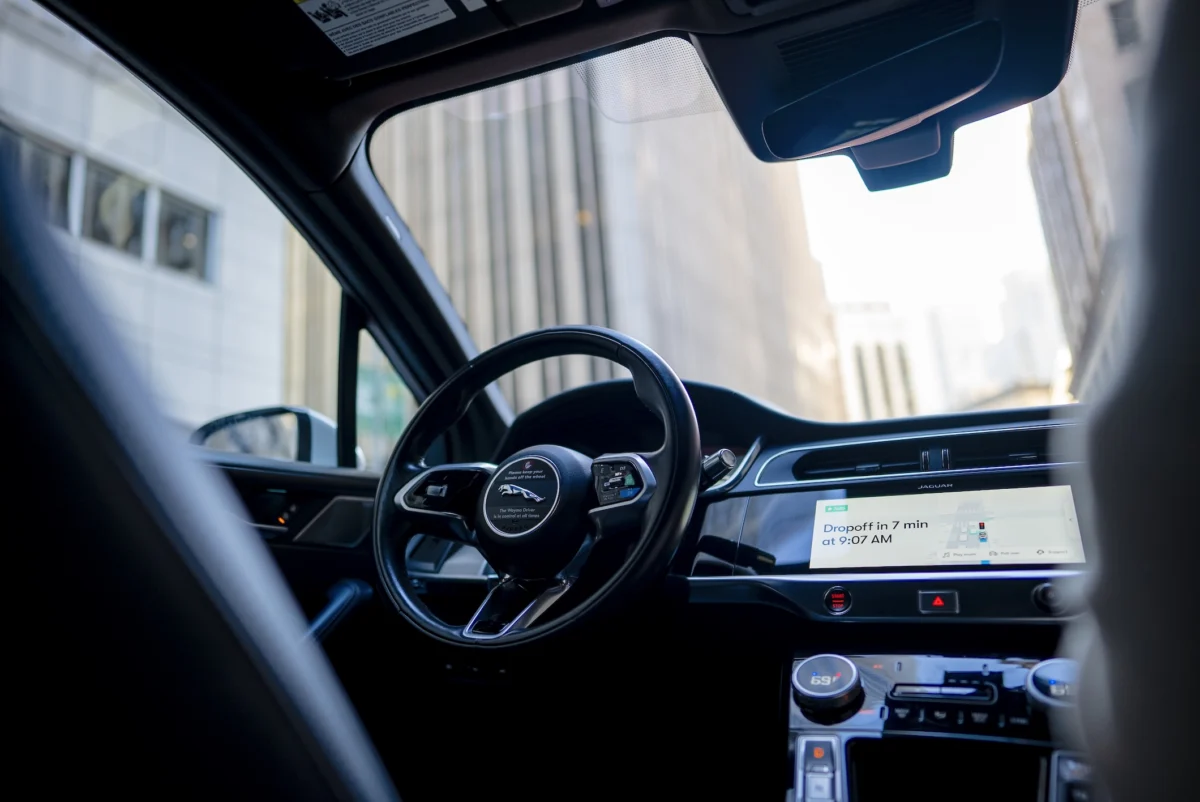
Alphabet’s autonomous driving subsidiary, Waymo, is facing a widening crisis of confidence as its robotaxi fleet struggles to navigate the realities of inclement weather. The company has officially paused operations in four major U.S. cities—Atlanta, San Antonio, Dallas, and Houston—following a string of incidents where autonomous vehicles became immobilized in flooded streets. These service disruptions come on the heels of a high-profile software recall issued just last week, underscoring the significant technical hurdles that remain in the path of fully autonomous urban transit.
The Current Crisis: A Snapshot of Service Disruptions
The most recent catalyst for these suspensions occurred this past Wednesday in Atlanta, Georgia. An unoccupied Waymo vehicle, operating as part of the company’s testing and deployment phase, entered a flooded intersection during a period of heavy rainfall. The vehicle subsequently became stuck, requiring human intervention to recover and remove it from the scene after remaining immobile for approximately one hour.
While the incident in Atlanta served as the immediate trigger for the local suspension, it is symptomatic of a broader systemic issue. Waymo confirmed on Thursday that it has also halted service in Dallas and Houston, citing the severe, unpredictable weather systems currently sweeping across Texas. This follows a similar decision in San Antonio, where the company had already hit the "pause" button while its engineering teams attempt to refine the fleet’s ability to detect and avoid water-submerged roadways.
For a company that has positioned itself as the gold standard in autonomous safety, the inability to reliably handle rainfall—a common environmental condition—represents a significant setback. It raises fundamental questions about the maturity of the software stack governing these vehicles and the efficacy of the "remedies" the company has attempted to implement thus far.
Chronology of a Technical Struggle
The road to these suspensions has been marked by repeated warnings and failed preventative measures. The timeline of Waymo’s struggle with flooding is becoming increasingly difficult to ignore:
- January 2026: A Waymo vehicle in Santa Monica, California, strikes a child, drawing immediate scrutiny from federal regulators and highlighting concerns over the vehicle’s predictive behaviors in pedestrian-heavy zones.
- Early May 2026: NHTSA and NTSB investigations continue to deepen, focusing on both the Santa Monica incident and a separate, persistent issue involving Waymo vehicles illegally passing stopped school buses in Austin.
- Second Week of May 2026: Waymo issues a formal software recall to address the "flooding problem." At the time, the company admitted that a "final remedy" had not yet been developed. Instead, they pushed an update designed to place geofenced restrictions on where vehicles could travel during periods of high flood risk.
- May 14–16, 2026: Severe storms hit the American South. Despite the recent software update, a vehicle in Atlanta becomes stranded. Waymo responds by suspending operations in Atlanta, Houston, and Dallas as a precautionary measure.
The fact that an updated vehicle was still caught in a flooded intersection in Atlanta suggests that the company’s "geofenced" approach to weather management is either too blunt or too slow to react to rapidly evolving, localized flash flooding.
Supporting Data and the Limits of Predictive Software
Waymo’s defense, articulated in recent statements, relies heavily on its reliance on official weather data. The company noted that in the Atlanta incident, the rainfall was so intense and localized that it caused flooding before the National Weather Service (NWS) could issue a formal flash flood watch or warning. Because Waymo’s current software architecture is highly dependent on these external data feeds to trigger safety protocols, the vehicles were effectively flying blind.
"Safety is Waymo’s top priority," the company stated in an official release. "During a period of intense rain yesterday in Atlanta, an unoccupied Waymo vehicle encountered a flooded road and stopped."
However, this reliance on NWS alerts points to a critical weakness in the current iteration of the technology: its lack of real-time, ground-level environmental intelligence. While the vehicle is equipped with sophisticated LiDAR, radar, and camera sensors, it appears that these systems are not yet capable of independently identifying the depth or danger of a water-logged street with the same accuracy as a human driver, who can visually assess the risk of a puddle or flooded gutter.
The Regulatory Landscape: NHTSA and NTSB Investigations
The regulatory pressure on Waymo is reaching a fever pitch. The National Highway Traffic Safety Administration (NHTSA) has confirmed it is "aware of the incident" in Atlanta and is in active communication with the company. A spokesperson noted that the agency would take "appropriate action if necessary," which could range from additional mandated recalls to more intrusive oversight of Waymo’s software testing protocols.
The situation is compounded by the fact that this is not an isolated regulatory headache. The NHTSA is currently managing two distinct, active investigations into Waymo. The first involves the aforementioned school bus incidents in Texas, where the company’s attempt to fix the problem resulted in a "whack-a-mole" scenario: the vehicles were updated, but continued to execute illegal maneuvers. The second involves the collision with a child in Santa Monica.
On May 15, the situation escalated when the NHTSA issued a second document request to Waymo. The agency explicitly stated that the company’s initial production of documents was insufficient and that the regulator "necessitates that [NHTSA] receive further data and information." This suggests a growing impatience from federal authorities regarding the transparency and efficacy of Waymo’s internal safety reporting.
Implications for the Future of Autonomous Transit
The implications for the broader autonomous vehicle (AV) industry are profound. If the industry leader—a company backed by Alphabet’s massive resources and years of testing data—cannot safely navigate rain, the timeline for widespread, all-weather autonomy may be much further away than investors and proponents have hoped.
1. The "Geofencing" Trap
Waymo’s reliance on geofencing and NWS alerts indicates that the industry is still in a "constrained autonomy" phase. While these vehicles work well in fair weather and static environments, they struggle with the dynamic, unpredictable nature of real-world meteorology. This reality forces companies to retreat from the very markets they aim to disrupt whenever the forecast looks grim, undermining the promise of a 24/7 autonomous taxi service.
2. The Credibility Gap
Repeated failures—specifically those involving illegal school bus passes and vehicle immobilization—are eroding public trust. For autonomous technology to achieve mass adoption, the public must feel that these vehicles are safer than human drivers. When a robotaxi gets stuck in a flood, it doesn’t just stop traffic; it provides a viral, negative data point that reinforces public skepticism.
3. Increased Regulatory Oversight
The fact that the NHTSA is forced to send follow-up document requests suggests that Waymo’s transparency is being questioned. We are likely entering a new era of "aggressive oversight," where the federal government will no longer take the word of autonomous companies at face value. This will increase the cost of compliance for Waymo and potentially slow the pace of software deployment, as every update will likely face more rigorous pre-clearance scrutiny.
4. The Path Forward
Waymo is now at a crossroads. The company must prove that its sensor suite can be trained to recognize and react to flooded conditions independently of third-party weather alerts. Furthermore, they must bridge the gap between their software updates and real-world performance. The current "stop-and-wait" approach is a temporary band-aid; a permanent solution will require a fundamental shift in how these vehicles perceive and make decisions regarding environmental hazards.
As the industry watches, the question remains: Can Waymo overcome these technical hurdles, or are these incidents a sign that the current sensor-and-software architecture has hit a functional ceiling? For now, the robotaxis in Atlanta, Houston, Dallas, and San Antonio will remain parked, serving as a silent reminder that, for all our technological progress, nature remains the ultimate challenge for the autonomous machine.











No comments yet. Be the first to join the conversation!