

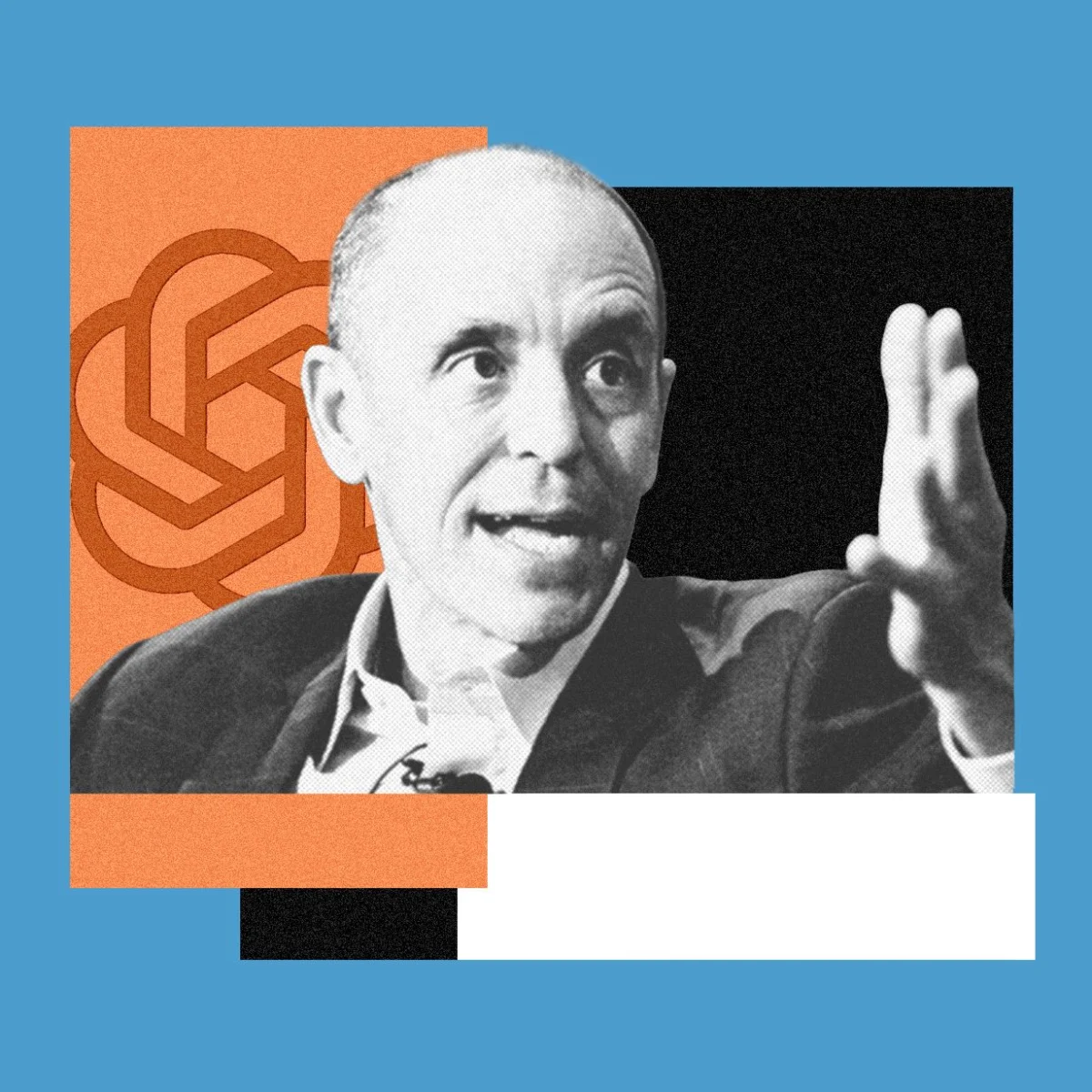
Three months ago, OpenAI co-founder Greg Brockman voiced a chilling concern to the public: despite the unprecedented global adoption of ChatGPT, the societal tide was turning against artificial intelligence. The initial wonder that greeted the generative AI revolution has curdled into deep-seated apprehension. Today, the backlash is no longer just a trend—it is a full-blown PR crisis, and the entity with the most to lose is the very company that triggered the boom: OpenAI.
From college commencement stages, where speakers like Eric Schmidt have been drowned out by jeers for promoting AI, to the violent fringes of the discourse, where a Molotov cocktail was recently hurled at CEO Sam Altman’s San Francisco residence, the atmosphere is toxic. Tasked with navigating this volatile landscape is Chris Lehane, OpenAI’s chief of global affairs and a seasoned political operative whose career is defined by managing impossible crises.
The Architect of Influence
Lehane, a veteran of the Bill Clinton White House, earned his reputation as a "master of disaster" through years of high-stakes political maneuvering. Before joining OpenAI in 2024, he was instrumental in transforming Airbnb from a rogue entity operating in a legal gray area into a mainstream global hospitality giant. He also played a key role in the formation of Fairshake, the influential crypto-industry super PAC that successfully shifted the needle on digital currency policy in Washington.
Lehane’s current mission is twofold: to rehabilitate OpenAI’s public image and to shepherd the company through a regulatory environment that threatens to stifle its rapid ascent. To Lehane, these are not separate tasks; they are two sides of the same coin. "When I was in the White House, we always used to talk about how good policy equals good politics," Lehane says. "You have to think about both of these things moving in concert."
Chronology of a Mounting Backlash
- Early 2024: OpenAI begins an aggressive expansion of its influence operations, hiring political heavyweights to navigate global scrutiny.
- Mid-2024: Launch of Leading the Future, a pro-AI super PAC backed by over $100 million in tech industry commitments, including contributions from Greg Brockman.
- Late 2024: Internal rifts emerge at OpenAI as members of the economic research unit resign, alleging the company is suppressing findings that contradict its optimistic corporate narrative.
- May 2026: Public hostility reaches a fever pitch; Eric Schmidt is booed during a commencement address, and a violent attack occurs at Sam Altman’s home, accompanied by a manifesto targeting AI executives.
- Current Day: OpenAI pivots toward "reverse federalism," attempting to harmonize state-level AI regulations to create a unified national framework.
The Binary Trap: Shifting the Narrative
Lehane argues that the current debate over AI is paralyzed by "artificially binary" thinking. On one end of the spectrum is the "Bob Ross view"—a utopian fantasy where AI automates all labor, leaving humanity to spend their days in leisurely artistic pursuits. On the other is the dystopian fear that AI will concentrate god-like power into the hands of a tiny, technocratic elite.
OpenAI, by its own admission, has contributed to this volatility. Sam Altman previously fueled the fire by suggesting the "singularity" would render entire job classes obsolete. Recently, however, the rhetoric has shifted. Altman has publicly stated that "jobs doomerism is likely long-term wrong," a pivot that Lehane is now operationalizing.
To move beyond these extremes, Lehane is pushing for a "calibrated" message. The company is now championing concrete social policies, including a four-day work week, expanded healthcare access, and a proposed tax on AI-driven labor. "If you’re going to go out and say that there are challenges here, you also then have an obligation—particularly if you’re building this stuff—to actually come up with the ideas to solve those things," Lehane asserts.
Supporting Data and Internal Friction
Despite this pivot, skepticism remains embedded within the company’s own ranks. Previous reporting revealed that OpenAI’s economic research team fractured after members felt pressured to act as an "advocacy arm." These researchers argued that their data-driven warnings regarding the economic displacement caused by AI were being sidelined in favor of the company’s broader, more optimistic marketing goals.
This friction extends to the political arena. The industry’s decision to fund super PACs, such as Leading the Future, has faced significant blowback. Critics argue that these PACs—which target candidates who support stringent AI safety laws—have poisoned the well, forcing politicians to campaign on their opposition to AI money. The case of New York representative Alex Bores, who authored a major AI safety bill and was subsequently targeted by industry-backed spending, serves as a flashpoint for this growing animosity.
Lehane, while acknowledging the existence of these groups, maintains a degree of professional distance. He claims he has not been involved in the day-to-day operations of Leading the Future and stresses that OpenAI, as a corporation, does not fund these PACs directly. "I’ve tried to let them be their own independent outside thing," he says.
The Strategy: Reverse Federalism
Lacking a cohesive federal framework, OpenAI is pursuing a strategy of "reverse federalism." Rather than waiting for a gridlocked Congress to pass national legislation, the company is lobbying state legislatures to adopt consistent, mirror-image laws. The objective is to prevent a "patchwork" of state regulations that could complicate compliance and slow innovation.
This strategy, however, has faced its own complications. In Illinois, OpenAI faced intense criticism after backing a bill that would have effectively granted AI labs immunity from liability for catastrophic harms. After the bill was lambasted by regulators, including the Illinois governor, OpenAI backpedaled, claiming they never supported the liability safe harbor provision.
Lehane characterized the support for the initial bill as an "oversight," admitting, "I don’t think we were explicit at all on what we were definitely for and what we were not supporting. That was on us." Since then, the company has pivoted to support a more rigorous Illinois bill that mandates third-party safety audits—a position that aligns them more closely with competitors like Anthropic.
Implications for the Future of AI
The implications of Lehane’s strategy are profound. If OpenAI succeeds in its current campaign, it will effectively define the "rules of the road" for the next decade of artificial intelligence. By positioning itself as a collaborative partner in crafting safety standards—while simultaneously funding the political machinery that supports pro-innovation candidates—the company is attempting to transition from a disruptive startup to a foundational utility, akin to the railroads or the power grid.
However, the "master of disaster" has his work cut out for him. The public’s distrust is not merely a communication failure; it is a fundamental skepticism regarding the concentration of power and the speed of technological change. As AI continues to integrate into every facet of the global economy, the gap between the industry’s "calibrated" messaging and the public’s lived reality will be the ultimate test of Lehane’s strategy.
Whether OpenAI can successfully navigate this storm depends on whether it can convince lawmakers and the public that its interests and those of humanity are truly aligned. For now, the "master of disaster" remains in the eye of the storm, attempting to steer the company toward a future where it is not just a provider of intelligence, but a trusted architect of society.
Key Takeaways
- Public Perception: OpenAI is facing an intensifying PR crisis, moving from general curiosity to active hostility from the public and political figures.
- Political Strategy: Under Chris Lehane, the company is shifting from aggressive disruption to "reverse federalism," aiming to influence state-level legislation to avoid a chaotic regulatory environment.
- Economic Advocacy: The company is attempting to address concerns about job loss through policy proposals like the four-day work week and AI labor taxes, though critics argue this is a form of corporate advocacy rather than objective research.
- The Super PAC Dilemma: Industry-backed political spending remains a double-edged sword, potentially alienating the very legislators the companies need to influence.
- Policy Evolution: The company’s move toward supporting third-party safety audits signifies a major change in its regulatory stance, moving away from liability shields and toward industry-wide oversight.












No comments yet. Be the first to join the conversation!