

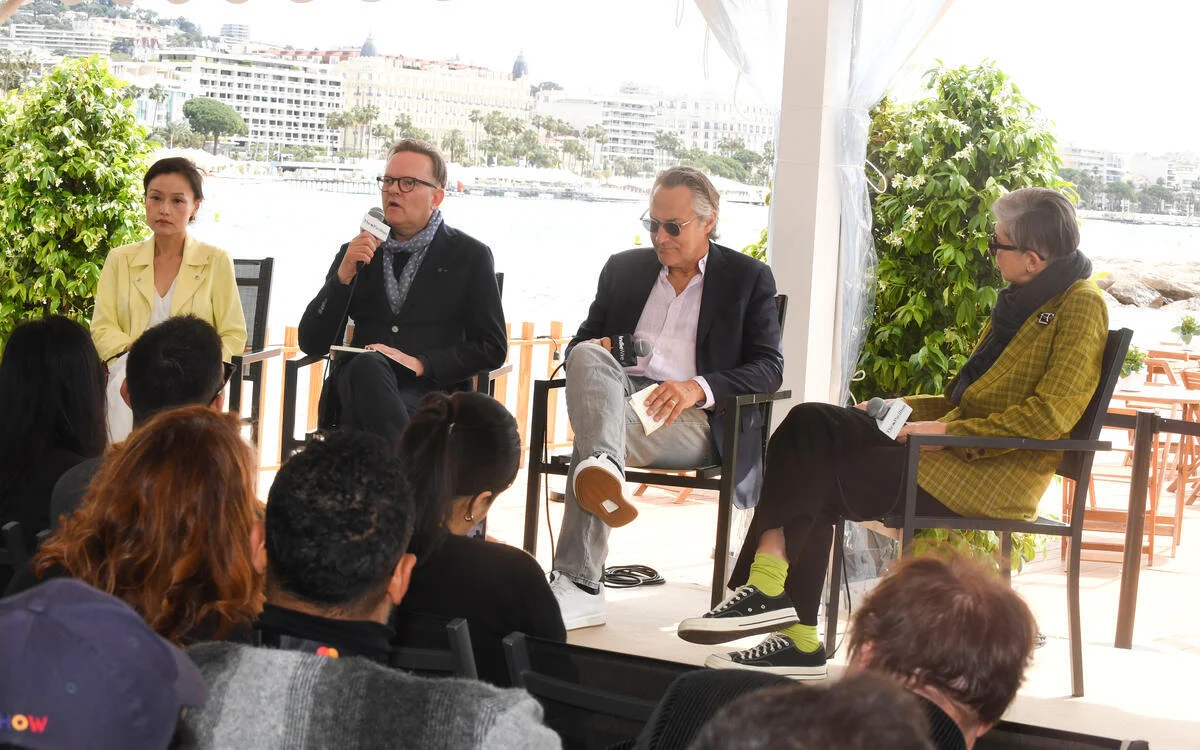
"This is not going to be your typical ‘How do you finance movies?’ panel," IndieWire Editor-in-Chief Dana Harris-Bridson remarked to a packed room at The American Pavilion during the 79th Cannes Film Festival. Her opening statement set the tone for a candid, high-stakes discussion that signaled a tectonic shift in how the entertainment industry values content.
The panel, titled New Models of Financing and presented by United for Business, brought together three titans of modern capital allocation: Tanu-Matti Tuominen, Co-Founder and Partner at IPR.VC; Mark Sourian, President of Production at 5&2 Studios; and Crystine Zhang, owner of Oval 5. As the festival unfolded, the consensus among these experts was clear: the era of the "speculative film gamble" is rapidly waning, replaced by a cold, data-driven obsession with "audience ownership."
The Shift: From Artistic Merit to IP Ecosystems
For decades, film financing was predicated on the "package"—a combination of star power, director pedigree, and script quality. While those elements remain important, they are no longer the primary drivers for institutional investors. In the current landscape, financiers are less interested in a single project’s "artistic merit" and more concerned with the strength of the Intellectual Property (IP) and the filmmaker’s direct line to a dedicated audience.
This evolution has fundamentally transformed studios into curators of IP ecosystems. Investors are now looking for sustainable, repeatable business models that transcend the theatrical window. As the panel highlighted, the shift is not merely stylistic; it is existential.
"The studios we want to work with—like A24, mk2, or MUBI—are tastemakers," said Tanu-Matti Tuominen. "They have a pre-existing relationship with their audience. They develop content because they know exactly who their fan is and who the story is made for. Our role as investors is to empower those studios to retain the ownership of that content, rather than letting it be subsumed by larger, disconnected entities."
Chronology of a Financial Revolution
The transition to this model did not happen overnight. It is the culmination of a decade-long fragmentation of the media landscape.

- 2014–2016: The Rise of the Streamers: As Netflix and Amazon began aggressive content acquisition, they prioritized "data-informed" decisions. Filmmakers were suddenly tasked with justifying their projects based on potential "completion rates" rather than just critical acclaim.
- 2017–2020: The Direct-to-Consumer Pivot: With the launch of Disney+, HBO Max, and Apple TV+, the power shifted from theatrical box office receipts to subscriber acquisition costs (CAC). Financing became tied to the ability to keep a user on a platform.
- 2021–2024: The Creator Economy Explosion: The success of independent creators—exemplified by figures like Markiplier and the rise of self-distribution models—demonstrated that a loyal, digital-native audience could be more valuable than a wide, lukewarm theatrical audience.
- 2025–2026: The Current Reality: We are now in the "Audience Ownership" phase. Financing is increasingly structured around the creator’s ability to leverage their own marketing funnel, effectively bypassing traditional gatekeepers.
Supporting Data: Why Gatekeepers Are Losing Their Grip
The decline of the "monolithic studio" as the sole financier of culture is not just a theory; it is backed by the changing economics of production and distribution. Mark Sourian, speaking from the perspective of a producer navigating this new terrain, noted that the barriers to entry have been dismantled by technology.
"Ten years ago, in order to get any film or television series made, you needed a mainstream network or studio to finance and distribute it," Sourian explained. "Today, you don’t need these big, monolithic companies to reach an audience. Between YouTube, the internet, and social commerce, creators have built their own ecosystems. When a producer walks into a meeting now, they aren’t just bringing a script; they are bringing a community."
This "community-first" approach allows for more efficient financing. When the audience is already built, the marketing spend—often the most expensive part of a film’s life cycle—is drastically reduced. This de-risks the investment, making it more attractive to private equity and venture capital firms that previously viewed film as a "black hole" for money.
The Implications for Independent Filmmaking
The move toward IP-centric financing presents a paradox for independent filmmakers. On one hand, it offers a pathway to bypass the "gatekeeper" fatigue that has long stifled creativity. If a filmmaker can demonstrate a dedicated following, they gain leverage that was previously reserved for A-list directors.
However, the risk is a potential homogenization of content. If investors only back projects with "pre-existing audiences," does that leave room for the discovery of new, unconventional voices?
The panelists argued that this is where the role of the "tastemaker" studio becomes critical. By partnering with entities like A24 or MUBI, investors rely on the studio’s brand equity to build an audience for the filmmaker. The financing, therefore, is not just for the movie; it is for the brand-building process that allows the filmmaker to reach their audience.

Official Responses and Strategic Alliances
The panel, supported by United for Business, highlighted the logistical realities of this high-paced, globalized production environment. As financing becomes more complex and spread across international borders, the logistical support for filmmakers has become a crucial, often overlooked component of the business.
United’s commitment to the industry, as outlined in their support of the Cannes programming, reflects the need for specialized services in an increasingly mobile production world. Providing custom booking options, equipment handling, and entertainment support desks acknowledges that modern production is no longer a localized affair. It is a global supply chain where speed and efficiency are as important as the creative vision itself.
Future Outlook: The Path Forward
As the industry looks toward 2027 and beyond, the trend toward audience-led financing shows no sign of slowing. The future of filmmaking will likely be defined by three pillars:
- Direct-to-Audience Engagement: Filmmakers who treat their audience as a community—engaging with them throughout the development and production process—will find it significantly easier to secure funding.
- Asset-Backed Financing: Investors will continue to move away from "project-based" investments in favor of "slate-based" investments, where they own a stake in the IP ecosystem rather than a single title.
- Technological Independence: The reliance on legacy distribution networks will continue to shrink, replaced by hybrid models that blend traditional theatrical prestige with aggressive digital-first marketing.
In conclusion, the message from Cannes is one of cautious optimism. The industry is in a state of chaos, but as the panelists noted, "chaos breeds opportunity." For those who understand that the audience is the most valuable asset in the room, the future of film financing is brighter—and more independent—than it has ever been.
The challenge for the next generation of filmmakers will be to balance this data-driven necessity with the artistic intuition that makes cinema a vital cultural force. As Harris-Bridson pointed out, these are not just businesses; they are stories. The task at hand is to ensure that while the business models evolve, the storytelling remains as human and as resonant as ever.
For more insights into the future of the entertainment industry, watch the full panel discussion via the link provided in the video player above. For those in the production industry looking to streamline their global operations, visit United for Business for information on specialized entertainment travel support.











No comments yet. Be the first to join the conversation!