Reynand Wu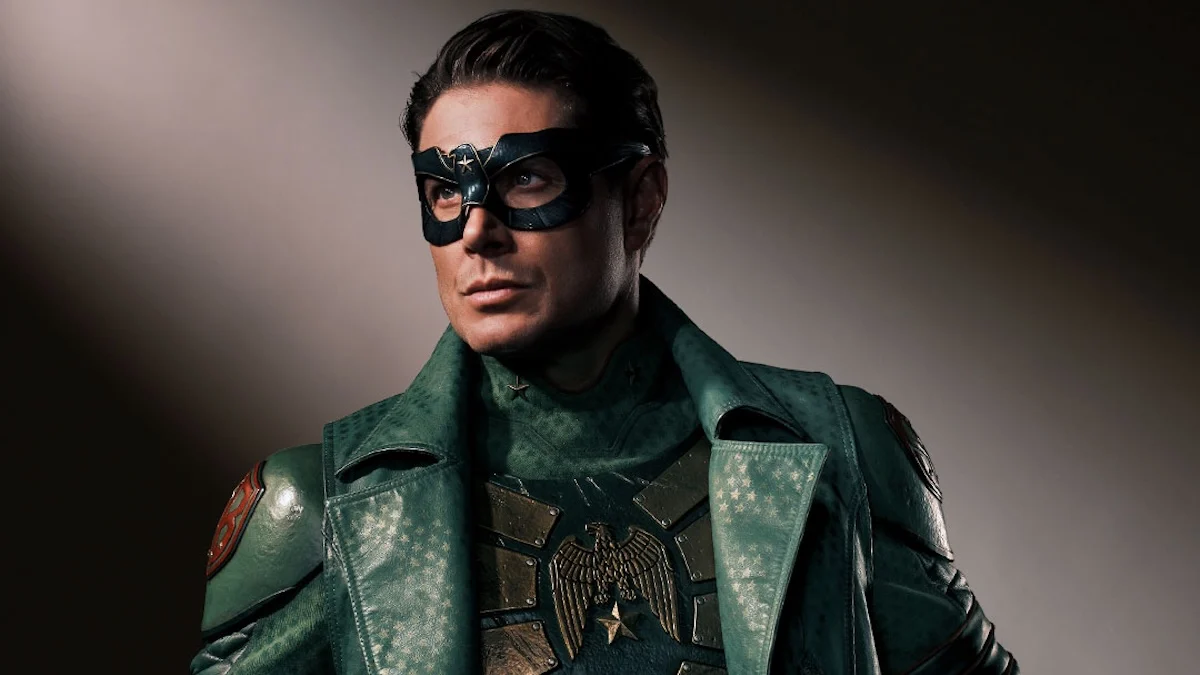
By Joe George | May 22, 2026
The conclusion of The Boys—a series defined by its blistering, neon-soaked satire of corporate greed and political extremism—left fans with a complicated legacy. While the show cemented its place in the pantheon of television history, its final season struggled with a unique, modern dilemma: reality was evolving faster than the writers’ room. As showrunner Eric Kripke recently noted, the show’s attempts to lampoon the absurdities of the political landscape were frequently outpaced by actual events, culminating in a reality where the boundary between political satire and news headlines had all but evaporated.
However, the dawn of the franchise’s next chapter, Vought Rising, offers a strategic pivot. By retreating to the 1950s, the series aims to ground its critique in the bedrock of American history. If The Boys was a mirror held up to the chaotic present, Vought Rising is a scalpel aimed at the romanticized past.
The Foundation of a Franchise: What We Know
The first trailer for Vought Rising has arrived, and with it, a promise of a darker, more calculated exploration of the superhero industrial complex. The prequel is set firmly in the Eisenhower era, a time often mythologized as the pinnacle of American prosperity and moral clarity.
Jensen Ackles returns to the role of Soldier Boy, though audiences will encounter a version of the character that feels startlingly different from the jaded, war-torn figure seen in later years. Here, Soldier Boy is a younger, earnest vessel for American propaganda, a man who believes—or is at least conditioned to believe—that he is a noble servant of the flag. He is joined by a team of contemporaries, including Bombsight (Mason Dye), Torpedo (Will Hochman), and Private Angel (Elizabeth Posey).
But the narrative gravitational pull of the series resides in the return of Aya Cash as Clara Vought. As fans of the original series know, Clara’s presence is the connective tissue to the darkest roots of the Vought corporation. Her evolution from the "patriotic" Liberty to the white supremacist figurehead Stormfront serves as the series’ moral anchor, promising to bridge the gap between the mid-century American dream and the monstrous reality of the Vought laboratory.
A Chronology of Corruption: From Paperclip to Present
To understand the stakes of Vought Rising, one must look at the timeline established within The Boys universe. The franchise has consistently drawn a direct line between the rise of the superhero and the influx of Nazi ideology into the United States following World War II.
- The Post-War Influx: The narrative begins in the late 1940s and early 1950s, a period where Operation Paperclip allowed the U.S. government to sanitize and absorb Nazi scientists.
- The Vought Genesis: Frederick Vought, the architect of Compound V, arrives on American soil. His wife, Clara, is rebranded as the hero Liberty.
- The Laboratory Years: The series will focus on the systematic testing of Compound V, not just on willing volunteers, but on marginalized populations.
- The Modern Repercussions: The later seasons of The Boys revealed that the "heroes" of the past were not merely flawed; they were the products of a system designed to codify racism and authoritarianism under the guise of American exceptionalism.
Vought Rising intends to document this genesis, transforming the 1950s—a decade defined by "Leave It to Beaver" domesticity—into a backdrop for the birth of medical apartheid and the weaponization of super-powered individuals for political control.
The Greatest Generation Under the Microscope
One of the most ambitious goals of Vought Rising is to dismantle the hallowed reputation of the "Greatest Generation." While history books focus on the defeat of the Axis powers, the series intends to highlight the rot that persisted within the United States.

The trailer makes it clear that the show will not shy away from the darker facets of the era. This was a time when institutionalized racism, eugenic theories, and the segregation of public and private life were not merely social issues, but official state policy. By centering the story in the 1950s, the creative team is drawing a parallel between the "ideal" American family and the toxic, fascist roots of the Vought corporation.
Furthermore, the inclusion of actors like KiKi Layne and Jorden Myrie suggests a narrative focus on the victims of the Compound V experiments. The history of the Tuskegee Syphilis Study and similar medical atrocities provides a grim blueprint for the show’s plot. By showing the injection of Black citizens with an experimental, volatile serum, Vought Rising is framing the "heroic" era of the 1950s as a period of profound state-sponsored betrayal.
Official Responses and Creative Direction
Eric Kripke has been vocal about the difficulties of maintaining a satirical tone in a polarized political climate. His recent reflections on the fifth season of The Boys highlighted a sense of creative exhaustion—the feeling that no matter how exaggerated the satire, it was consistently outdone by the reality of the American political scene.
"We were trying to predict the absurdity of the future," Kripke noted in a recent interview. "But the future decided it didn’t want to be predicted; it wanted to be more ridiculous than anything we could write."
By moving to the 1950s, the production team has essentially created a "safe space" for satire. Because the history of the 1950s is settled, the showrunners can critique the period without the risk of being upstaged by current events. The focus shifts from "what will happen next?" to "how did we get here?" This allows for a deeper, more philosophical examination of American nationalism, eugenics, and the cult of celebrity.
Implications: The Moral of the Story
The implications of Vought Rising are significant for the broader The Boys franchise. By rooting the story in the past, the show forces the audience to confront the fact that the issues currently plaguing the fictional Vought universe—and, by extension, our own society—are not bugs in the system; they are features.
- The Continuity of Fascism: The show argues that the transition from Nazi Germany to American corporate dominance was seamless. It challenges the viewer to look at the "patriotic" icons of the past and see the potential for malice.
- The Weaponization of History: By casting the superhero as a tool of the military-industrial complex, the series critiques the way historical narratives are curated to serve the interests of those in power.
- The Audience Challenge: Kripke has often expressed frustration with viewers who consume the show as a standard superhero power fantasy, missing the biting social commentary. By making the historical setting so transparently tied to real-world racial and medical injustices, Vought Rising makes the "joke" impossible to ignore.
As we look toward the 2027 premiere on Prime Video, the success of Vought Rising will hinge on its ability to balance the high-octane violence and "needle-drop" aesthetic that fans adore with the heavy, historical weight of its premise. If it succeeds, it will be more than just a prequel; it will be a historical corrective, reminding us that the greatest threats to a democracy often wear the brightest capes and the most convincing smiles.
Whether the audience is ready to grapple with the lessons of the past remains to be seen. But as history shows, those who ignore the roots of the tree are destined to be crushed when it eventually falls. Vought Rising isn’t just telling the story of how the world’s most famous heroes were made—it’s telling the story of how the world was broken.


 Sagoh
Sagoh
 Nana Muazin