Asro
Asro
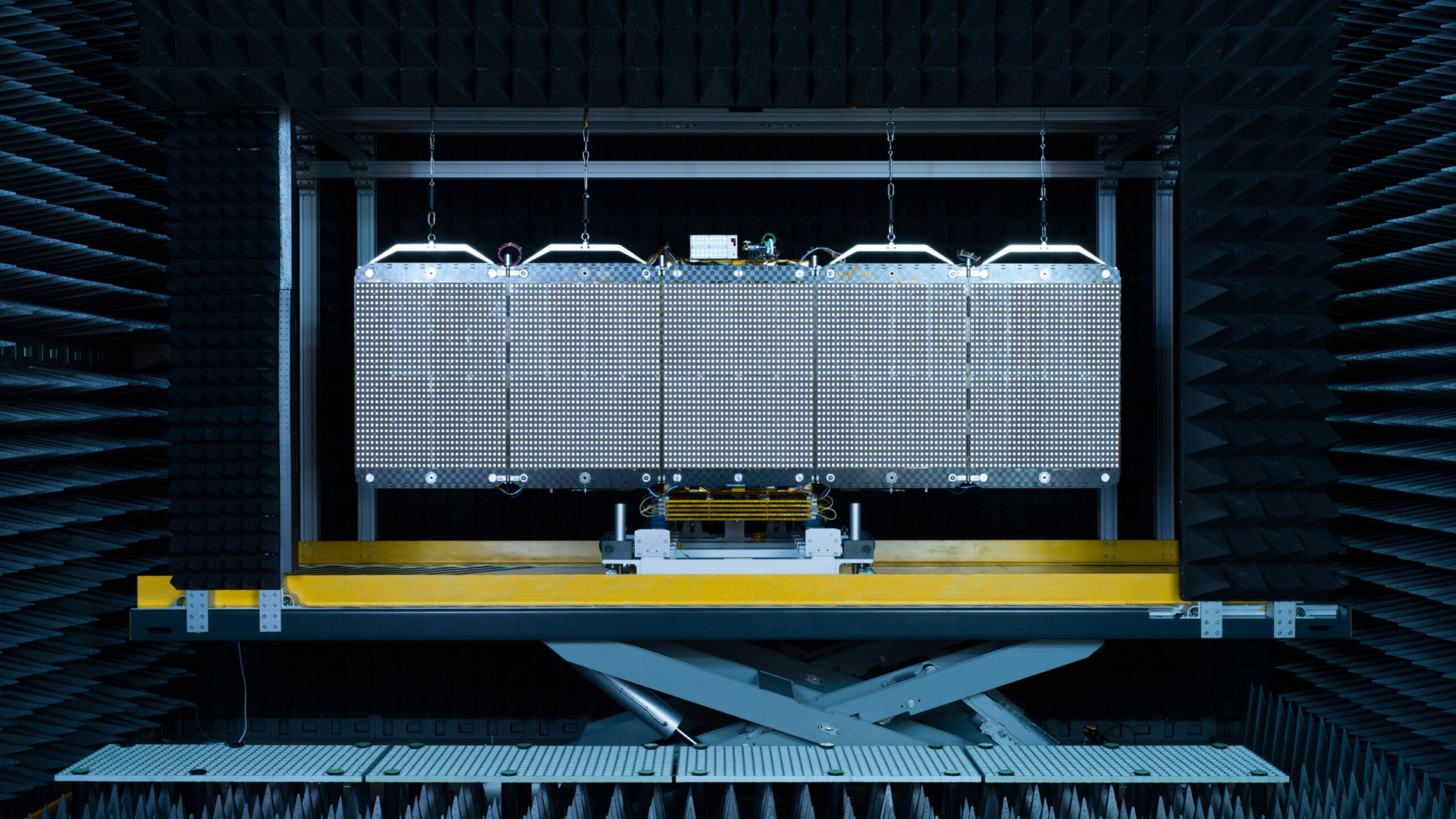
In an alarming development that highlights the growing volatility of the space domain, at least four Russian military satellites have executed precise orbital maneuvers to align themselves with a Finnish-American radar surveillance satellite. The spacecraft in question, identified as the ICEYE-X36, serves a critical role in providing high-resolution, all-weather intelligence to the Ukrainian military in its ongoing defensive conflict against Russian forces.
The proximity of these Russian assets, tracked through open-source orbital data, has ignited concerns among defense analysts and intelligence experts regarding Russia’s strategic intentions. The maneuver, which involves matching the orbital inclination of the ICEYE platform, is a resource-intensive operation that suggests a targeted, rather than incidental, alignment.
The Core Facts: A Calculated Approach
The Russian satellites, designated Kosmos 2610 through 2613, were launched on April 16 via a Soyuz-2.1b rocket from the Plesetsk Cosmodrome. Over the past week, these four satellites performed complex "plane change" maneuvers, adjusting their orbital inclinations by nearly a full degree.
While a degree may seem trivial to the casual observer, in the realm of astrodynamics, such a maneuver is highly significant. The delta-v (change in velocity) required to alter an orbital plane is immense, often equivalent to the energy needed to boost a satellite’s altitude by over 100 miles. By burning precious fuel to close the gap with the ICEYE-X36, the Russian operators have signaled that these satellites are not performing routine Earth observation or standard communications duties.
According to Greg Gillinger, a retired Air Force space intelligence officer and founder of Integrity ISR, the cross-track distances between the Russian quartet and the ICEYE platform have now been reduced to between 500 meters and 22 kilometers. Furthermore, a fifth satellite from the same April launch appears to be following suit, mirroring the maneuvers to move closer to the ICEYE-X36 in its polar orbit at an altitude of approximately 340 miles (547 kilometers).
Chronology of the Standoff
The escalation follows a pattern of increasingly aggressive Russian behavior in low-Earth orbit (LEO) and beyond.
- April 16, 2026: Russia launches the Soyuz-2.1b rocket from Plesetsk, placing the Kosmos 2610–2613 series satellites into orbit.
- Early May 2026: Open-source intelligence analysts begin detecting anomalous orbital adjustments from the four satellites.
- May 15, 2026: Analysts confirm the satellites are actively matching the plane of the ICEYE-X36, a commercial asset critical to Ukrainian situational awareness.
- May 17, 2026: Integrity ISR releases a special report detailing the "high-energy" maneuvers, sparking international concern over the potential for Rendezvous Proximity Operations (RPO).
- Present: The satellites remain in a co-planar configuration, with Russian operators maintaining the ability to further refine their approach through minor adjustments in eccentricity and altitude.
Supporting Data: The Capability Gap
The maneuverability exhibited by the Kosmos satellites is fundamentally inconsistent with the profile of standard commercial or scientific satellites. Most satellites are launched into a "set and forget" orbit, with fuel reserves intended primarily for station-keeping—the small adjustments needed to stay in place against atmospheric drag and gravitational perturbations.
"This capability is not common for satellites conducting typical missions," Gillinger noted in his newsletter. "Maneuvering into a co-planar orbit is alarming. Plane matching is the first—and most fuel-expensive—step to conducting Rendezvous Proximity Operations."
RPO is a dual-use technology. While it is necessary for benign activities like satellite servicing, refueling, or debris removal, it is also the prerequisite for "killer" satellite operations. Whether through physical collision, the deployment of kinetic projectiles, or non-kinetic interference (such as high-powered lasers or electronic jamming), the ability to hover within meters of a target represents a direct threat to the integrity of that asset.
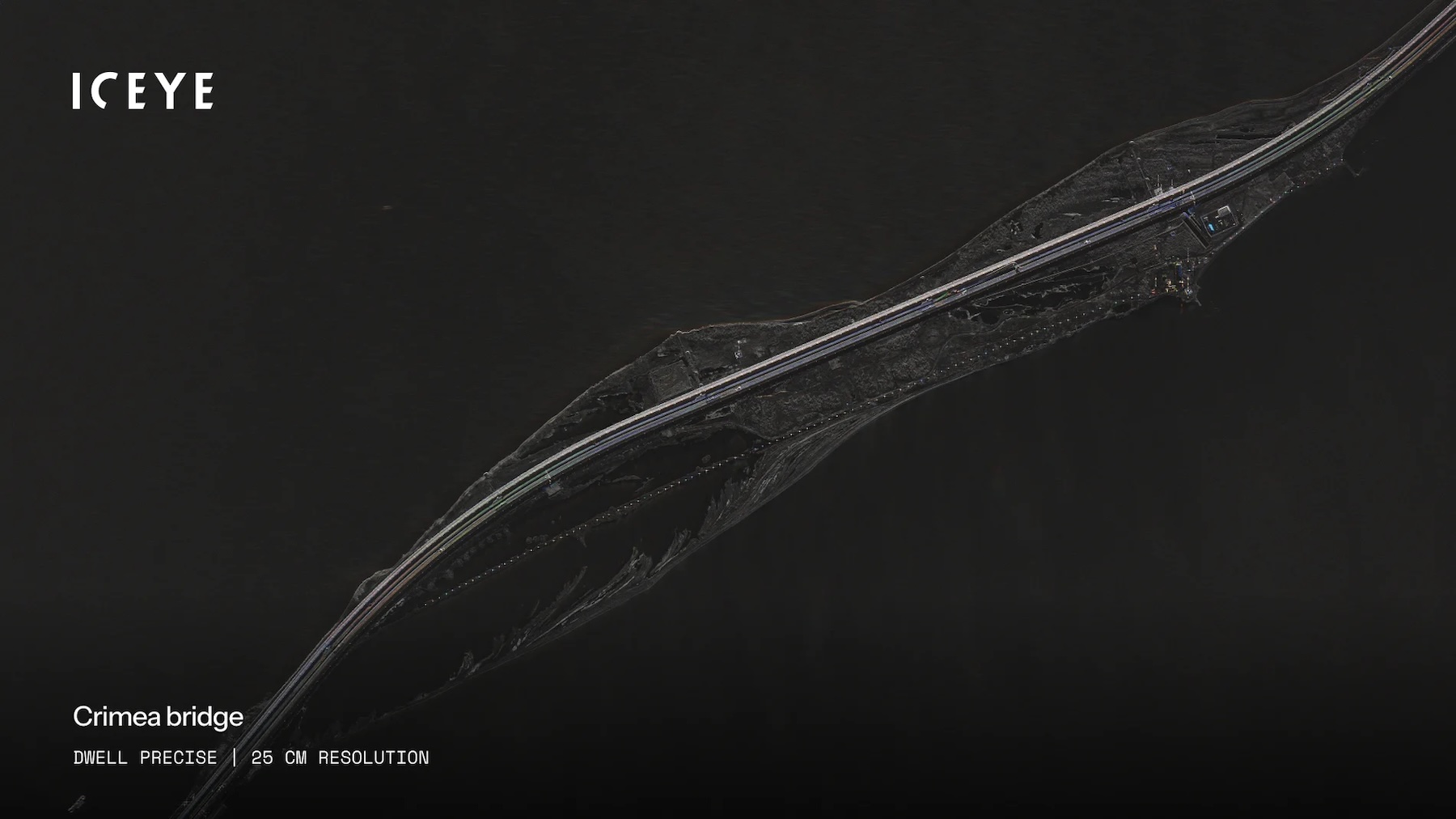
The ICEYE constellation is particularly valuable because it utilizes Synthetic Aperture Radar (SAR). Unlike traditional optical cameras, which are blinded by cloud cover or darkness, SAR can "see" through any weather condition to provide high-resolution imagery—sometimes down to 16 centimeters, capable of identifying objects the size of a grapefruit. For Ukraine, this capability has been a game-changer, allowing them to track troop movements and logistical bottlenecks in real-time.
The Broader Geopolitical Context
This incident is not an isolated occurrence but rather the latest chapter in a burgeoning "Grey Zone" conflict in space. For years, the Russian military has been "rattling the saber" by shadowing US intelligence assets. US Space Command has previously warned that Russia is actively operationalizing co-orbital anti-satellite (ASAT) weapons, effectively turning LEO into a potential battlefield.
The tactic is reminiscent of Russian aviation behavior, where strategic bombers frequently probe the edges of NATO airspace to test response times and monitor defensive capabilities. However, the stakes in orbit are higher. A single collision or act of sabotage could generate thousands of pieces of lethal orbital debris, triggering a "Kessler Syndrome" effect that could render entire orbital shells unusable for decades—affecting not just military assets, but GPS, weather monitoring, and global telecommunications.
Just recently, a mysterious Russian satellite was tracked entering geostationary orbit, prompting the US Space Force to dispatch an inspection satellite to investigate. The pattern is clear: Russia is asserting a right to "shadow" Western-aligned assets, creating an environment of perpetual ambiguity.
Official Responses and Corporate Stance
ICEYE, a Finnish-American company, has maintained a firm stance on its commitment to the Ukrainian defense effort. While the company did not provide a statement specifically addressing the current shadowing incident, its executive leadership has previously emphasized the critical nature of their work.
"ICEYE is proud and humbled to have supported Ukraine’s defense teams with reliable, near-real-time space-based intelligence since the beginning of the invasion," said John Cartwright, Senior Vice President of Data Product at ICEYE. He noted that recent agreements to expand the partnership ensure that "allies have the best decision-ready data when they need it most."

From the perspective of the US government, the silence is often tactical. Intelligence officials are cautious about revealing the extent of their monitoring capabilities or the defensive measures they might be taking in response to these Russian maneuvers. However, the consistent public reporting from organizations like Integrity ISR serves as a vital deterrent, stripping away the anonymity that Russia relies upon for its "shadowing" operations.
Implications for Global Security
The implications of this standoff are profound. If Russia successfully demonstrates the ability to harass or disable commercial assets like those of ICEYE, it effectively signals that no satellite—private or public—is immune to interference.
- The End of Space Sanctity: The distinction between civilian and military space assets is dissolving. Because commercial firms like ICEYE are providing direct intelligence to military forces, they are being treated as combatants by the Russian state.
- Increased Costs of Space Operations: If satellite operators are forced to carry more fuel to perform evasive maneuvers, it reduces the lifespan of their satellites and increases the cost of space-based services.
- The Normalization of Space Aggression: By engaging in "near-miss" behavior, Russia is attempting to normalize the act of shadowing foreign satellites, lowering the threshold for what constitutes an act of war in the vacuum of space.
As the international community watches, the situation remains fluid. The ICEYE-X36 continues to operate, and the Russian Kosmos satellites remain in their proximity. Whether this is a prelude to an actual attack or merely a campaign of psychological warfare remains to be seen. What is certain, however, is that the silent, cold expanse of Earth’s orbit has become the latest front in a high-stakes, real-world conflict where the margin for error is measured in centimeters.


 Asep Darmawan
 Rifan Muazin