

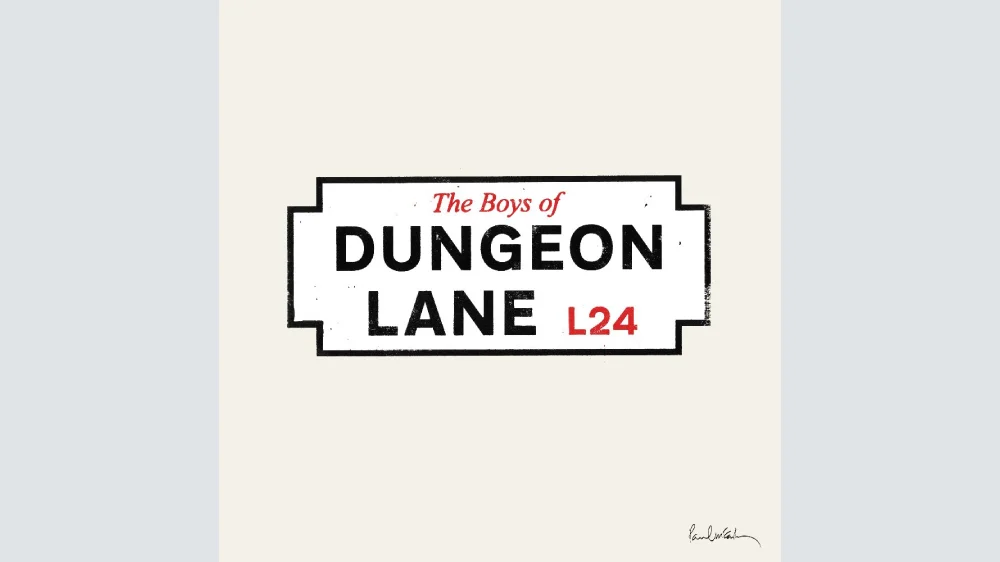
Paul McCartney has long been a master of the musical feint—a magician who draws your attention to his left hand while his right hand pulls a rabbit from a hat. With the announcement of his latest studio album, The Boys of Dungeon Lane (due May 29), the former Beatle has once again orchestrated a sophisticated sleight of hand.
The campaign began with the release of the lead single, "Days We Left Behind." A wispy, introspective ballad, the track suggested an album rooted in acoustic minimalism—a collection of gentle, creaky-floorboard memories. However, the true nature of the project reveals itself the moment you drop the needle on the opening track, "As You Lie There." For 55 seconds, the song mimics the soft, fingerpicking textures of the lead single, lulling the listener into a false sense of security. Then, a thunderous drum fill shatters the silence, snarling electric guitars tear through the mix, and McCartney’s trademark rock-and-roll howl kicks in for a chorus that is nothing short of anthemic.
The Boys of Dungeon Lane is not an "old man’s record." It is a vibrant, fiery, and deeply commercial piece of work that finds McCartney operating with the vitality of a man half his age, while possessing the wisdom of a man who, next month, will turn 84.
A Chronology of Artistic Evolution
McCartney’s career is a study in perpetual motion. To understand Dungeon Lane, one must look at the trajectory of his 21st-century output. While many fans point to 2007’s Memory Almost Full as the gold standard of his late-period work—a record that successfully balanced introspective songwriting with aggressive, crunchy production—the new album serves as a spiritual successor.
The creation of this record was a collaborative labor, pairing McCartney with producer Andrew Watt. Watt, a titan of the modern rock production world, acts as both a cheerleader and a technical architect. At 35, Watt brings a youthful, high-octane energy to the studio, acting as the perfect foil to McCartney’s legacy. Together, they have crafted a sound that feels less like a reverent, self-homaging "Beatles" record and more like a mid-period Wings album—commercial, eclectic, and unapologetically alive.
The recording process involved a rigorous schedule of experimentation. Unlike the insular, solo-driven records of his past, McCartney opened the doors to a select few collaborators, including arrangers Ben Foster and Giles Martin, to add depth to the album’s more ambitious arrangements. The result is a 14-track journey that jumps effortlessly between the 1950s and the 2020s, treating both eras as equally vital components of his current reality.
Supporting Data: The Anatomy of a Masterpiece
Critics and listeners often struggle with superlatives, but The Boys of Dungeon Lane makes a compelling case for being the greatest album ever recorded by a rock star in his 80s. While the "80-plus" category is admittedly a small, nascent field, the quality of the composition here makes the distinction moot.
The Dynamics of Songwriting
The record is defined by its extreme, "whisper-to-a-scream" dynamics. McCartney’s pen remains as sharp as ever, employing more key changes than one would expect from an entire industry, yet he uses them with a narrative purpose rather than for show.
- "As You Lie There": The album opener, which transitions from intimate folk to high-octane stadium rock.
- "Mountain Top": A psychedelic ode that begins with harpsichord loops before morphing into a double-time rock-and-roll sprint.
- "Salesman Saint": Perhaps the album’s most audacious moment, a tribute to his parents’ struggles in WWII-era Liverpool that suddenly pivots into a swing orchestra arrangement—completely outside the time signature of the base track.
These shifts are not just stylistic choices; they are a reflection of a mind that still finds joy in the architecture of a song. As McCartney himself noted during a private listening session, the ability to jump between these disparate sounds is what keeps the music "fresh and lively."
Official Perspectives and Behind-the-Scenes Insights
The album is heavily colored by McCartney’s personal life, particularly his marriage to Nancy Shevell. There is a palpable sense of peace in the lyrics, as if his memories of Liverpool boyhood and his contemporary love letters to Shevell occupy the same emotional space.
In "Down South," McCartney offers a heartfelt, acoustic look at his platonic bond with the late George Harrison. The song serves as a romanticized look back at their shared youth, riding buses and talking about guitars—long before the world knew their names.
Perhaps the most anticipated track for the faithful is "Home to Us," a genuine duet between McCartney and Ringo Starr. The track captures the essence of their post-war upbringing, blending country-rock sensibilities with power-pop hooks. It is a triumphant, if bittersweet, affirmation of their enduring partnership.
The Philosophical Implications: Why "Yesterday" Still Matters
Some critics have historically dismissed McCartney’s relentless optimism as a lack of "seriousness." The Boys of Dungeon Lane effectively puts that critique to bed. The album is a meditation on the passage of time, but it refuses to succumb to melancholia.
In "Days We Left Behind," the lyric is tweaked from "No one can erase the days we left behind" to "Nothing can reclaim the days we left behind." It is a fleeting acknowledgment of mortality, but one that McCartney refuses to linger on. Instead, he focuses on the "eternal present."
His songwriting remains deeply observational. In the standout track "Lost Horizon," McCartney catalogs the ambient sounds of his childhood—the train whistles, the playground noise, the ticking clocks. He concludes that while these sounds can "lift him up," they can also "do his head in." It is an honest assessment of the weight of history.
A Legacy of Wonder
The most poignant parallel in the album is McCartney’s own reflection on his youthful crushes. He describes a girl named Jasmine, whom he watched from an upstairs window in his youth—a girl who never knew he existed. Much like the Mr. Bernstein character in Orson Welles’ Citizen Kane, who spends his life haunted by a girl on a ferry he saw for only a second, McCartney remains a romantic, still mooning over a ghost from 70 years ago.
It is this ability to remain perpetually "boyish" that defines the record. Whether he is playing the recorder on a track or inserting a subtle Pet Sounds-inspired harmony into a minimalist ballad, McCartney is not just looking back; he is actively rearranging his history to make sense of his present.
Conclusion: The Soundtrack of an Unfinished Life
The Boys of Dungeon Lane is a testament to the fact that artistry does not have an expiration date. By refusing to act his age, Paul McCartney has successfully defied it. He remains a man in love with the sound of a guitar string, the tension of a key change, and the mystery of a memory.
For the listener, the album offers a rare opportunity to witness one of the architects of modern music continue to build, tinker, and dream. It is a record that does not ask for pity or reverence; it simply asks for your attention. And, if the evidence of this latest release is anything to go by, it will hold that attention with the same effortless, boyish charm that began this journey over six decades ago.











No comments yet. Be the first to join the conversation!