

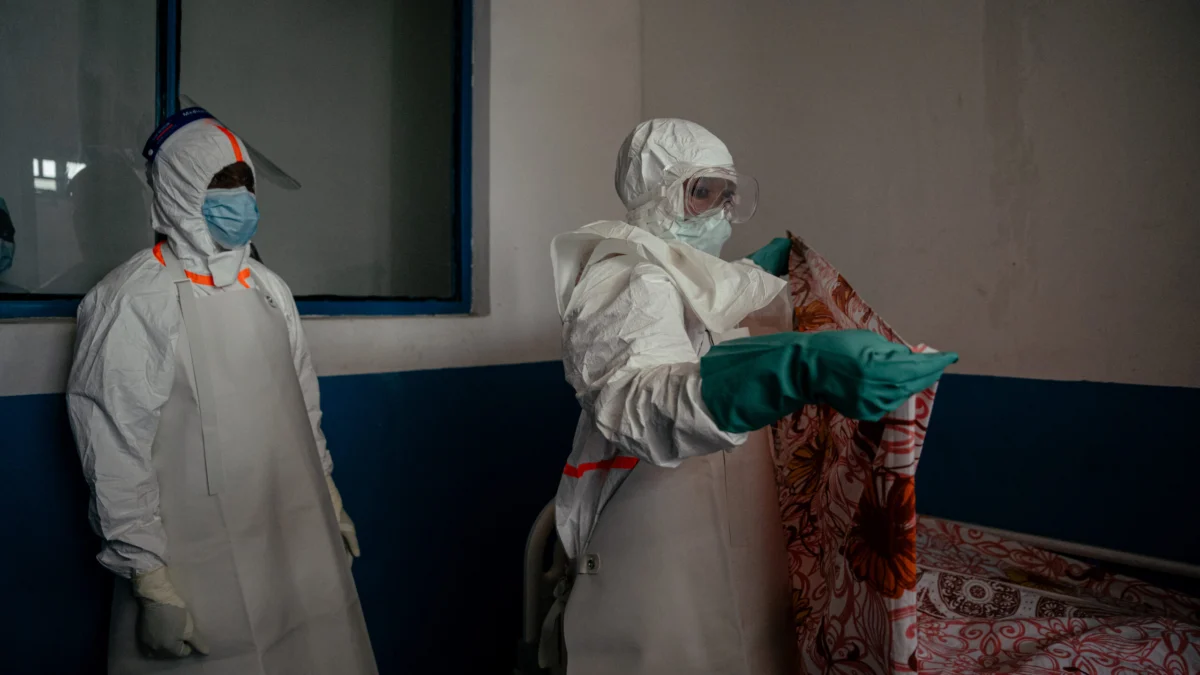
The Democratic Republic of the Congo (DRC) is currently grappling with one of the most volatile and concerning public health emergencies in recent history. An Ebola outbreak, originating in the Ituri province, has surged with alarming velocity, placing international health authorities on high alert. With case numbers nearing 750 and a death toll already climbing toward 200, the World Health Organization (WHO) has officially categorized the national risk level as "very high."
The current situation is not merely a localized epidemic; it is a complex humanitarian emergency. As the virus continues its rapid transmission, global health experts are engaged in a desperate race against time to implement containment measures, address systemic vulnerabilities, and prevent a wider regional catastrophe.
The Core Facts: A Situation of "Very High" Risk
The latest briefing from the World Health Organization paints a grim picture of the unfolding crisis. According to official data, the outbreak has claimed 177 lives, while nearly 750 individuals have been identified as infected. Perhaps most concerning to epidemiologists is the massive scale of the contact tracing effort now underway: approximately 1,400 individuals who have come into direct contact with the virus are currently being monitored.
WHO Director-General Dr. Tedros Adhanom Ghebreyesus delivered a sobering assessment during a Friday press conference, stating unequivocally that the outbreak is "spreading rapidly." While the international body maintains that the global risk remains low, the upgrade of the national risk level to "very high" signifies that the DRC’s internal stability and healthcare infrastructure are under immense, unprecedented strain.
Chronology of the Outbreak: A Ticking Clock
The trajectory of this outbreak serves as a stark reminder of the danger of silent, undetected transmission. Retrospective analysis by the WHO has identified that the virus was circulating long before it was officially reported to the global community.
The Hidden Weeks
The earliest suspected case has been traced back to April 24, involving a health worker in Bunia, the capital city of Ituri. For nearly two weeks, the virus moved through the population undetected. It was not until May 5 that the WHO received reports of a cluster of unidentified, deadly infections—a cluster that included the tragic deaths of four healthcare workers.
The "Sprinting" Response
By the time the initial WHO response teams arrived on the ground to investigate, the virus had already established a firm foothold, with 80 confirmed cases already in the system. Dr. Anne Ancia, a WHO representative currently operating in the DRC, described the scene upon arrival: the virus was "already rampant and silently disseminating."
"Now we are sprinting behind the virus," Dr. Ancia explained, noting that because transmission is ongoing, the number of cases is expected to continue its upward trajectory until the full weight of the containment operation is effectively deployed.
Supporting Data and Technical Challenges
The clinical and epidemiological nature of this specific outbreak presents unique challenges that complicate the standard Ebola response protocols.
The Bundibugyo Variant
Unlike the Zaire Ebolavirus, which has been the subject of intensive international research and for which vaccines and therapeutics have been developed, this outbreak is driven by the Bundibugyo virus. This strain is significantly less common, and crucially, there are no established, proven vaccines or therapeutic treatments currently available to combat it.
This technical gap forces responders to rely on the "old school" methods of epidemic control:
- Active Case Finding: Deploying teams into remote and high-risk areas to identify symptomatic individuals.
- Isolation: Establishing secure treatment centers to prevent hospital-acquired infections.
- Contact Tracing: Mapping the web of exposure for every confirmed case to break the chain of transmission.
The Humanitarian Landscape
The difficulty of these tasks is compounded by the environment in which the virus is spreading. Ituri and the broader eastern DRC are regions plagued by:
- Armed Conflict: Ongoing instability hampers the mobility of medical teams and the delivery of supplies.
- Population Mobility: High levels of movement among displaced populations make it exceptionally difficult to track contacts or enforce quarantine zones.
- Fragile Healthcare Systems: Limited local infrastructure means that the outbreak is occurring in areas where basic medical care is already scarce.
- Acute Food Insecurity: With millions facing hunger, the population is already weakened by malnutrition, which can accelerate the impact of infectious diseases.
Official Responses and Strategic Shifts
The WHO has openly acknowledged that a delay in initial detection and response enabled the virus to reach its current, alarming scale. In response, the organization is pivoting toward a more aggressive, front-loaded strategy.
"We are racing to get ahead of the virus," the WHO stated, noting that the agency is mobilizing additional resources, including logistical experts, epidemiologists, and community engagement specialists. The strategy is to shift from a reactive stance—chasing outbreaks as they appear—to a proactive, surveillance-based model that can identify clusters before they become uncontrollable chains of transmission.
However, the WHO emphasizes that success is not guaranteed by the agency alone. The response requires a multi-faceted approach involving the DRC government, local community leaders, and international non-governmental organizations (NGOs) to build trust. In many of these regions, fear and skepticism toward medical intervention can be a major barrier, as seen in previous Ebola outbreaks. Educating the public on how to handle the deceased, how to recognize symptoms, and how to safely access care is paramount.
Implications: The Potential for Long-Term Destabilization
The implications of this outbreak extend far beyond the immediate health crisis. If the virus is not contained rapidly, the potential for a long-term, regional emergency is high.
Impact on Health Systems
The death of healthcare workers is a particularly devastating blow. When doctors and nurses are lost to an outbreak, the healthcare system loses its most valuable assets. Furthermore, the fear of infection often leads to the closure of local clinics, leaving the population without access to treatment for other common, preventable diseases such as malaria, pneumonia, and routine childhood infections.
Socio-Economic Consequences
The economic disruption caused by an Ebola outbreak is profound. Markets, schools, and transport routes often shut down as panic sets in. In a region where many survive on daily wages or subsistence farming, a prolonged shutdown can lead to a secondary humanitarian crisis defined by starvation and poverty.
The Global Perspective
While the WHO currently assesses the risk to the global community as low, the rapid spread of the virus serves as a wake-up call for international health security. The ease with which a virus can move through porous borders and into high-density urban areas highlights the need for a more robust, decentralized global surveillance network.
The Bundibugyo virus is a reminder that there are many pathogens waiting in the wings that do not have the "safety net" of existing vaccines. This outbreak may force a re-evaluation of how the global community invests in research for "neglected" strains of highly infectious diseases.
Conclusion: A Critical Juncture
As the world watches the DRC, the situation remains fluid and dangerous. The dedication of the responders on the ground—often working in conflict zones and under extreme duress—is the only thing currently standing between the region and a total health collapse.
The coming weeks will be decisive. If the WHO and local partners can effectively manage the 1,400 contacts under surveillance and prevent new clusters from emerging, there is a chance to halt the spread. However, if the virus continues to outpace the response, the death toll and the human cost will continue to climb, leaving a legacy of tragedy that will affect the Ituri province for years to come.
The "sprinting" must continue, but it must be matched by sustained, long-term international commitment. The lessons learned from this outbreak—specifically the dangers of delayed detection and the vulnerability of conflict-ridden regions—must lead to permanent structural changes in how the world prepares for, and responds to, the next inevitable viral threat. For now, the focus remains singular: break the chain of transmission, protect the healthcare workers, and provide life-saving care to those currently suffering in the grip of the virus.












No comments yet. Be the first to join the conversation!