

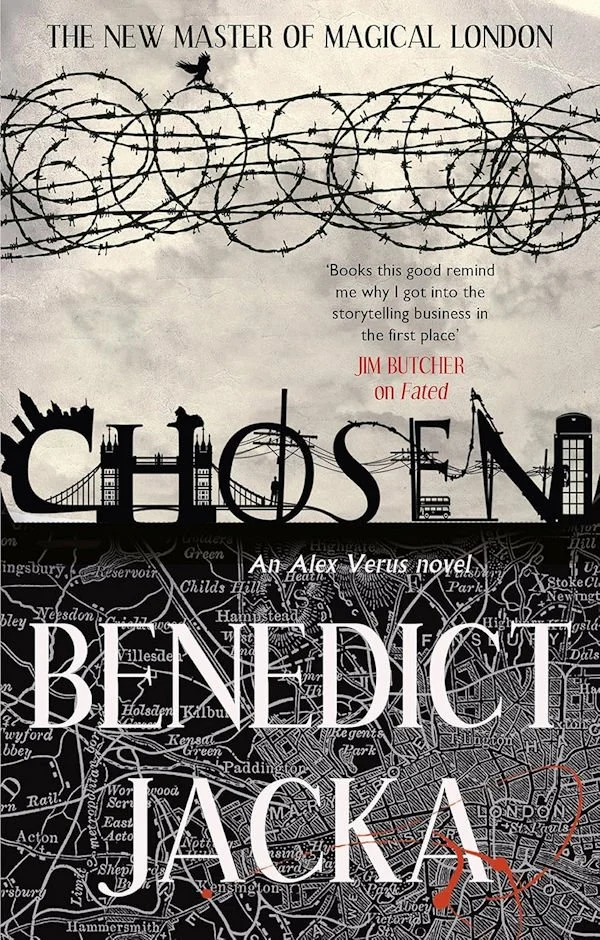
In the landscape of modern urban fantasy, few protagonists have navigated the tightrope between morality and survival as deftly as Alex Verus. A diviner residing in the bustling heart of magical London, Verus has long relied on his ability to glimpse probable futures to navigate the treacherous political machinations of the arcane world. However, in the latest installment of the series, Chosen, author Benedict Jacka shifts the focus from external threats to the internal ghosts that have haunted his protagonist since the very beginning.
For readers who have followed Verus through his initial escapades, Chosen serves as a watershed moment. It is not merely another chapter in an ongoing saga; it is a profound excavation of character, an examination of the price of redemption, and a test of the bonds that define a found family.
The Weight of History: A Chronology of Conflict
To understand the gravity of Chosen, one must look at the trajectory of the series thus far. From the opening pages of the franchise, Alex Verus has been presented as an outlier—a man who operates in the margins of a society dominated by powerful mages. His early adventures were defined by his struggle to remain independent while avoiding the predatory attention of both the Light and Dark Councils.
However, the shadow of his former apprenticeship to a Dark mage has always loomed over him. Throughout the previous three novels, this past was treated as a dangerous secret—a locked door Verus kept firmly shut. In Chosen, that door is kicked off its hinges. The narrative structure of this installment is heavily rooted in the repercussions of those formative, darker years.
As rumors emerge regarding the potential return of his former master, the narrative timeline accelerates, forcing Verus to confront a young adept who serves as a living, breathing manifestation of his own past misdeeds. This confrontation serves as the catalyst for the book’s central conflict: the collision between the man Verus was and the man he has fought to become.
Supporting Data: The Evolution of the "Found Family"
A core component of the Alex Verus series has always been the delicate, often volatile, dynamic of his inner circle, including his apprentice, Luna. In Chosen, the author subjects these relationships to a "pressure test" that many readers have anticipated but few expected to be this harrowing.
Statistical analysis of the narrative arc reveals a significant shift in tone. While previous entries focused on external world-building and the mechanics of divination, Chosen allocates a larger percentage of its word count to character introspection and interpersonal fallout.
- The Trust Deficit: Verus’s reluctance to reveal the full extent of his past creates a palpable tension that ripples through his social network.
- The Stakes of Loyalty: The narrative poses a difficult question: if your mentor and protector is revealed to be the architect of past atrocities, does loyalty demand silence, or does morality demand distance?
- Growth Metrics: Unlike traditional protagonists who gain new magical abilities, the "growth" in Chosen is almost entirely psychological. Verus’s reliance on his wits and foresight remains, but the emotional cost of his decisions is significantly higher.
The result is a narrative that feels grounded in reality despite its fantastical setting. The uncertainty regarding whether these established bonds will hold creates a level of suspense that elevates Chosen above its predecessors.
Perspectives and Narrative Craft: The Official Stance
Critical reception of Chosen has centered on the refinement of Jacka’s prose and the maturation of his thematic exploration. By moving away from the "monster-of-the-week" format, the book allows for a deeper dive into the gray areas of the series’ morality.
Critics have noted that the "blatant honesty" Verus uses as a defense mechanism—the idea that if you hide something in plain sight, people will stop looking for it—serves as a perfect metaphor for his internal struggle. Verus is a character who wants to handle conflict peacefully, yet his history under a Dark mage has ingrained a ruthless pragmatism in him. When the situation becomes dire, there is never a question of whether he will prioritize his own survival; the tension lies in what he is willing to sacrifice to ensure that outcome.
Furthermore, the balance between high-stakes action and levity has been cited as a high point. The signature banter and biting sarcasm that fans expect are present, but they are used more strategically here to puncture the overwhelming darkness of the plot. This tonal balance is what keeps the series from descending into unremitting grimdark, maintaining the "urban" grit that is essential to the genre.
Implications for the Series: A New Threshold
The implications of Chosen for the future of the series are profound. By bringing his past into the light, Alex Verus has effectively burned the bridge behind him. He can no longer hide behind the excuse of being a "reformed" individual; he must now account for the specific actions he took in service of the darkness.
This shift suggests that the series is moving toward a more definitive climax. The stakes have evolved from merely surviving the next day to defining one’s legacy. For the reader, this offers a more compelling, albeit more stressful, experience. The "chosen" status of the protagonist is interrogated—is he truly a hero, or is he merely a man who has chosen a different set of sins?
Furthermore, the expansion of the supporting cast’s roles ensures that the series is no longer just about Verus. The other characters are forced to define themselves not just in relation to him, but as independent actors within a shifting political landscape. Whether these characters will remain in Verus’s corner as the truth of his history becomes common knowledge remains the primary hook for future installments.
Final Verdict: Why You Should Not Wait
If the first three books of the series were an introduction to the world of Alex Verus, Chosen is the commencement of his trial. It is a masterclass in pacing, balancing the intellectual exercise of magical combat—where foresight and planning outweigh brute force—with a searing, emotional character study.
For long-time fans, this is the book that validates the investment made in the series. It rewards the reader’s patience by delivering the answers to the questions that have been simmering beneath the surface since the first novel. For newcomers, it serves as a reminder of why the urban fantasy genre remains vital: it provides a mirror through which we can view the complexities of our own morality, masked in the language of smoke, mirrors, and probable futures.
Chosen is not just a high-water mark for the Alex Verus series; it is a definitive example of how to evolve a long-running narrative without losing the essential DNA that made it successful in the first place. As the series hits its stride, the only certainty is that the path forward will be as unpredictable and dangerous as the futures Verus stares into every day.
For those who have followed the diviner’s journey, the wait is over. The past has arrived, and the consequences will be felt for a long time to come.










No comments yet. Be the first to join the conversation!