

As the second phase of a landmark legal battle unfolds in a New Mexico courtroom, Meta is intensifying its efforts to bolster youth safety protections across its global platforms. The company, which owns social media giants Facebook and Instagram, announced a series of new initiatives this week aimed at ensuring users are held to age-appropriate standards. These moves come at a precarious time for the tech behemoth, which is currently grappling with a court order demanding systemic changes and billions of dollars in potential damages.
The New Strategy: Empowering Parents and Leveraging AI
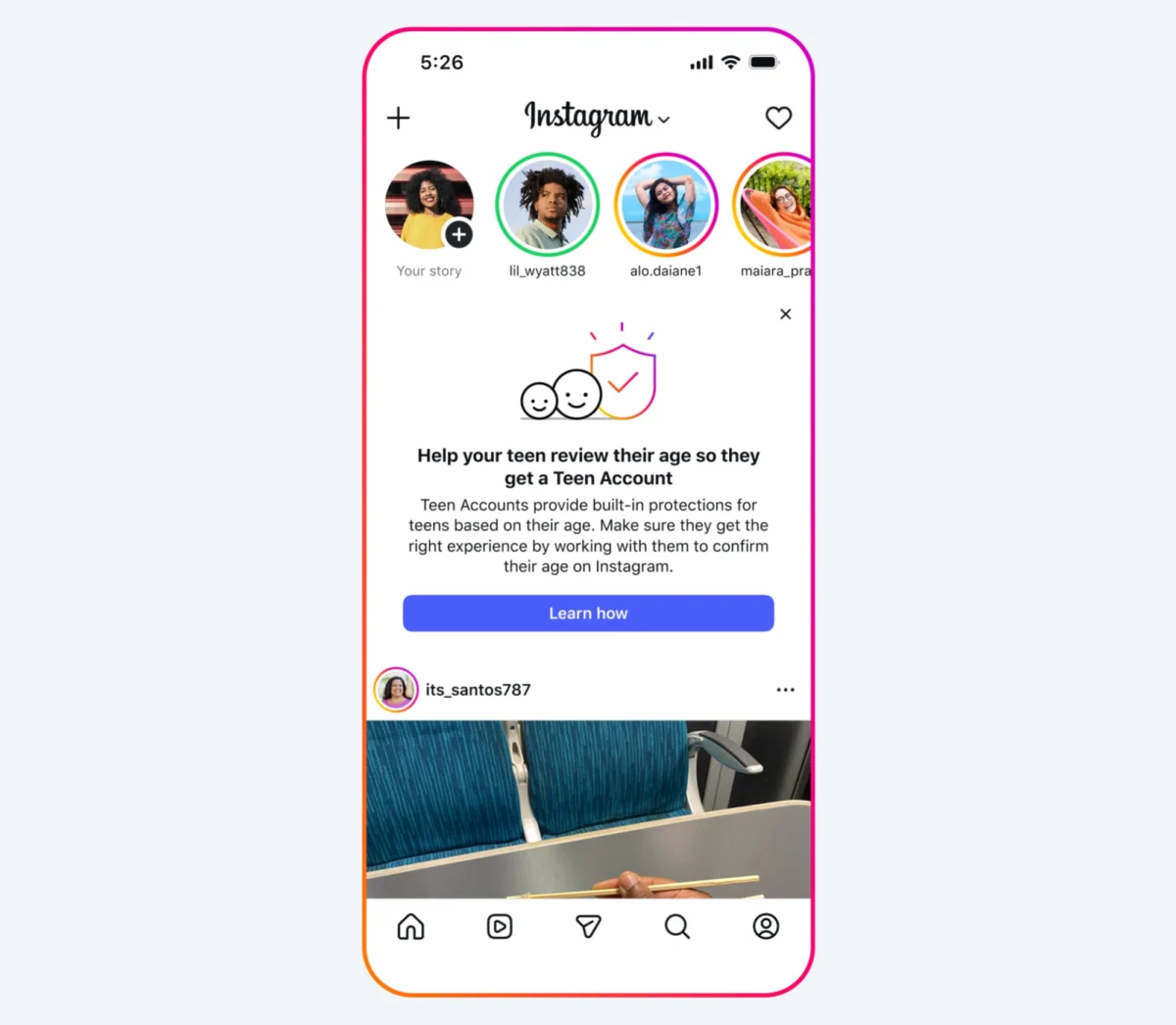
Meta’s latest attempt to address the mounting criticism regarding youth online safety centers on parental involvement and technical intervention. In a blog post published Tuesday, the company announced that it is rolling out notifications to parents across the United States on both Facebook and Instagram.
Unlike previous efforts that focused primarily on parents already managing a "Teen Account," these new notifications are being sent to any user identified by Meta’s algorithms as a parent. The prompt encourages these adults to review and confirm their teens’ ages on the platform. To assist in this, the notification includes direct links to educational resources, such as a blog post by Dr. Alexandra Lockhart, which outlines the psychological and safety-related importance of ensuring children use the platform with their correct chronological age.
Beyond parental engagement, Meta is significantly scaling its technological infrastructure. The company confirmed that its proprietary age-detection technology—which uses artificial intelligence to identify teen users who have falsified their birth dates to appear as adults—is expanding to 27 countries within the European Union and to Brazil. Furthermore, for the first time, this AI-driven age-verification layer is being applied to all Facebook users in the United States.
Meta’s AI models are designed to scan user profiles for "contextual clues" regarding age, such as birthday posts, the ages of connected friends, and historical account activity. If the system detects a discrepancy, it automatically re-assigns the user to a "Teen Account," a restricted mode that limits visibility, messaging, and content recommendations. Additionally, the company is refining its systems to make it easier for users to report suspected underage accounts and is strengthening its "gatekeeping" capabilities to prevent banned users from simply opening new profiles.
A Troubled Chronology: From AI Rollouts to Safety Failures
The current push for better age verification follows a turbulent timeline of development and public scrutiny.
In April 2025, Meta officially launched its AI-driven age-check system, positioning it as a cornerstone of its "Teen Account" initiative. The company promised that these accounts would serve as a robust, safe environment for minors, protecting them from predatory behavior and harmful content.
However, the rollout was quickly met with skepticism. In the fall of 2025, a team of independent cybersecurity and social media researchers conducted a stress test of the Teen Account product. Their findings were damning: the report alleged that the guardrails failed to function as advertised. Among the most concerning revelations were documented instances where the system failed to block direct messages from adult strangers, effectively rendering the "safety shield" porous.
These findings ignited a firestorm of criticism from child advocacy groups and state regulators, fueling the momentum of the ongoing legal challenges in New Mexico. The company’s Tuesday announcement, therefore, serves as both a functional update and a strategic attempt to regain the narrative of a company that is "actively listening" and evolving.
The New Mexico Trial: A $3.75 Billion Question
The backdrop for these developments is the ongoing litigation in New Mexico. In March 2026, a jury delivered a stinging blow to Meta, finding the company liable for misleading consumers about the safety of its platforms and contributing to the endangerment of children. The verdict ordered Meta to pay the maximum possible penalties under New Mexico’s consumer protection laws, totaling $375 million.
While Meta has vowed to appeal that decision, the legal threat has shifted into a high-stakes bench trial. The New Mexico Department of Justice, led by Attorney General Raul Torrez, is now seeking injunctive relief that could fundamentally alter how Meta operates within the state. The requested remedies are sweeping:

- Mandatory Age Verification: Requiring robust, third-party verification for all users.
- Strict Access Control: Implementing absolute blocks for children under the age of 13.
- Encryption Limits: Restricting end-to-end encryption for minors to allow for better monitoring and intervention.
- Permanent Bans: Implementing industry-standard bans for adults who facilitate child exploitation.
The state is also seeking an additional $3.75 billion in damages, arguing that such a sum is necessary to address the long-term societal harm caused by the company’s design choices.
The "Nuclear" Option: Meta’s Threat to Exit
The legal friction reached a boiling point last week when Meta issued a stark warning: it may be forced to shut down its platforms in New Mexico entirely.
In a formal court filing, Meta argued that the state’s demands are "technologically or practically infeasible." The company contended that the requirements—specifically regarding the decoupling of encryption and the implementation of state-specific age verification—would force it to build an entirely separate version of Facebook, Instagram, and WhatsApp for New Mexico.
"Granting onerous relief could compel Meta to entirely withdraw… from the state as the only feasible means of compliance," the filing stated. During proceedings on Monday, Meta’s legal counsel, Alex Parkinson, doubled down on this stance, characterizing the state’s demands as an existential threat to the service’s viability in the region.
Implications for the Tech Industry
The standoff in New Mexico serves as a bellwether for the future of Big Tech regulation in the United States.
The Regulatory Divide
Meta’s response to the crisis has been to shift the burden of proof to other players in the tech ecosystem. In its latest blog post, the company argued that the responsibility for age verification should not fall solely on social media apps. Instead, Meta is calling for federal legislation that would require app stores—such as Apple’s App Store and Google’s Play Store—to verify the age of every user before they can download an application. Meta argues that a "top-down" approach would be more secure and consistent than forcing individual platforms to build fragmented, region-specific systems.
The Conflict of Priorities
For Attorney General Raul Torrez, the company’s threat to leave is merely a distraction from the core issue: corporate profit versus public safety.
"We know Meta has the ability to make these changes," Torrez said in a public statement following the hearing. "This is not about technological capability; it is about their business model. They are prioritizing advertising revenue over the safety of children, and they are using the threat of a shutdown to bully a state that is simply trying to protect its citizens."
The Future of "Teen Safety"
The industry is now watching closely to see if Meta’s new, AI-focused safety features will be enough to satisfy regulators, or if the court will mandate the radical changes requested by New Mexico. If the court rules in favor of the state, it could set a legal precedent that effectively forces social media companies to operate under a patchwork of state-level safety regulations.
As the trial progresses, one thing remains clear: the era of "self-regulation" for social media giants is rapidly coming to an end. Whether through federal oversight, state-level injunctions, or evolving AI-driven safety tools, the way minors interact with the digital world is undergoing a forced, and long-overdue, transformation. Meta’s next move in the courtroom will likely define the parameters of that digital landscape for years to come.












No comments yet. Be the first to join the conversation!