

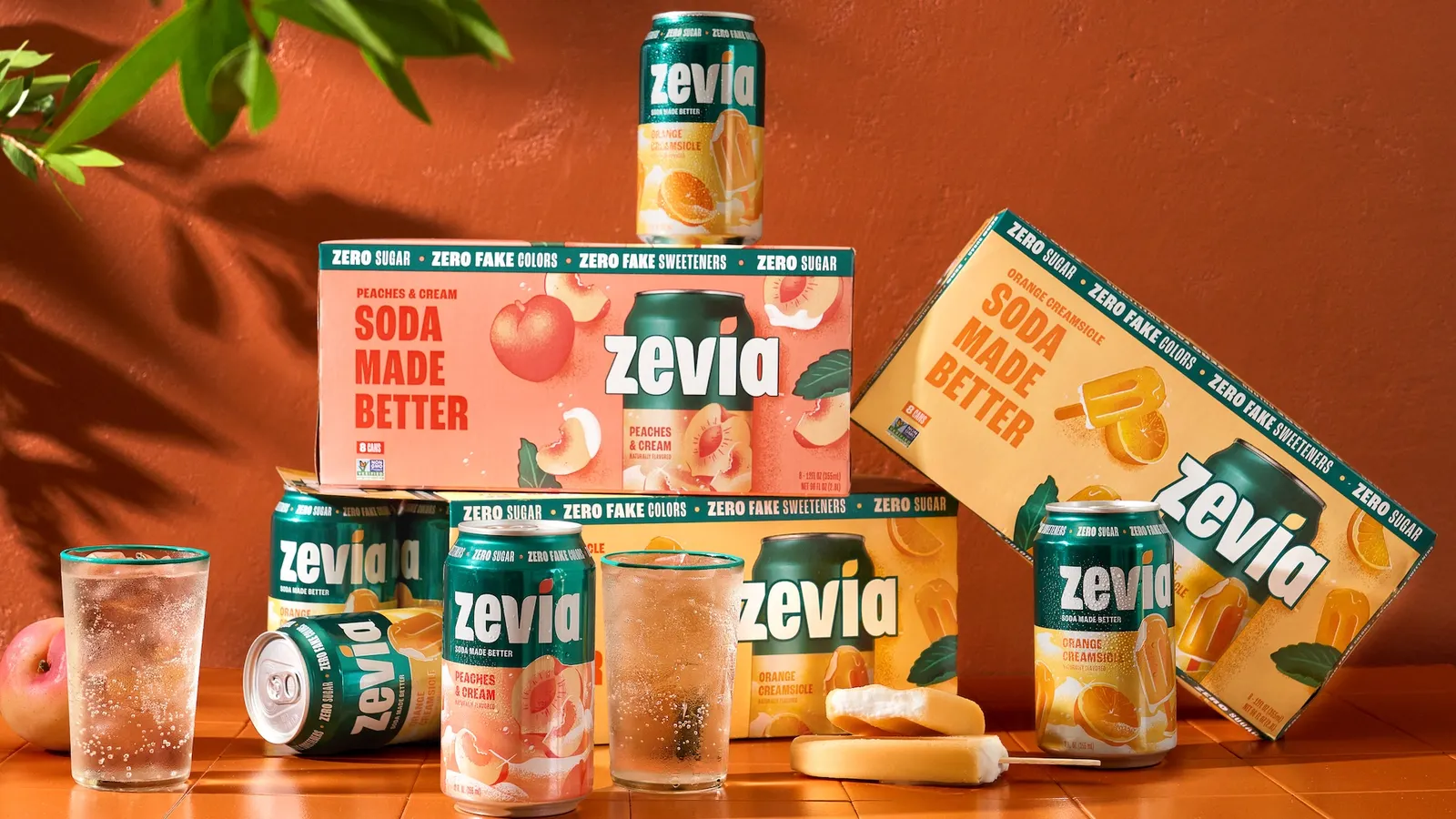
In the highly saturated beverage market, where behemoths like Coca-Cola and PepsiCo have dominated the landscape for over a century, a challenger brand is making waves by weaponizing the concept of "realness." Zevia, a “better-for-you” soda manufacturer, has spent the last several years positioning its portfolio as the antidote to the artificial. By pairing clean-label ingredients with a provocative marketing strategy that mocks the industry’s reliance on synthetic additives and AI-generated advertising, Zevia has transformed from a niche health-food store item into a formidable market disruptor.
With a massive 21.2% year-over-year revenue increase in the first quarter of 2026 and a high-profile partnership with hip-hop icon Cardi B, Zevia is no longer just playing in the margins. It is mounting a full-scale assault on the traditional soda category.
A Chronology of Disruption: From Niche to Mainstream
Zevia’s rise is not a story of overnight success, but rather a methodical, multi-year climb toward cultural relevance.
- 2023: Kirsten Suarez joins Zevia as Chief Marketing Officer, bringing with her a wealth of experience from consumer-packaged goods (CPG) titans like Procter & Gamble and Taco Bell. Under her leadership, the brand begins a strategic pivot from merely selling a product to building a distinctive, "radically real" identity.
- Early 2026: The brand launches the "Ztox" campaign, a direct jab at the industry’s home base in Atlanta. By deploying branded trash cans and garbage trucks throughout the city, Zevia encouraged consumers to "detox" from artificial sodas, creating a viral moment that challenged the status quo.
- March 2026: Zevia announces a landmark partnership with Cardi B, who joins the company not just as a face, but as a shareholder and brand ambassador. The move signals a maturation of the brand’s growth strategy, moving from grassroots provocation to celebrity-fueled mainstream adoption.
- Q1 2026: Financial disclosures reveal that net sales reached $46.1 million, a surge of over 21% compared to the same period in 2025. This growth is directly attributed to the brand’s newfound marketing velocity and expanded distribution channels.
Supporting Data: The Economics of Authenticity
Zevia’s aggressive marketing strategy is backed by a disciplined fiscal approach. According to earnings reports, the company has doubled its marketing spend as a percentage of revenue over the past two years. While the company invested 11.2% of net sales into marketing during Q1 2026—a decrease from the 16.2% spent in the same quarter the previous year—this is a strategic reallocation. Executives confirmed that the bulk of the 2026 budget is being pushed into the third quarter to capitalize on the Cardi B campaign, as well as the rollout of refreshed packaging and new product lines.
The impact of these investments is measurable. The announcement of the Cardi B partnership alone generated an estimated 152 million editorial impressions in its first week. This “earned media” value is critical for a mid-sized brand that lacks the multi-billion-dollar advertising budgets of its competitors. By betting on cultural moments rather than just paid airtime, Zevia has managed to punch well above its weight class.
The CMO’s Vision: A Conversation with Kirsten Suarez
Marketing Dive recently sat down with Kirsten Suarez to discuss the evolution of the brand and the philosophy behind its aggressive, often satirical, marketing stance.
Building a Distinctive Identity
When Suarez arrived at Zevia in 2023, she recognized a brand with strong product-market fit but a weak brand "engine."
"Zevia had a pretty good product-market fit, but it was not a developed brand," Suarez noted. "The focus has been on getting to a brand strategy, getting a team in place, and building the marketing ecosystem. We have the most simple ingredient statement in the category, and we don’t use anything artificial. That’s the truth we’re leaning into."
The AI-as-Artificial Strategy
Zevia’s marketing has become famous for its biting commentary on AI. When asked about this, Suarez clarified that the focus isn’t on the technology itself, but on what it represents in the modern age.
"It’s less of a commentary on AI itself, and more of a commentary on ‘artificial,’" Suarez explained. "Soda is a category where culture matters. We’re asking: what are the conversations that people are having where we can intersect? It gives us an opportunity to simply say, ‘This is what Zevia is about.’"
The "Challenger" Mindset
Regarding the brand’s habit of taking shots at legacy competitors, Suarez emphasizes that the strategy is one of intentionality. "Don’t do it just to do it," she advised her team. "The enemy in our work is the idea of the ‘fake.’ We act as a challenger to the industry because we think people are going to agree with us. We’re not interested in industry talk; we’re interested in what people actually care about."
The Cardi B Factor: Beyond the "Celebrity Endorsement"
The partnership with Cardi B is arguably the most significant move in the company’s history. Unlike traditional celebrity deals, which are often transactional and short-lived, Zevia has entered into a two-year, equity-based agreement.
"We wanted someone who was willing to do a less traditional deal," said Suarez. "She has equity, so we are both incentivized to grow the brand together."
This alignment of interests is expected to pay dividends as the company integrates the star into retail displays, commercials, and future product innovations. By choosing a partner known for her unfiltered, authentic public persona, Zevia is reinforcing its core brand pillar: that in a world of synthetic, AI-generated content, there is still a massive market for the "radically real."
Implications for the Beverage Industry
Zevia’s success provides a blueprint for other "challenger brands" attempting to disrupt stagnant categories. The implications of their strategy are threefold:
- The "Culture-First" Pivot: In an age of ad-blockers and algorithmic fatigue, traditional media buys are becoming less effective. Brands must instead find ways to insert themselves into cultural conversations—even if that means being provocative or confrontational.
- The Value of Equity Partnerships: By turning brand ambassadors into shareholders, companies can ensure that the "face" of the brand is truly invested in the product’s long-term health, rather than just cashing a paycheck for a single commercial.
- Leaner, Faster Marketing Teams: Suarez’s philosophy—that being smaller is a strength—is a direct indictment of the bloated approval processes common in larger CPG firms. By giving the creative team "license" to experiment and fail, Zevia has managed to keep its brand voice agile and current.
As Zevia looks toward the second half of 2026, the challenge will be scaling this success without losing the "scrappy" identity that defined its early growth. With new flavors, updated packaging, and a massive, culturally relevant campaign on the horizon, Zevia is poised to prove that the soda wars are far from over—and that, in the battle between the synthetic and the real, the consumer might just be ready for a change of pace.










No comments yet. Be the first to join the conversation!