Layla Zulfa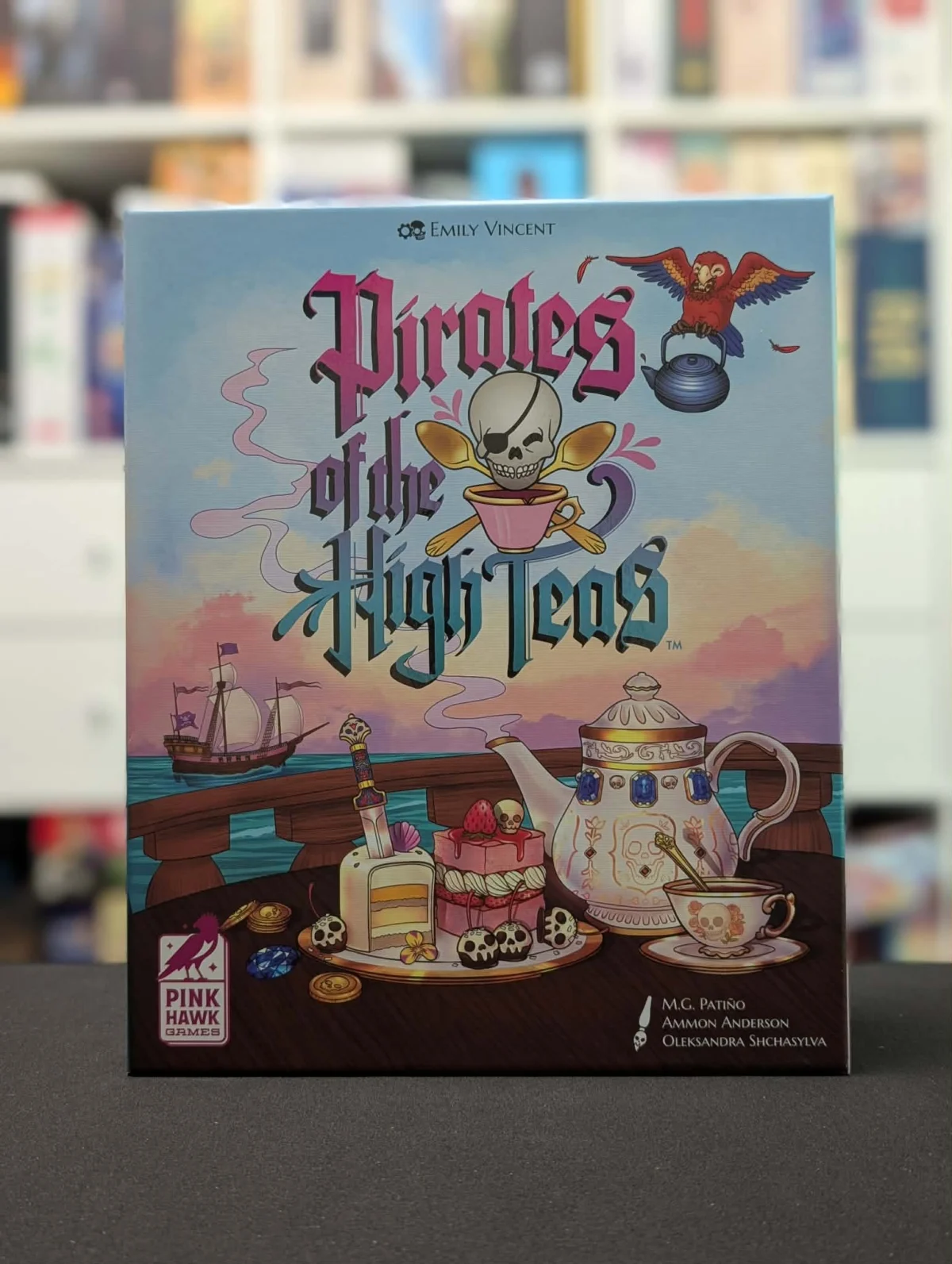
In the vast, often cutthroat ocean of modern board gaming, few themes are as reliable as the salty, gold-hungry pirate. Yet, every so often, a title emerges that swaps the cutlasses for cream tea and the cannons for crumpets. Pirates of the High Teas is one such anomaly—a strategy game that posits a refreshing, if slightly absurd, premise: what if the fiercest scallywags on the seven seas were actually just looking for the perfect afternoon snack?
By blending traditional worker placement mechanics with a whimsical, high-society aesthetic, the game offers a masterclass in cozy, low-stakes competition. It is a title that proves you don’t need to plunder a Spanish galleon to feel like a winner; sometimes, all you need is the right blend of Earl Grey and a perfectly paired pastry.
The Main Course: Understanding the Mechanics
At its core, Pirates of the High Teas is a streamlined engine-builder that challenges players to balance their limited resources over nine brisk rounds. The objective is simple yet addictive: amass the most doubloons by curating the most elegant tea services for your respective pirate captains.
The Mechanics of the Row
The game board features an action row that dictates the flow of play. Each round, players deploy their pirate meeples onto specific spaces to harvest tea cards or gather treat cards. The brilliance of the design lies in the risk-reward tension of the action row:
- The "Late-Game" Premium: Action spaces further to the right generally offer more powerful rewards, such as rarer ingredients or higher-value tea combinations.
- The Turn-Order Paradox: Choosing spaces to the left is often less rewarding in terms of immediate loot, but it grants the player superior turn order for the following round.
This creates a constant tug-of-war between immediate gratification and long-term strategic positioning. Players must frequently decide whether to snatch a high-value scone now or sacrifice their current haul to ensure they act first when the fresh tea cards are revealed in the next cycle.

Scoring and Objectives
Tea cards serve as the primary scoring engines. Each card lists specific requirements—color-coded dishes or specific ingredient types—that must be fulfilled by the treat cards collected throughout the round. When a player successfully "serves" a set, they earn doubloons. The most successful captains are those who can layer these conditions, creating a chain reaction of points that turns a simple afternoon tea into a lucrative haul.
Chronology of a Session: How the Game Unfolds
To understand why Pirates of the High Teas has been garnering attention in hobbyist circles, one must look at how a session typically progresses.
- The Setup (Rounds 1-3): Players begin with minimal resources. The focus is on establishing a foundation, grabbing basic tea cards, and identifying which captain they are catering to. Strategy is loose, and the board feels open.
- The Mid-Game Pivot (Rounds 4-6): This is where the "worker placement" pressure kicks in. Players start to get in each other’s way. The tension of the turn-order track becomes palpable, and players begin to specialize their collections to match the requirements of their specific captain’s scoring bonuses.
- The Grand Finale (Rounds 7-9): The pace intensifies. With the end in sight, players often abandon long-term efficiency for "hail mary" plays, attempting to complete as many final sets as possible to maximize their doubloon count.
Because the game is limited to exactly nine rounds, it avoids the "marathon fatigue" that plagues many complex strategy games. The entire experience typically clocks in under an hour, making it an ideal "opener" or "closer" for a gaming night.
Supporting Data: Pacing and Player Interaction
The design philosophy behind Pirates of the High Teas is one of "parallel play." Unlike heavy wargames where players actively destroy one another’s progress, this title relies on subtle, indirect competition.
Scalability and Downtime
According to recent playtest data from the board game community, the game hits its mechanical "sweet spot" at three players. At this count, the board feels tight enough to necessitate strategic blocking, but not so crowded that a player’s entire plan is ruined by a single opponent.

- Two-Player Dynamics: Each player controls two workers, which maintains the game’s speed but alters the tactical depth.
- Four-Player Dynamics: While slightly slower, the game’s inherent efficiency ensures that downtime remains minimal. The "reset" phase between rounds is so snappy that even at a full table, players rarely find themselves waiting more than a few seconds for the next turn to commence.
Interaction Levels
The interaction is best described as "gentle friction." You might take the last croissant card that your neighbor desperately needed, or occupy the "extra sugar" space before they can get to it, but you are never truly "attacking" them. This makes the game a safe harbor for families or groups that prefer to avoid the high-conflict tension often found in competitive gaming.
Official Perspective: The Artistic Vision
In recent communications, the developers emphasized that the game’s visual identity was just as important as its mechanical balance. By utilizing a pastel-heavy color palette—soft blues, warm purples, and creamy pinks—the game carves out a unique shelf presence.
"We wanted to subvert the expectation of what a pirate game looks like," the design team noted. "Usually, you see dark, moody browns and grays. We wanted something that felt like a warm invitation to a table. The detailed illustrations of the pastries aren’t just filler; they are meant to make the player feel the ‘cozy’ atmosphere of a high-tea service."
The inclusion of unique, custom-shaped pirate meeples was a deliberate choice to add tactile satisfaction to the experience. By ensuring each player’s pieces have a distinct silhouette, the designers added a touch of personality to what could have been a standard set of wooden tokens.
Implications: A New Standard for Family Gaming?
The success of Pirates of the High Teas highlights a growing trend in the board game industry: the "Gateway-Plus" category. These are games that are accessible enough for a six-year-old to understand the basic iconography, yet deep enough to engage a seasoned hobbyist who wants a low-stress evening.

Replayability and Longevity
Critics have pointed out that the core loop is relatively simple, which could lead to repetition over dozens of sessions. However, the developers mitigated this by introducing "Advanced Captains" and randomized round bonuses. These variables force players to constantly adapt their strategies. If you build your engine the same way every time, you will likely find yourself coming up short in the final tally.
Family-Friendly Utility
The game’s greatest implication is its role in cross-generational gaming. Because the reading requirement is minimal—relying instead on intuitive iconography—parents and children can compete on a relatively level playing field. The theme is inherently engaging for children, while the decision-making process offers enough "crunch" for adults to remain mentally stimulated.
Final Assessment: Is It Worth Your Doubloons?
Pirates of the High Teas is a rare gem that manages to be both "silly" and "serious" in the right proportions. It does not try to be the next Twilight Imperium; it does not try to reinvent the wheel of worker placement. Instead, it offers a refined, polished experience that respects the player’s time and intelligence.
If you are a fan of titles like Wingspan or Everdell, you will find the aesthetic and pacing remarkably familiar. If you are a fan of pirates who wants to see them in a less traditional setting, you will be charmed by the attention to detail and the sheer absurdity of the premise.
Ultimately, the game serves as a reminder that the best tabletop experiences are not always the ones that demand the most effort. Sometimes, the most rewarding victory is the one shared over a imaginary cup of tea and a well-played card. Whether you are a hardened pirate captain or a newcomer to the hobby, Pirates of the High Teas is a voyage worth taking.

 Sagoh
Sagoh
 Ammar Sabilarrohman