

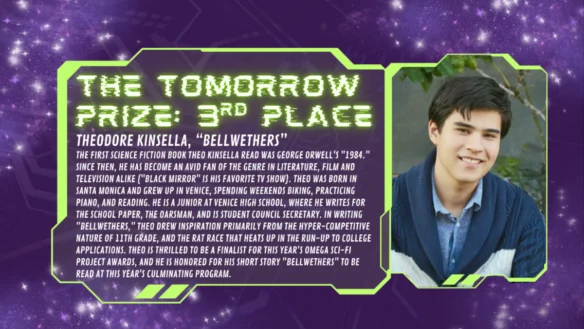
PASADENA, CA – The vibrant intersection of youthful imagination and speculative fiction was on full display this past May 16 as the literary community gathered at the iconic Vroman’s Bookstore in Pasadena. The occasion was the annual Celebrity Readings & Honors ceremony, an event that serves as the premier stage for the next generation of science fiction visionaries: the winners of The Tomorrow Prize and The Green Feather Award.
These prestigious honors, which celebrate the creative prowess of Los Angeles County high school students, once again highlighted the capacity for young minds to tackle complex existential, technological, and environmental themes through the lens of science fiction. As the curtains rose on this year’s ceremony, the audience was treated to an evening that reaffirmed the enduring power of storytelling to map out the contours of our collective future.
The Core Mission: Fostering Tomorrow’s Voices
The Tomorrow Prize is far more than a literary contest; it is a critical initiative designed to foster literacy and creative expression among Southern California’s high school student body. By challenging students to craft original science fiction narratives, the organizers—SciFestLA—encourage participants to engage with the "what if" scenarios that define the genre, from the implications of artificial intelligence to the nuances of space exploration and dystopian sociology.

The competition is structured to provide both recognition and tangible rewards. The top three entries in the Tomorrow Prize category are awarded cash prizes of $250, $150, and $100, respectively. Beyond the financial incentive, the first-place laureate earns the honor of publication in L.A. Parent Magazine, a distinction that offers young writers a professional platform and a wider readership.
Complementing this is the Green Feather Award, a specialized category that pushes the boundaries of the genre toward ecological responsibility. This award recognizes the most compelling environmentally-focused science fiction story, challenging writers to envision a world where humanity must reconcile its progress with the fragility of the planet. The winner of this category receives a $250 prize and the opportunity for online publication via the Nature Nexus Institute, bridging the gap between artistic creation and environmental advocacy.
A Chronology of the Ceremony
The May 16 event at Vroman’s Bookstore was the culmination of months of rigorous judging and deliberation. The ceremony itself followed a structured program designed to honor the craft of the students while engaging the local literary community.

- 1:00 PM – Arrival and Networking: Attendees, including educators, local authors, parents, and literature enthusiasts, gathered at Vroman’s—the oldest and largest independent bookstore in Southern California. The venue provided a fitting backdrop for an event dedicated to the written word.
- 2:00 PM – Celebrity Readings: A hallmark of the event, professional actors and authors took to the stage to perform readings of the winning entries. This segment is designed to bring the student narratives to life, allowing the audience to hear the words as they were intended, while providing the young authors with the surreal experience of seeing their work interpreted by established professionals.
- 3:30 PM – Honors and Awards Presentation: The formal recognition of the honorees took place. As each winner was called, their achievement was contextualized within the broader framework of the competition’s goals.
- 4:30 PM – Reception and Dialogue: The ceremony concluded with a reception, allowing the finalists to interact with judges and mentors. This period of discourse is often cited by participants as a highlight, as it facilitates a rare mentorship opportunity between seasoned sci-fi professionals and the budding talents of the next generation.
Supporting Data and Thematic Trends
The 2026 cohort of submissions represented a diverse cross-section of Los Angeles County, drawing entries from a multitude of schools. While the specific narratives remain under wraps until their full publication, preliminary reports from the judges suggest a distinct shift in thematic focus compared to previous years.
Data from the submission pool indicates an uptick in "hopeful" or "solarpunk" narratives, particularly within the Green Feather Award submissions. Whereas previous years often leaned toward bleak, post-apocalyptic settings, the 2026 winners demonstrated a marked interest in technological solutions to climate change and the restoration of natural ecosystems. This shift mirrors broader global trends in speculative fiction, where authors are increasingly interested in exploring how humanity might adapt and thrive alongside a changing environment rather than simply chronicling its demise.
In the general Tomorrow Prize category, the influence of contemporary AI developments was evident. Many of the top-tier stories grappled with the blurred lines between biological and digital consciousness—a theme that clearly resonated with the panel of judges who prioritized "originality, structural integrity, and emotional resonance."

Official Responses and Industry Perspectives
The organizers of SciFestLA emphasized the importance of these awards in the current educational climate. In a press release following the event, spokespeople noted that science fiction provides a unique pedagogical tool.
"Science fiction is the literature of change," one organizer remarked. "By forcing students to step outside the constraints of the present day, we are effectively training them to think critically about the consequences of today’s policies and technologies. The winners this year have shown a maturity in their prose and a depth of thought that is truly staggering."
The partnership with the Nature Nexus Institute for the Green Feather Award continues to be a cornerstone of the initiative. By providing a platform for eco-fiction, the organizers are effectively creating a dialogue between the humanities and the sciences. "When a student writes about a dying reef or a future sustainable city, they aren’t just writing fiction," said a representative from the Institute. "They are practicing the very empathy and foresight that we need to solve real-world environmental crises."

Implications: The Long-term Impact on Student Writers
The implications of winning a prize like the Tomorrow Prize extend far beyond the cash award or the initial publication. For many of these students, the recognition serves as a formative professional milestone.
Building a Literary Pipeline
By connecting students with publishers like L.A. Parent Magazine and organizations like the Nature Nexus Institute, the program effectively bridges the gap between amateur writing and professional publication. This exposure often acts as a catalyst for students to pursue creative writing or journalism in higher education.
Developing Critical Thinking
The process of drafting a science fiction story requires extensive world-building. Students must consider physics, social structures, and ethical dilemmas. This deep-dive approach to storytelling encourages a multidisciplinary mindset, which is a vital skill in an increasingly complex workforce.

Strengthening the Community
Events like the one at Vroman’s Bookstore do more than celebrate individuals; they weave a tighter community of young writers. The camaraderie observed at the reception suggests that these awards are building a network of peers who will likely continue to influence the literary and creative industries in Los Angeles and beyond for decades to come.
Looking Ahead: The Future of the Awards
As the 2026 cycle concludes, the organizers are already looking toward the future. The success of this year’s ceremony has prompted discussions about expanding the outreach of the competition to include more underserved school districts within Los Angeles County.
The goal remains consistent: to ensure that every student, regardless of their background, has the opportunity to explore the frontiers of their imagination. As the world continues to navigate the complexities of the 21st century, the voices of these young writers will be essential in helping us understand not only where we are going, but who we hope to become when we get there.

The Tomorrow Prize and The Green Feather Award stand as a testament to the fact that the future is not just something that happens to us—it is something we write, edit, and ultimately define. With the 2026 honorees now taking their place in the spotlight, the literary community can rest assured that the future of science fiction is in very capable, very creative hands.












No comments yet. Be the first to join the conversation!